
Take a look in your shower. If it’s anything like most, you’ll see a collection of plastic bottles, each with a little bit of product left. Natural shampoo and conditioner bars are changing that picture, and it's why they’ve gone from a niche eco-product to a serious contender in hair care.
These solid bars aren’t just a novelty; they represent a more intentional and effective way to get healthy, beautiful hair.
Why Natural Hair Care Bars Are Taking Over
Have you ever flipped over a shampoo bottle to read the ingredients and felt like you needed a chemistry degree to understand it? You’re not the only one. There's a growing frustration with overly complicated routines and a real concern about the environmental footprint of all that plastic.
This has kicked off a major shift toward simplicity in the beauty world. People are actively looking for alternatives to harsh chemicals like sulfates, notorious for stripping hair of its natural, protective oils and irritating the scalp. The move is toward gentle, plant-based ingredients that actually feed your hair and scalp what they need.
The Power of Simplicity and Sustainability
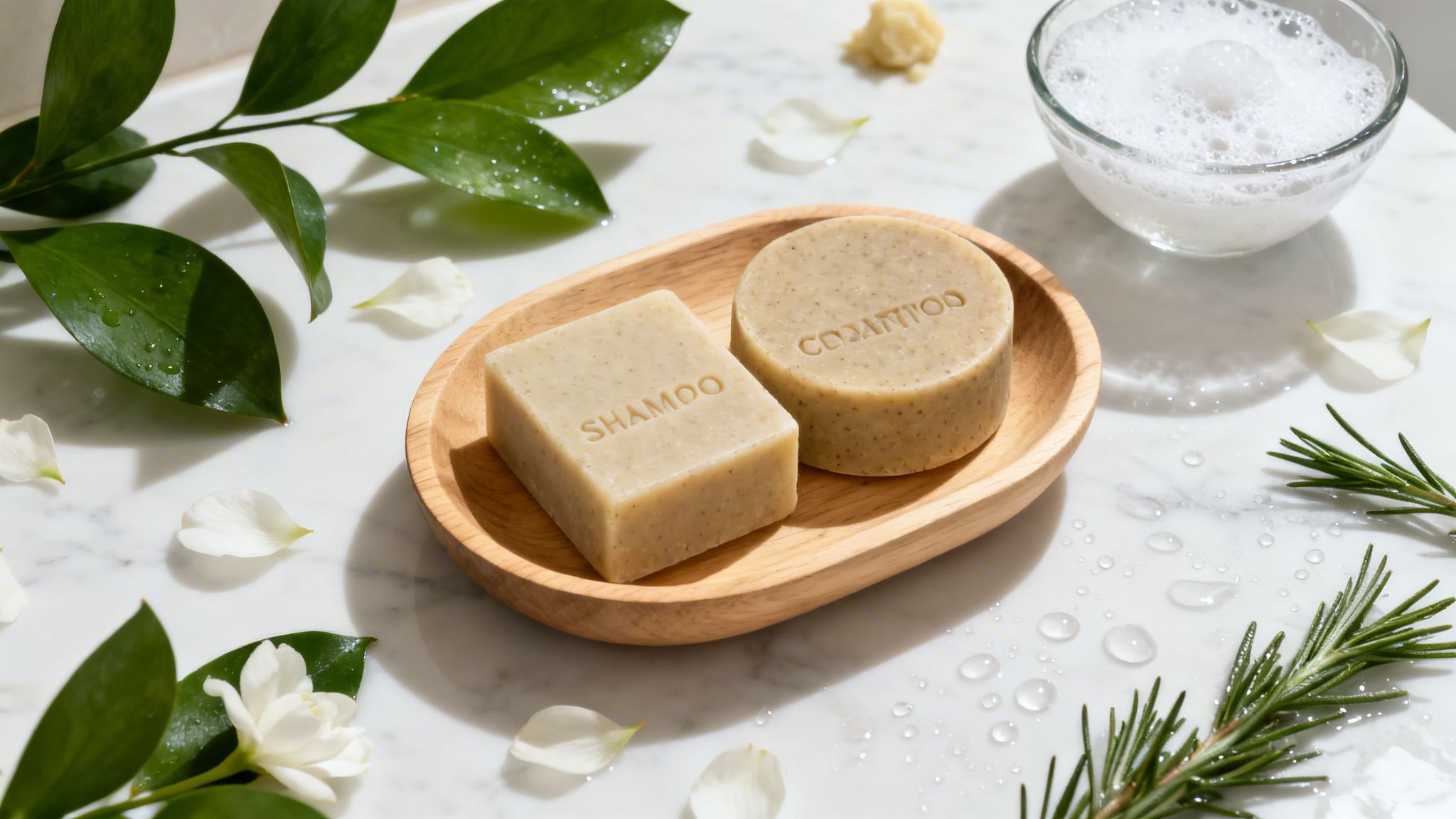
At their core, natural shampoo and conditioner bars are a return to what works. Think of them less as "shampoo without the water" and more as a highly concentrated dose of good stuff. They're packed with nourishing butters, clays, and essential oils, without any of the cheap fillers or the plastic bottle.
This isn't just a fleeting trend—it's a fundamental change in what we expect from our products. The demand for eco-friendly options that actually perform is booming, and the statistics back it up.
The global market for shampoo bars hit USD 14.57 billion in 2023 and is on track to jump to USD 24.59 billion by 2030. This incredible growth is a direct result of people wanting zero-waste beauty that works. You can explore more market insights on the shampoo bar's rapid expansion.
North America is leading the charge, making up a massive 65.4% market share in 2023. It’s a clear signal that sustainability is no longer a fringe benefit; it’s a priority.
A Solution for Common Hair Concerns
Beyond being better for the planet, these bars are problem-solvers for your hair. Many people who make the switch notice significant improvements with common issues.
- Dryness and Frizz: By ditching the harsh detergents and using rich butters and oils, these bars help your hair hang onto its natural moisture.
- Scalp Sensitivity: With no synthetic fragrances or aggressive chemicals, natural bars can be incredibly soothing for an itchy, irritated scalp.
- Oiliness: It sounds counterintuitive, but using gentle, natural ingredients can help balance your scalp's oil production over time, meaning you might not have to wash your hair as often.
Ultimately, the appeal is twofold. You get a direct path to healthier hair while making a choice you can feel good about. It's hair care that aligns performance with principle, one wash at a time.
What's Really Inside That Little Bar?
If you've ever felt overwhelmed trying to decipher the long, chemical-laden ingredient list on a typical shampoo bottle, you're not alone. A big part of the appeal of natural shampoo and conditioner bars is their simplicity. Think of them less like a complex chemical formula and more like a nutrient-dense meal for your hair and scalp.
The secret to their cleansing ability isn't harsh detergents, but gentle surfactants, which are often derived from coconuts. You'll commonly see ingredients like Sodium Cocoyl Isethionate (SCI) on the label. This is what creates that rich, satisfying lather that lifts away dirt and oil without stripping your hair of its natural moisture—a common complaint with the sulfates found in so many liquid shampoos.
This simple, clean, and eco-conscious approach is precisely why so many people are making the switch.
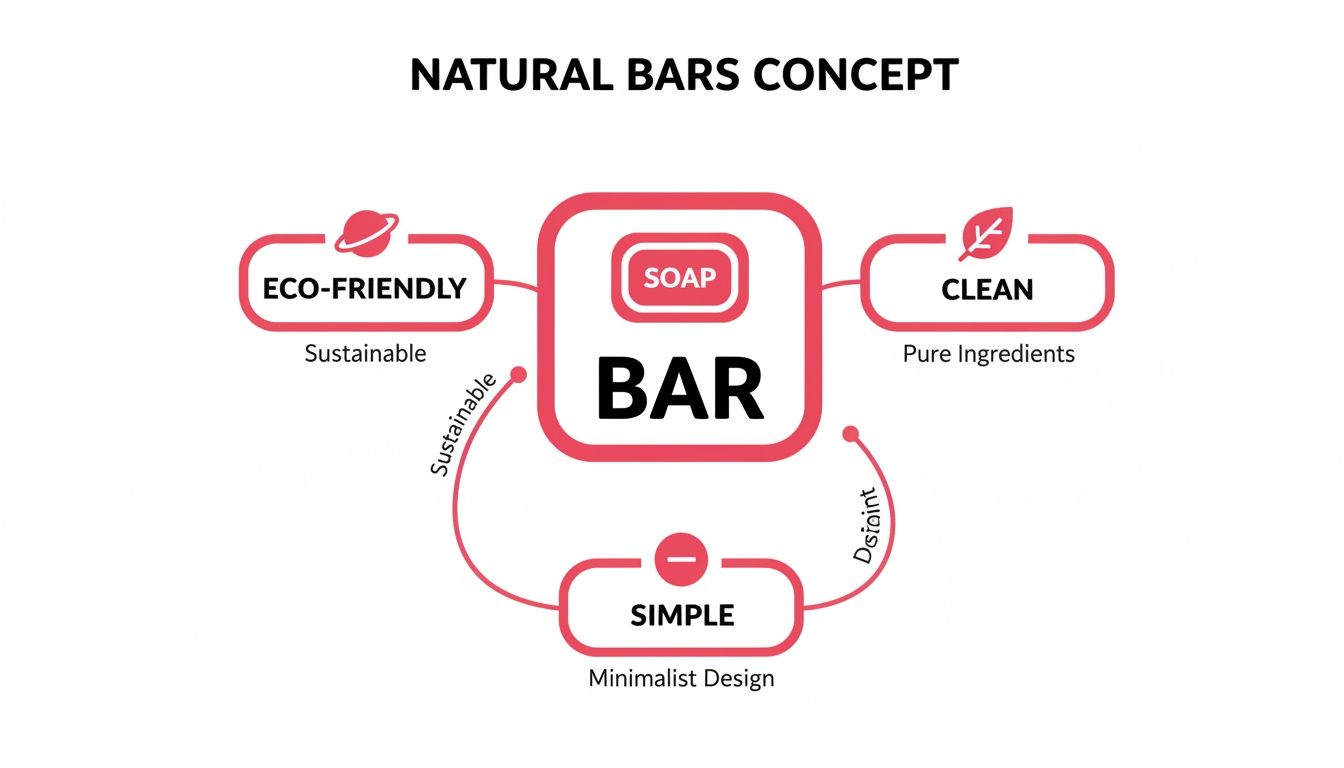
It all comes down to a "less is more" philosophy. By ditching unnecessary fillers and focusing on effective natural ingredients, these bars deliver powerful results in a small package.
The Nourishing Core
Beyond just getting your hair clean, the real heart of a quality bar lies in its blend of butters, oils, and botanicals. These aren't just additives; they are the workhorses that condition, protect, and heal your hair.
Rich Butters: Shea and cocoa butter are fantastic for conditioning. They sink deep into the hair shaft to moisturize, help smooth the outer cuticle to fight frizz, and leave your hair feeling incredibly soft.
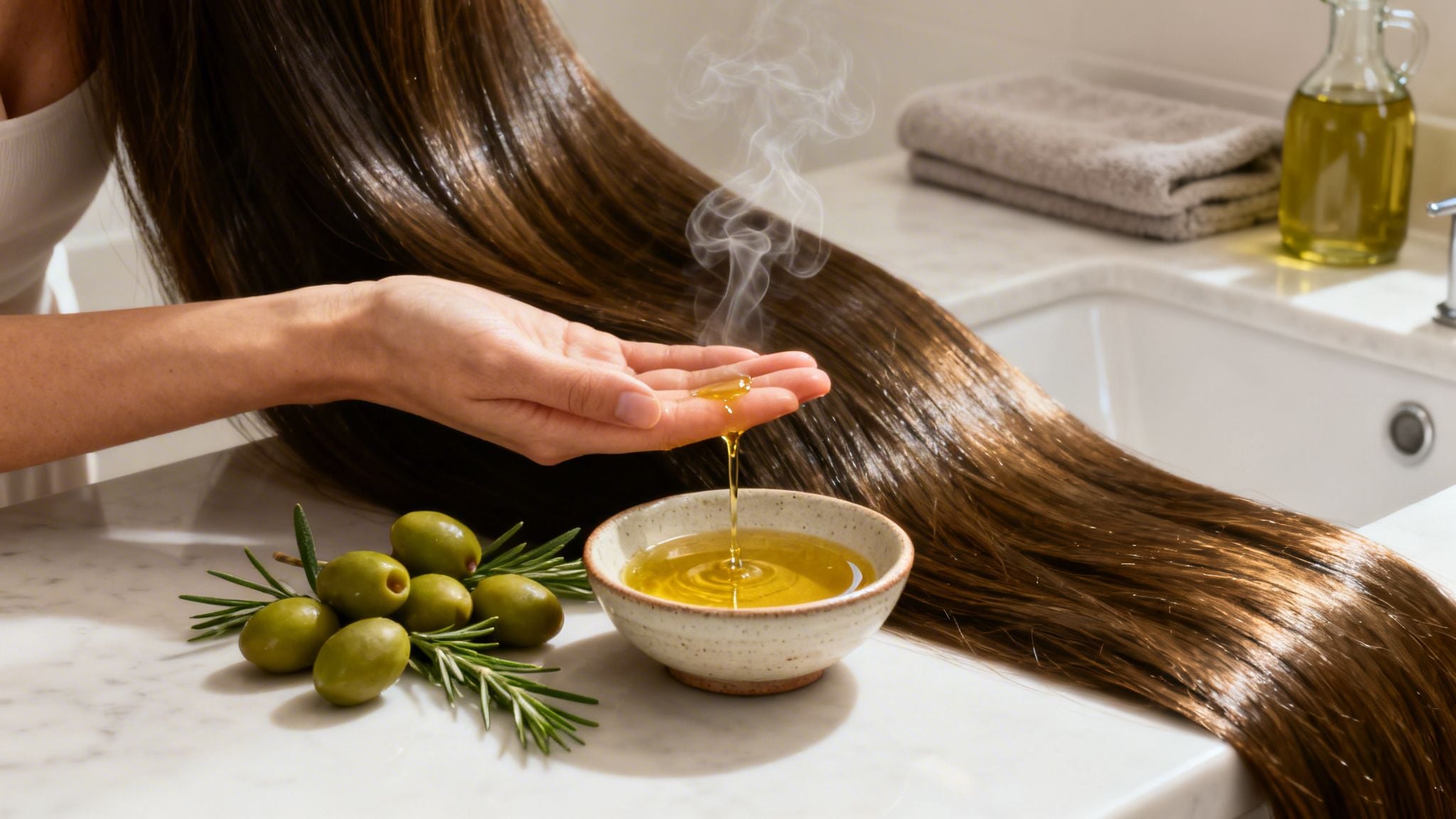
Potent Oils: Nutrient-dense oils like argan, jojoba, and coconut are loaded with vitamins and fatty acids. They add a beautiful shine, improve hair's elasticity and strength, and provide a protective layer against damage. Even a simple hot olive oil treatment at home can offer similar deep-conditioning benefits.
Functional Additives: This is where things get really interesting. Many bars include ingredients to tackle specific issues. Kaolin clay, for example, is brilliant for gently detoxifying an oily scalp, while botanical extracts like rosemary and nettle can help invigorate hair follicles.
This isn't just marketing fluff. These carefully chosen ingredients are why many people with sensitive skin, dandruff, and even hair loss have found relief with shampoo bars. A typical bar might contain 30-50% gentle surfactants and 20-30% nourishing oils, a concentrated, low-water formula that delivers moisture without the buildup that can aggravate scalp problems. The market data shows a clear trend toward these targeted, natural solutions.
Find the Right Ingredients for Your Hair Type
Knowing the ingredients is one thing, but matching them to your hair's unique needs is the real game-changer. The table below breaks down which ingredients to look for based on your top hair concerns.
| Hair Concern | Look for These Ingredients | Why It Works |
|---|---|---|
| Dry, Brittle Hair | Shea Butter, Argan Oil, Avocado Oil, Glycerin | These are rich in fatty acids and humectants that deeply moisturize, seal the cuticle, and restore softness and flexibility. |
| Oily Hair & Scalp | Rhassoul Clay, Kaolin Clay, Tea Tree Oil, Lemon Oil | Clays absorb excess sebum without over-drying, while tea tree and lemon have natural clarifying and antiseptic properties. |
| Dandruff & Itchy Scalp | Nettle Extract, Peppermint Oil, Calendula, Colloidal Oatmeal | These ingredients have anti-inflammatory and soothing properties that calm irritation, reduce flaking, and rebalance the scalp. |
| Thinning or Fine Hair | Rosemary Oil, Nettle Extract, Hydrolyzed Rice Protein, Castor Oil | These stimulate scalp circulation and provide proteins that can help strengthen the hair shaft, adding volume and promoting healthier growth. |
| Frizzy or Unruly Hair | Cocoa Butter, Argan Oil, Coconut Oil, Hydrolyzed Silk | These heavy-duty moisturizers smooth the hair cuticle, creating a protective barrier against humidity and reducing frizz. |
Once you start looking at labels this way, you're no longer just buying a shampoo bar; you're choosing a specific, targeted treatment for your hair.
A well-formulated shampoo bar isn’t a one-size-fits-all product. It’s a personalized tool designed to restore your hair and scalp’s natural balance with ingredients that work for you, not against you.
For example, if you struggle with an oily scalp but have dry ends, you might look for a bar with clarifying tea tree oil but also conditioning shea butter. It’s all about finding that perfect combination on the ingredient list that finally gives your hair what it’s been missing.
The Real Benefits and Honest Downsides
So, you're thinking about switching to shampoo and conditioner bars. It's a move that can do a world of good for your hair, your wallet, and the planet. But let's be real—like any change, it has its amazing perks and a few potential bumps in the road. Knowing both sides of the story is the best way to decide if it's right for you.
Let’s talk about the biggest, most obvious win: ditching all that plastic. It's hard to ignore the mountain of waste from our daily routines, and traditional hair care is a huge part of the problem.
The real driving force behind the shampoo bar movement is sustainability. Think about it: an estimated 1 billion shampoo bottles are bought around the world every single year. That breaks down to about 115,000 bottles thrown out every hour, with most of them clogging up landfills or ending up in our oceans. Solid bars tackle this head-on by getting rid of the bottle entirely. You can see more data on the shampoo bar market and its impact on sustainability here.
Choosing a bar over a bottle isn't just a small gesture. It’s a genuine step toward a less wasteful life, starting right in your shower.
What This Means for Your Hair and Scalp
The eco-friendly aspect is fantastic, but the benefits for your hair's actual health are what get most people to stick with it. Many liquid shampoos use harsh detergents like sulfates that strip your hair and scalp of their natural, protective oils. This can kick off a vicious cycle: your scalp gets dry and irritated, so it overproduces oil to compensate, leaving you with greasy roots and a need to wash your hair constantly.
Natural shampoo and conditioner bars are designed to break that cycle. They're made with much gentler cleansers and packed with nourishing ingredients that work with your hair's natural biology, not against it.
- Your Scalp Can Finally Chill Out: When you stop bombarding it with harsh chemicals, your scalp starts to rebalance its oil production. For many people, this means their hair gets less greasy over time, and they can go longer between washes.
- A Huge Relief for Sensitive Scalps: If you deal with an itchy, irritated scalp, switching away from synthetic fragrances, sulfates, and silicones can be a game-changer. The relief from constant redness and discomfort is often immediate.
- Healthier Hair, Naturally: As your scalp gets healthier, so does your hair. People often notice their hair feels softer and has more shine and volume once they stop stripping its natural moisture away.
The Practical Side: Perks and Potential Problems
The upsides go beyond just hair health. One concentrated shampoo bar can easily last as long as two or three bottles of liquid shampoo, which is great for your budget. And if you travel, they're a dream—solid, compact, and completely TSA-friendly. No more worrying about shampoo explosions in your luggage.
Now for the honest truth about the challenges. The switch isn't always perfectly smooth for everyone, and it really helps to know what you might be in for.
Getting the Hang of It
There’s a small learning curve. You have to figure out the best way to get a good lather. Some people rub the bar right on their head, while others work up a lather in their hands first. It might take a few washes to find your groove, but you'll get there.
The Infamous "Transition Phase"
This is the most common complaint you'll hear. As your hair purges years of silicone and synthetic buildup, it can feel a bit weird for a week or two—sometimes waxy, heavy, or even greasy. It's a temporary phase while your scalp figures out its new normal. Just stick with it.
Hard Water Headaches
If you live in an area with hard water, you might run into an issue. True soap-based shampoo bars (not the syndet kind) can react with the minerals in the water and leave a bit of a film on your hair. This is easily fixed with a quick apple cider vinegar rinse, but it's an extra step to keep in mind.
In the end, most people find that the long-term benefits of making the switch are more than worth navigating these initial hurdles. With a bit of patience, you can get through the adjustment and find a way of caring for your hair that’s simpler, healthier, and a whole lot kinder to the planet.
How to Use and Store Your Bars Correctly
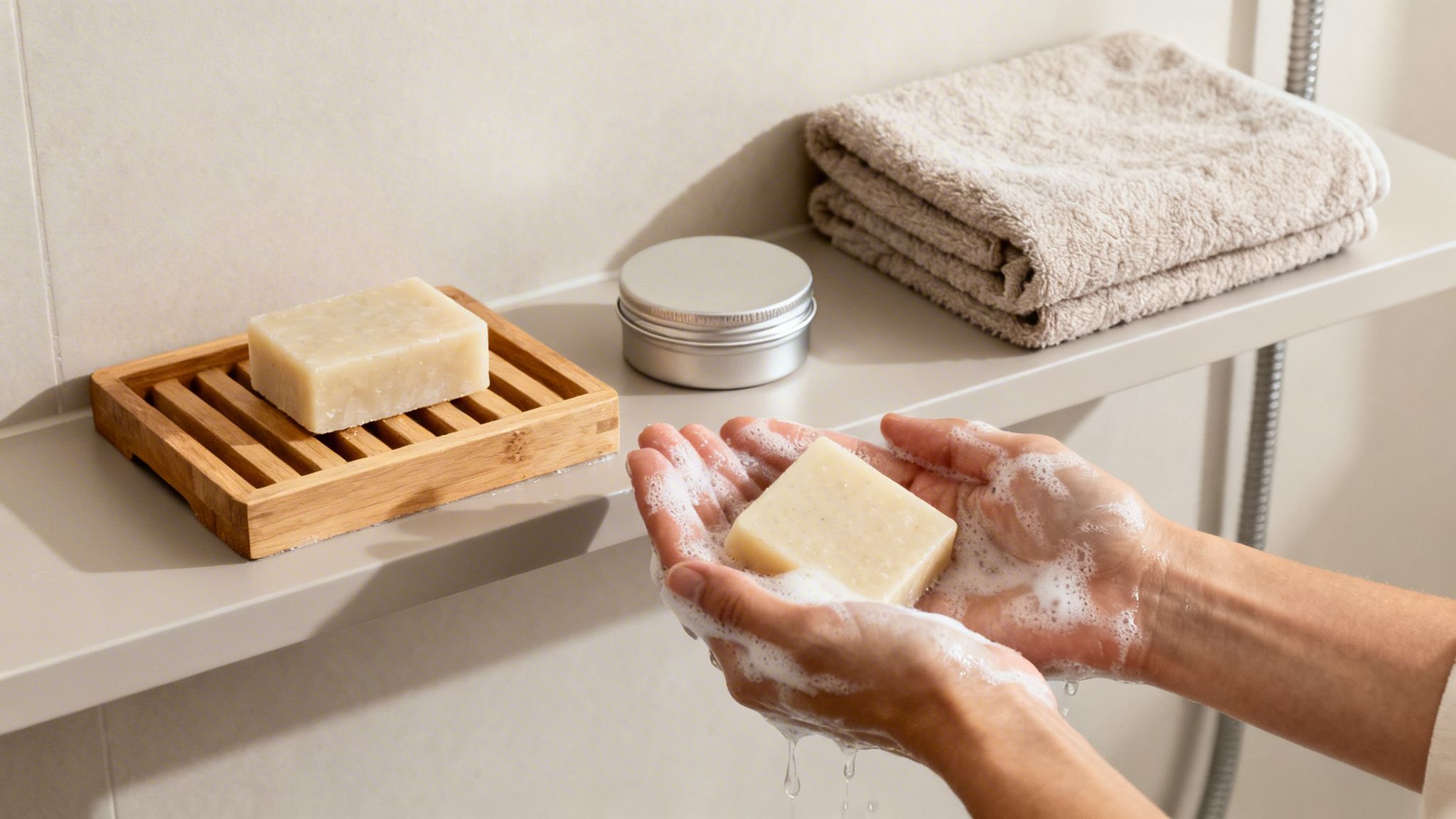
Making the switch to natural shampoo and conditioner bars is exciting, but let's be honest—it can feel a little weird at first. Trading a familiar plastic bottle for a solid bar involves a small learning curve. But once you nail the technique and figure out storage, you'll unlock an amazing wash day experience and make your bars last for ages.
First things first, get your hair soaking wet. I mean really, truly saturated—even wetter than you think you need. This is the secret to getting the bar to glide easily and build a rich lather without tugging at your hair. Water is your best friend here; it’s what activates the bar and helps it spread.
Now for the lather. You’ve got two main approaches. You can work the bar between your wet hands until you have a good amount of foam, then massage that into your scalp. Or, you can swipe the bar directly onto your head a few times. I find that applying it right to the scalp is quicker and more effective for most people.
The Right Way to Wash and Condition
Once you've got some lather going, where you focus your attention is key. Your target is your scalp, not the ends of your hair.
- Massage Your Scalp: Use the pads of your fingertips—never your nails—to really work that lather into your roots. This is where oil, dirt, and product buildup hang out, so give it a good, gentle scrub.
- Let the Lather Do the Work: When you rinse, the suds will travel down the length of your hair, cleaning it perfectly without you needing to scrub the life out of it. This simple trick helps protect your fragile ends from friction and breakage.
- Rinse Completely: Be thorough here. Run your fingers through your hair as the water flows to make sure every last bit of product is washed away. This is the single most important step for avoiding that waxy or heavy feeling some people experience when they first switch.
When you move on to your conditioner bar, the method changes slightly. Keep it away from your roots to avoid weighing your hair down. Just glide the bar over your mid-lengths and ends. You’ll feel a bit of "slip" as the conditioner coats your hair. Let it sit for a minute or two to work its magic, then rinse.
Protecting Your Investment Through Proper Storage
Here’s the golden rule for making your bars last: keep them dry between uses. If a solid bar is left sitting in a puddle, it will turn to mush and disappear before your eyes. A single shampoo bar can replace up to three plastic bottles, but only if you care for it properly.
Proper storage isn't just about being tidy—it's about longevity. A bar that’s allowed to dry completely between washes will stay hard and concentrated, giving you way more uses for your money.
To make this happen, you need a spot that offers good drainage and airflow.
- Draining Soap Dishes: These are a classic for a reason. Look for dishes with slats, holes, or raised ridges that lift the bar up and out of any water.
- Wall-Mounted Holders: Magnetic or suction-cup holders are fantastic. They keep your bars high and dry and clear up precious shower ledge space.
- Sisal Soap Saver Bags: These little mesh bags are great because you can hang them up to dry with the bar still inside, letting air circulate all around it.
- Travel Tins: A must-have for the gym or your suitcase. Just remember to let the bar air out and dry as much as possible before sealing it in a tin for a long time.
By adopting these simple habits, your natural bars will perform beautifully and stick around for months, making your switch to sustainable haircare both effective and easy on your wallet.
Getting Through the Awkward 'Detox' Phase
So you’ve made the leap to natural shampoo and conditioner bars, but your hair feels… a bit off. Maybe it's greasy, maybe it's heavy, or maybe it feels strangely waxy. Don't panic and toss the bar! You’ve just entered the "transition phase," and it's the single biggest reason people give up on bars before seeing the amazing results.
Think of it as a much-needed detox for your scalp. For years, you've likely been washing with commercial shampoos full of sulfates that strip away all your natural oils. Your scalp, in a constant state of panic, has been overproducing oil to compensate. At the same time, conditioners loaded with silicones have been coating your hair strands to give them that slick, artificial shine.
When you switch to a natural bar, you take away those harsh detergents and synthetic coatings. Your scalp, still in overdrive, keeps producing excess oil for a little while. And without the silicone "veneer," you're feeling your hair's true, naked texture for the first time in a long time. This isn't the bar failing you; it's your hair and scalp recalibrating.
Your Guide to Surviving the Transition
The good news? This phase is temporary, usually lasting just a week or two. With a couple of smart techniques, you can make the whole process feel a lot less awkward.
First, check your bar. Make sure you’re using a true pH-balanced shampoo bar, also known as a "syndet" bar. Some handmade bars are actually soap, which has a high pH and can react with hard water to leave a sticky film on your hair. A syndet bar cleanses much more like a liquid shampoo, just without the plastic bottle and harsh chemicals.
Next, you need to get serious about rinsing. I mean really serious. You probably need to rinse for longer than you ever have before.
Crucial Tip: Spend at least an extra minute under the water, methodically running your fingers through your hair from scalp to ends. The #1 cause of that waxy, heavy feeling during the transition is simply not rinsing all the product out.
How to Speed Up the Detox
If your hair feels especially weighed down after the first few washes, you’re likely dealing with a buildup of old silicones and styling products. Your secret weapon here is a clarifying apple cider vinegar (ACV) rinse. It’s fantastic for breaking down that residue and rebalancing your scalp’s pH.
Here's a quick recipe:
- Mix Your Rinse: Pour one part apple cider vinegar and four parts water into a spray bottle or simple cup.
- Apply After Shampooing: Once you've thoroughly rinsed out your shampoo bar, drench your hair and scalp with the ACV mixture.
- Let It Sit: Just let it work its magic for a minute or two. You can leave it in—the vinegar smell will completely disappear once your hair is dry.
This one step can make a massive difference. If you're still fighting some greasiness between washes, a high-quality dry shampoo can be a lifesaver. You can find some great pointers in our guide on how to use dry shampoo effectively.
Ultimately, a little patience is key. Stick with it, follow these tips, and you’ll push past the adjustment period and finally get the soft, genuinely healthy hair you were hoping for.
Choosing Your Perfect Shampoo and Conditioner Bar
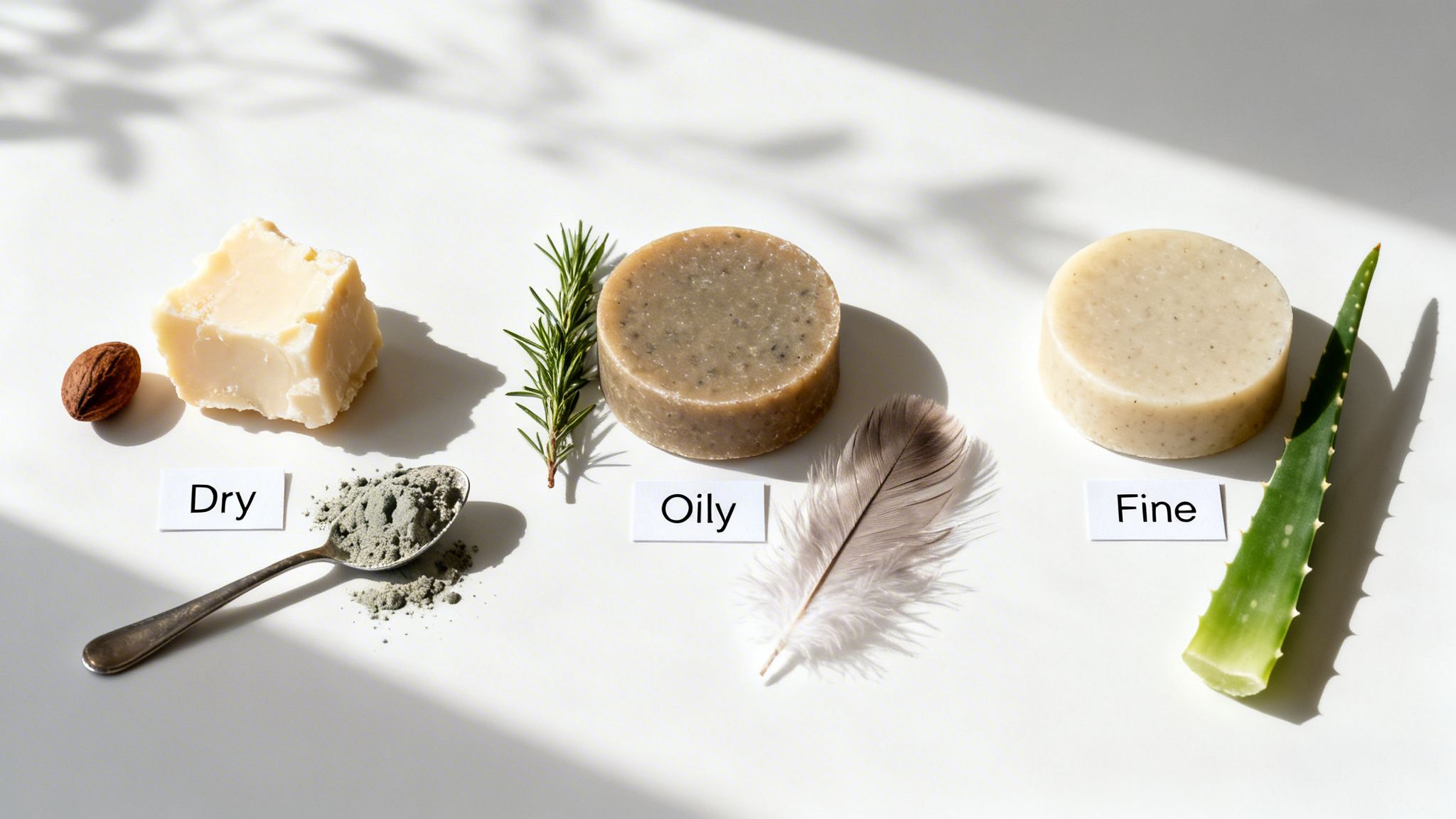
With the explosion of natural shampoo and conditioner bars on the market, walking down the aisle (or scrolling online) can feel overwhelming. How do you find the one that will actually make your hair happy? The secret isn't in the brand name; it’s in the ingredients list.
Think of it like being your own personal hair care chef. Once you learn which ingredients solve specific problems, you can confidently pick a bar that's tailor-made for your hair's unique needs. Let's break down what to look for.
For Dry, Damaged, or Curly Hair
If your hair feels constantly thirsty, looks a bit frazzled, or your curls are losing their bounce, your main goal is deep hydration. You need bars packed with rich, nourishing ingredients that can seal the hair cuticle to lock in precious moisture.
Heavy-duty butters and oils are your best bet here. They're incredible for restoring softness, boosting elasticity, and taming that dreaded frizz.
- Look for: Shea butter, mango butter, cocoa butter, avocado oil, and argan oil.
- Why they work: These powerhouses are loaded with fatty acids and vitamins. They don't just sit on the surface; they penetrate the hair shaft to deliver lasting moisture and create a shield against damage.
For Oily Hair or Problem Scalps
Dealing with an oily scalp, limp roots, or persistent flakes requires a totally different approach. You need to clarify and rebalance. The key is to find ingredients that absorb excess oil and purify the scalp without stripping it dry, which would only trigger more oil production.
This is where natural clays and certain essential oils truly shine. They work like tiny magnets, pulling out dirt and sebum, while their antimicrobial properties help keep your scalp calm, clear, and happy.
- Look for: Kaolin clay, rhassoul clay, tea tree oil, and peppermint oil.
- Why they work: Clays are masters of detoxification, drawing impurities away from the skin. Meanwhile, tea tree and peppermint oils bring natural antiseptic and anti-inflammatory benefits to soothe irritation and help keep dandruff in check.
For Fine Hair Needing Volume
For those of us with fine or thin hair, the biggest challenge is finding a bar that cleanses thoroughly but won't weigh things down. The wrong formula can leave your hair looking flat and sad just hours after washing. Your ideal bar will feature lightweight ingredients that build strength and body from the inside out.
Look for bars fortified with plant-based proteins and scalp-stimulating botanicals. These ingredients help plump up each individual strand and encourage healthy, robust growth right from the root for a natural-looking lift. If you're looking for more advice on common hair issues, particularly for younger members of the family, check out our guide on choosing gentle hair care for kids.
- Look for: Hydrolyzed rice or wheat protein, rosemary extract, and nettle extract.
- Why they work: Proteins bond directly to the hair, making each strand feel thicker and stronger. Herbs like rosemary and nettle are known to invigorate the scalp, boosting circulation to support healthier growth and fullness.
For Sensitive or Easily Irritated Scalps
When your scalp is reactive, prone to redness, or just plain itchy, your number one priority is finding the absolute gentlest bar you can. This means steering clear of all potential irritants, from synthetic fragrances to even some of the more potent essential oils.
For truly sensitive skin, less is always more. Seek out bars that are either completely unscented or only use calming botanicals. A simple, short ingredient list is often your best friend.
Focus on formulas built around ingredients known for their soothing, nurturing properties.
- Look for: Colloidal oatmeal, calendula extract, and chamomile.
- Why they work: These ingredients are celebrated for their ability to calm and reduce inflammation. They work together to soothe irritation, dial down redness, and bring a sense of peace back to a troubled scalp, making wash day a relief instead of a worry.
Frequently Asked Questions About Hair Care Bars
Thinking about swapping your liquid shampoo for a solid bar? It's a great move, but it's totally normal to have a few questions before you dive in. We get it. Here are some straightforward answers to the things people ask us most often about natural shampoo and conditioner bars.
Are Shampoo Bars Safe for Color-Treated Hair?
Yes, and honestly, they're often a smarter choice for colored hair. The biggest enemy of a fresh dye job is the harsh sulfates found in so many traditional liquid shampoos. Those chemicals are notorious for stripping color right out of your hair, causing that vibrant shade to fade way too fast.
High-quality shampoo bars, on the other hand, typically use gentle, plant-derived cleansers. They get your hair clean without being aggressive, which helps lock in your color for much longer. Just make sure you grab a bar that's specifically labeled sulfate-free, and you'll be golden.
How Do Bars Perform in Hard Water?
This is a really important question, because the answer depends entirely on the kind of bar you're using. There are two main types out there: old-school soap-based bars and modern syndet bars.
- Soap-Based Bars: These are made through traditional soap-making methods. In hard water, the soap molecules can bind with the minerals, sometimes leaving behind a waxy film on your hair. It’s not a deal-breaker, though—a quick apple cider vinegar rinse acts as a clarifier and gets rid of any residue.
- Syndet Bars: "Syndet" is short for "synthetic detergent," but don't let the name fool you. These bars use gentle, lab-created cleansers that are pH-balanced for your hair. They work beautifully in any type of water, hard or soft, and rinse clean every time with no extra steps.
Most of the natural shampoo bars you'll find today are syndet bars. Brands have shifted to this formula because it’s just so much easier to use and gives people a consistently great experience from the very first wash.
Can Bars Help with Hair Loss or Severe Dandruff?
Many people tell us they see a huge improvement in their scalp health after making the switch. While a shampoo bar isn't a medical cure, choosing one with the right active ingredients can absolutely help manage issues like thinning or flakes.
If you're concerned about hair loss, look for bars with ingredients known to boost scalp circulation, like rosemary oil, nettle extract, or castor oil. For dandruff or an itchy scalp, bars containing tea tree oil, peppermint, or calendula offer amazing anti-inflammatory and antimicrobial benefits that can calm things down and restore balance.
Choosing a bar formulated for your specific needs can make a world of difference in how your hair and scalp feel day-to-day.
At Hair and Body Review, we're committed to helping you find the best solutions for your hair and skin. Discover more expert tips and honest product reviews by visiting us at https://hairandbodyreview.com.