
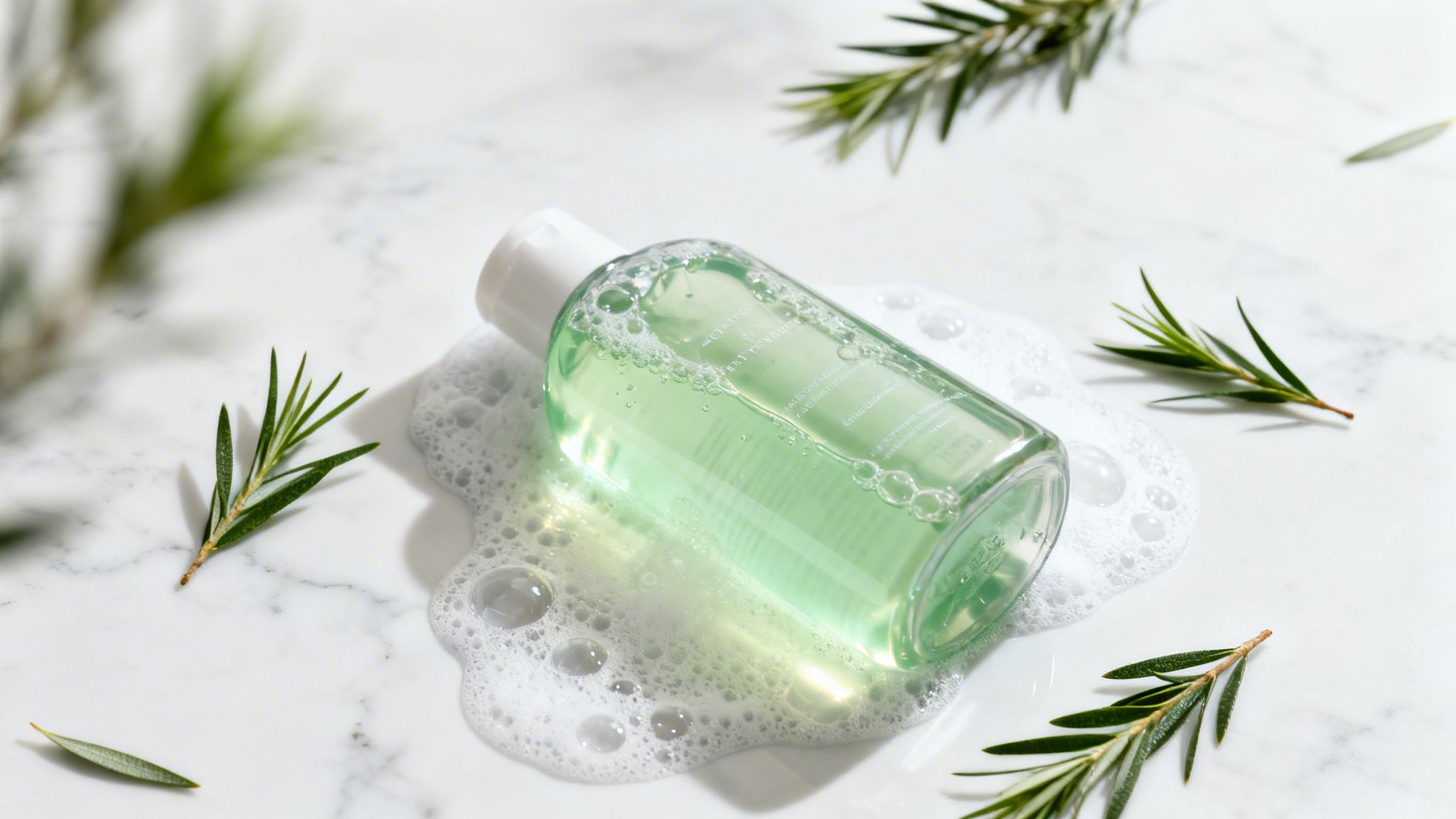
Tea tree shampoo is a medicated cleanser infused with essential oil from the Australian Melaleuca alternifolia plant, which is celebrated for its natural antifungal and antibacterial properties. It’s more than just a shampoo; it’s a targeted treatment that cleans your hair while actively working to rebalance and soothe your scalp. For anyone dealing with stubborn dandruff, a constantly itchy scalp, or excess oil, it's often the first line of defense.
What Is Tea Tree Shampoo and How Does It Work
Think of your scalp like a garden. In a healthy garden, everything is in balance. But if an invasive species—like a fungus or certain bacteria—starts to take over, you get problems like flakes, itchiness, and irritation. A regular shampoo might just mow the surface, but tea tree oil gets to the root of the problem.
This powerful natural ingredient doesn't just clean your hair. It’s a bioactive formula that aims to restore your scalp’s natural harmony. Its real strength comes from a specific compound that acts as a bouncer for your scalp, kicking out the troublemakers.
The Science Behind the Soothing Tingle
So what’s the secret? The primary active component in tea tree oil is a compound called terpinen-4-ol. This is the powerhouse behind the oil’s well-documented antiseptic and anti-inflammatory effects. It works by breaking down the cellular walls of microbes, which stops them from multiplying and causing chaos on your scalp.
Here’s what that looks like in action:
- Antifungal Action: It directly goes after Malassezia, a yeast-like fungus that is a major culprit behind dandruff and seborrheic dermatitis.
- Antibacterial Power: It clears out bacteria that can clog hair follicles, contribute to scalp odor, or cause minor infections and pimples.
- Anti-Inflammatory Relief: It calms the underlying inflammation, reducing the redness and itchiness that make scalp issues so uncomfortable. That’s where the signature cooling sensation comes from.
Instead of just washing away flakes, tea tree shampoo addresses the microscopic source of the irritation, helping to keep it from coming back.
You can think of tea tree oil as a firm but fair mediator for your scalp. It doesn't bring in the heavy artillery like some harsh chemical treatments. Instead, it gently persuades the unwanted microbial guests to leave, which calms the chaos and restores a peaceful, balanced environment.
A Reset Button for Your Scalp
Most standard shampoos are formulated to clean the hair strands, but a great tea tree shampoo puts your scalp first. When your scalp is overloaded with product buildup, excess oil, and dead skin cells, your hair follicles are essentially suffocated. This can easily stunt healthy hair growth and leave your hair looking flat and dull.
A tea tree shampoo cuts through all that gunk like a clarifying treatment, but it's gentle enough not to strip away the healthy, natural oils your scalp needs. By doing this, it creates the perfect foundation for stronger, healthier hair to thrive. It’s not just about symptom relief—it’s about building a genuinely healthy scalp ecosystem from the ground up.
What Tea Tree Shampoo Actually Does for Your Hair and Scalp
So, we've covered the science of how tea tree shampoo works. Now, let’s get to the good part: what can you actually expect to see and feel when you start using it? This isn't just about getting your hair clean; it's about tackling some of the most frustrating scalp issues at their source to build a foundation for healthier hair.
It’s no secret that people want shampoos that solve specific problems. In fact, specialty shampoos designed for issues like dandruff or oiliness now make up over 55% of the entire global market. This huge trend, which you can read more about in this shampoo industry analysis from Mordor Intelligence, shows that we've moved beyond one-size-fits-all products. Tea tree shampoo is a standout natural choice in this category for a few key reasons.
Finally, Relief from Dandruff and Itching
If you're constantly checking your shoulders for those tell-tale white flakes, tea tree shampoo can bring some real, lasting relief. Its main job is to get the scalp's microbial environment back in balance by controlling the overgrowth of Malassezia globosa—the fungus that’s the primary culprit behind dandruff.
Instead of just washing away the flakes you can see, it gets to the root of the problem. Studies have found that a shampoo with just 5% tea tree oil can make a major difference in reducing dandruff and the maddening itch that comes with it, often within a few weeks. The oil's natural anti-inflammatory qualities also help calm the redness and irritation, leaving behind that cool, tingling sensation that feels like it’s working instantly.
A Natural Solution for Oily Hair and Product Buildup
Fighting greasy hair can feel like a losing battle. You use a harsh clarifying shampoo that strips your hair, only for your scalp to panic and produce even more oil to compensate. It's a vicious cycle. Tea tree shampoo provides a much more balanced way to deal with it.
It works like a natural astringent, gently breaking down excess oil and dissolving the stubborn residue left behind by styling products. This gives your hair a deep clean without the harsh stripping effect, so your scalp doesn't go into oil-production overdrive.
A good tea tree shampoo essentially hits the reset button on a greasy, weighed-down scalp. It purifies the follicles and helps regulate oil production, lifting away the gunk and letting your hair’s natural volume and shine come through.
This clarifying power helps your scalp stay cleaner for longer, which can help you finally break free from the daily wash-and-repeat cycle.
Creating a Healthy Foundation for Hair Growth
It’s simple: healthy hair grows from a healthy scalp. When your hair follicles get clogged with oil, dead skin, and product buildup, it creates inflammation and can easily disrupt the hair growth cycle, sometimes even contributing to increased shedding.
This is where all of tea tree oil’s benefits come together. By keeping follicles clear of debris and calming inflammation, it helps create the perfect environment for hair to grow strong. It also helps boost circulation in the scalp, making it easier for essential nutrients to reach the hair roots.
While it's not a cure for genetic hair loss, think of it as providing critical support for your hair’s natural growth process. Using a tea tree shampoo is a proactive step that ensures your scalp is a healthy, fertile ground for the hair you want.
Finding Your Perfect Tea Tree Shampoo Match
Walking down the shampoo aisle can be a bit much, but finding the right tea tree shampoo is simpler than it looks. The secret isn't just grabbing the first bottle you see; it's about becoming a bit of a product detective. Not all formulas are the same, and the goal is to find one that fits your hair and scalp like a glove.
Your investigation starts on the back of the bottle, with the ingredient list. The real power of a tea tree shampoo comes from the combination of its star ingredient—tea tree oil—and the supporting cast it’s paired with. These other ingredients are what make a formula hydrating, clarifying, or extra soothing.
Tailoring to Your Hair Type
Think of it this way: a formulator is like a chef. They carefully select ingredients to create a specific outcome. The right recipe for you depends entirely on your hair type.
If you have dry, coarse, or curly hair, your main mission is moisture. Look for shampoos that team up tea tree oil with hydrating heroes like aloe vera, glycerin, or argan oil. These ingredients help pull moisture into the hair shaft and lock it in, fighting dryness without leaving your hair feeling heavy.
But what if your problem is the complete opposite? For those with an oily scalp, you need ingredients that gently clarify. Witch hazel, peppermint oil, or even a small amount of salicylic acid can work wonders alongside tea tree oil. They cut through the grease and product buildup, leaving your scalp feeling clean and refreshed, not stripped.
This chart breaks down how tea tree works its magic on the two most common scalp troubles, ultimately creating a foundation for healthier hair.
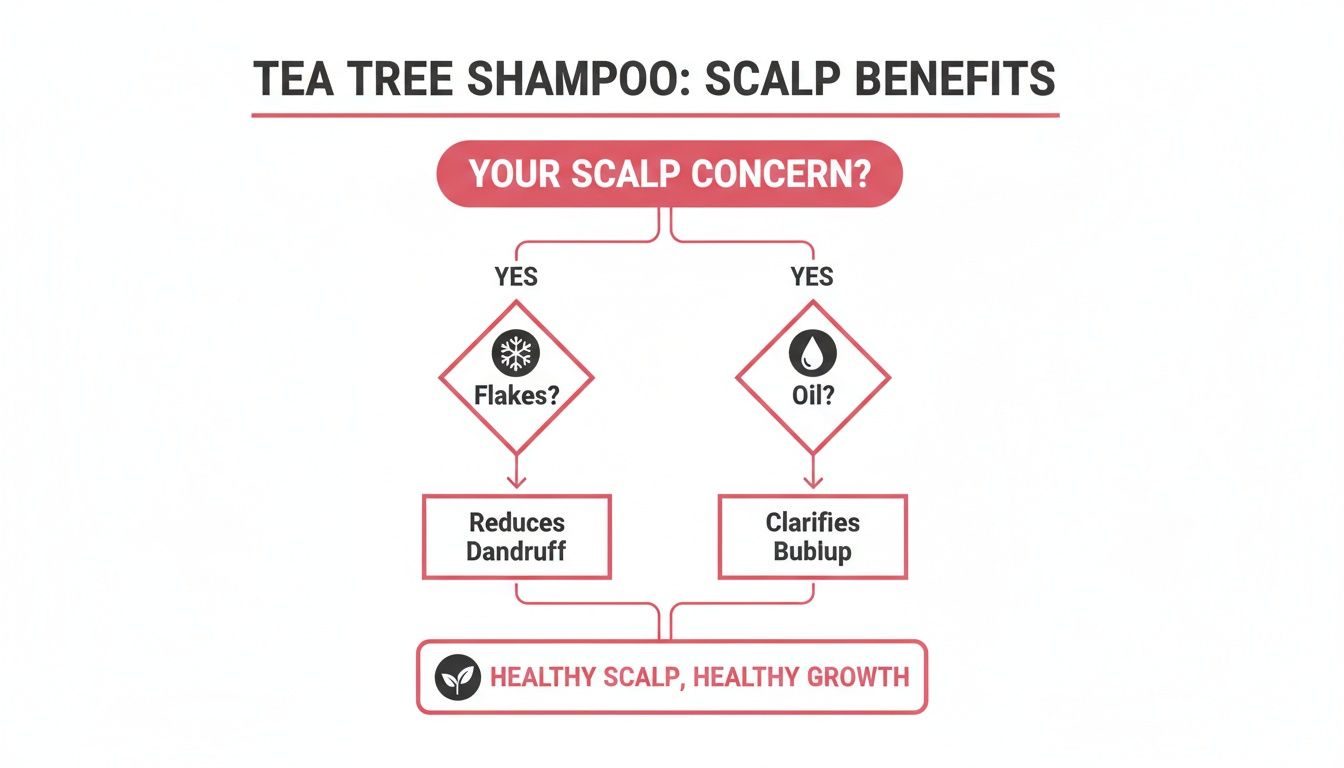
As you can see, whether you're dealing with flakes or excess oil, a well-formulated tea tree shampoo helps bring your scalp back into balance—which is exactly what you need for healthy growth.
Reading Labels Like a Pro
Learning to decipher an ingredient label is your best tool. The first five ingredients listed typically make up most of the formula. You want to see Melaleuca Alternifolia (Tea Tree) Leaf Oil somewhere near the top, not lingering at the very bottom of the list. For real therapeutic benefits, the concentration should ideally be between 2% and 5%.
What’s not in the bottle is just as important. If you have a sensitive scalp or color-treated hair, a sulfate-free formula is a must. Harsh sulfates like Sodium Lauryl Sulfate (SLS) can strip your hair of its natural oils and cause your color to fade prematurely. Instead, look for shampoos that use gentler, plant-derived cleansers.
To make this easier, here’s a quick guide to help you find the right formulation based on your specific hair needs.
Tea Tree Shampoo Formulation Guide by Hair Concern
| Hair Type / Concern | Look For These Ingredients | Consider Avoiding These Ingredients |
|---|---|---|
| Dry or Damaged Hair | Aloe Vera, Glycerin, Argan Oil, Shea Butter, Panthenol (Pro-Vitamin B5) | Harsh Sulfates (SLS/SLES), High concentrations of clarifying agents like witch hazel |
| Oily Scalp or Buildup | Peppermint Oil, Witch Hazel, Salicylic Acid (low concentration), Eucalyptus Oil | Heavy oils like coconut or shea butter (unless formulated to rinse clean), Silicones |
| Sensitive or Irritated Scalp | Chamomile, Oat Kernel Extract, Allantoin, Aloe Vera, Panthenol (Pro-Vitamin B5) | Fragrance (Parfum), Alcohol Denat., High concentrations of essential oils, Sulfates |
| Dandruff or Flaky Scalp | Salicylic Acid, Ketoconazole (in medicated versions), Peppermint Oil, Zinc Pyrithione | Heavy, pore-clogging oils, Silicones that can trap flakes and oil on the scalp |
This table should give you a solid starting point for scanning labels and finding a product that will work with your hair, not against it.
Choosing the right tea tree shampoo is all about synergy. The tea tree oil tackles the main problem, but the other ingredients ensure it does so without causing new issues, creating a blend that works with your unique hair biology.
Here are a few classic pairings to look for:
- For Dryness and Irritation: Tea tree oil + aloe vera or chamomile. These ingredients are fantastic for calming inflammation while delivering a much-needed dose of hydration. It's an ideal approach when trying to repair dry and damaged hair.
- For Oily Scalps: Tea tree oil + peppermint oil or witch hazel. This duo doubles down on the clarifying action, helping to manage oil production without leaving your scalp feeling tight and dry.
- For Sensitive Skin: Tea tree oil + oat extract or panthenol (Vitamin B5). These are incredibly gentle soothers that help calm redness and minimize any chance of irritation.
By matching the formula to your hair's specific profile, you can be confident that your tea tree shampoo will be a valuable player in your hair care routine.
How to Use Tea Tree Shampoo for Best Results
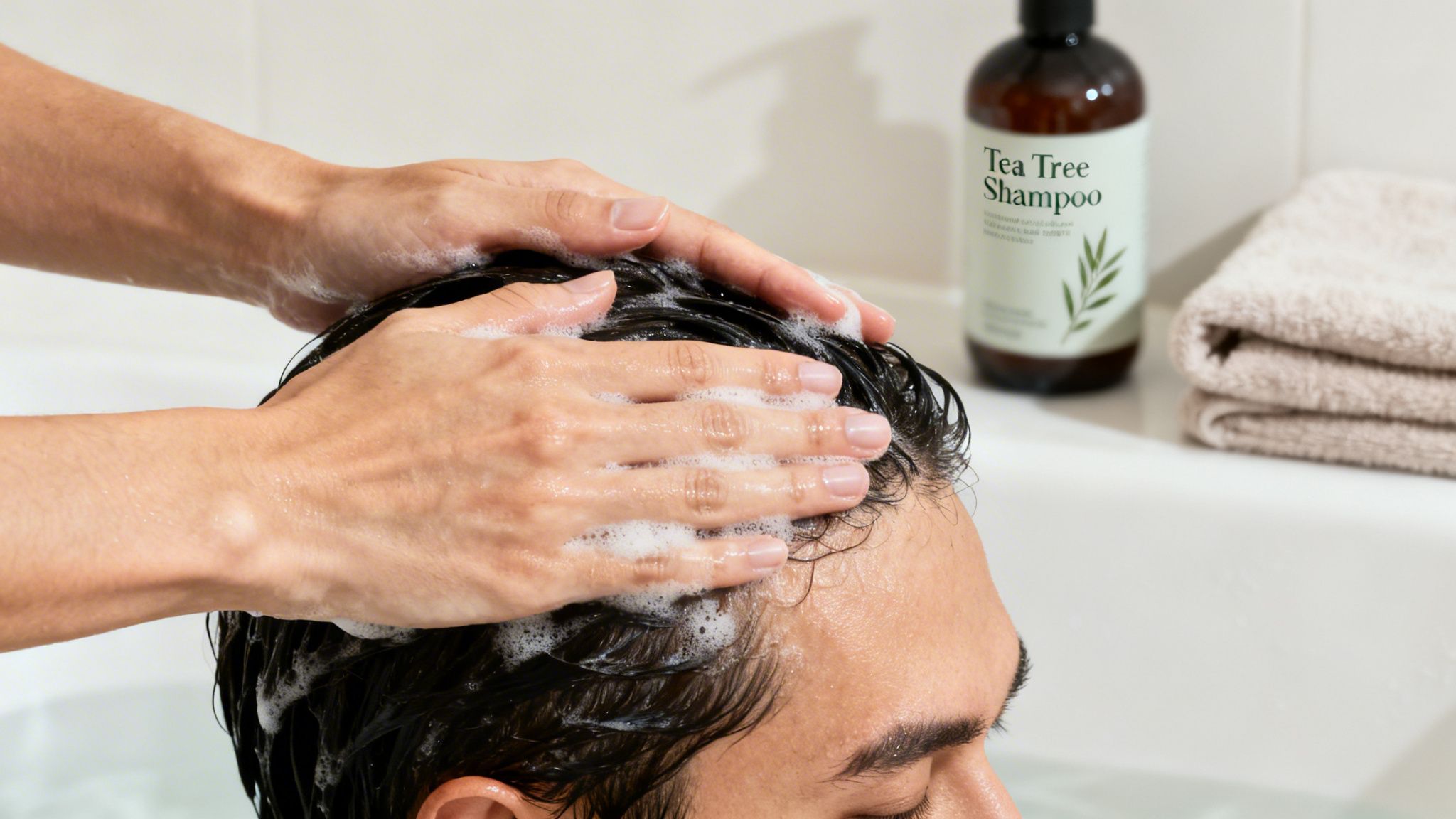
If you're using a tea tree shampoo, a quick lather-and-rinse just won't cut it. To really get those scalp-soothing benefits, you need to adjust your technique. It’s less about washing your hair and more about giving your scalp a dedicated treatment.
Think of it this way: your hair will get clean no matter what, but the goal here is to give the active ingredients enough time and contact to work their magic directly on the skin.
Step 1: Start with a Scalp-First Massage
First, squeeze a quarter-sized amount of shampoo into your palm and work it into a light lather. Instead of plopping it on top of your head, apply it straight to your scalp.
Using the pads of your fingertips (never your nails!), massage the shampoo into your scalp for a full 60 seconds. This isn't just for relaxation; the massage physically lifts away flakes and oil while also boosting blood flow to your hair follicles, which helps create a healthier environment for hair growth. Make sure to work it into those spots where buildup loves to hide, like the nape of your neck and behind your ears.
Step 2: Let It Sit and Activate
This is the step most people skip, but it's where the real power lies. After you’ve finished massaging, just let the shampoo sit there for 3-5 minutes. Don't rinse it out right away! This "contact time" is absolutely essential.
It's like letting a good marinade soak into meat—you have to give the ingredients time to penetrate. This is when compounds like terpinen-4-ol get to work, delivering the antifungal and anti-inflammatory action your scalp needs.
You can go about the rest of your shower routine while you wait. That signature cool, tingling sensation you'll feel is the tea tree oil doing its thing. It's a good sign!
Step 3: Rinse Thoroughly and Condition Your Ends
Once your time is up, rinse everything out with lukewarm water. You want to be thorough here to make sure no residue is left behind, which could weigh your hair down or dull its shine.
Now, don't skip the conditioner! While tea tree oil is a hero for your scalp, it can be a little drying on your actual hair strands. Apply a hydrating conditioner only from the mid-lengths to the ends. This puts moisture back where you need it without making your freshly cleaned scalp greasy.
Potential Side Effects and How to Use It Safely
Tea tree oil is powerful stuff, and that's precisely why it works so well. But that potency also means we need to use shampoos containing it smartly. While it's safe for most people, some can experience side effects, especially if their skin is on the sensitive side or they don't use the product correctly.
The most common complaints are irritation and dryness. Think about it: the very properties that make tea tree oil a powerhouse against flakes and oil buildup can sometimes be a bit too much for a delicate scalp. This can lead to some redness, itching, or a tight feeling. It’s also exactly why you should never apply undiluted tea tree oil straight to your skin or scalp—it’s just too concentrated.
Always Do a Patch Test First
Before you go all-in with a full hair wash, please don't skip this step. A quick patch test is the single most important thing you can do to avoid a potential headful of irritation. It's a simple safety check that takes almost no effort.
Here’s the right way to do it:
- Apply a Small Amount: Squeeze a dime-sized dab of the tea tree shampoo onto a hidden patch of skin. Behind your ear or on your inner arm works perfectly.
- Wait and Watch: Let it sit for a full 24 hours without washing it off. A little tingling can be normal with tea tree products, but if you feel any burning, serious itching, or see a rash developing, that’s your sign to stop.
- Check the Results: If your skin looks clear and feels fine after a day, you’re good to go. You can now use the shampoo on your scalp with confidence.
This little test gives you a sneak peek into how your skin will handle the new formula.
A patch test is like a dress rehearsal for your skin. It lets you see how it’ll react on a small, hidden stage before you put it under the spotlight on your entire scalp.
A Heads-Up for Sensitive Skin
Some of us just need to be a bit more careful. If you already deal with eczema, psoriasis, or generally sensitive skin, your skin's natural barrier might be more easily disturbed. This doesn’t mean you have to avoid tea tree shampoo altogether, but you should be strategic.
Look for formulas with a lower concentration of tea tree oil and check the label for calming ingredients like aloe vera, chamomile, or oat extract. These can help buffer the oil's intensity. You might even find good options by looking into gentle formulas, similar to the approach used for hair care for kids.
If you try a tea tree shampoo and the irritation just won't quit, or if your scalp issues actually get worse, it's time to stop using it. Your best bet is to chat with a dermatologist who can help you pinpoint what's going on and recommend a better path forward.
Why Natural Ingredients Are Taking Over Hair Care
If you're curious about tea tree shampoo, you’re already part of a major change happening in the hair care aisle. We've all been there—flipping over a bottle, squinting at the ingredients list, and wondering what we’re really putting on our bodies. More and more, people are deciding they want ingredients they can actually pronounce.
This isn't just a passing fad. It's a real shift away from harsh sulfates, parabens, and synthetic fragrances. People are looking for products that solve their problems without creating new ones, and they’re turning to transparent, plant-based ingredients to do it.
The Rise of Botanical Solutions
The numbers back this up in a big way. The global market for natural hair care is on track to hit a staggering $14.5 billion by 2026. If you want to dive deeper into the data, KBV Research's market analysis offers a great look at how consumer preferences are evolving.
This explosive growth is sending a clear message to the industry: people are demanding better. They're moving away from formulas that might offer a quick fix but have questionable long-term effects, and they're voting with their wallets for ingredients they can trust.
Choosing a natural product like tea tree shampoo is more than just avoiding a few chemicals. It’s a conscious decision to nourish your body with ingredients sourced from nature, bringing your self-care routine more in line with a healthy, holistic lifestyle.
Why This Shift Matters for Your Hair
Ultimately, this move towards natural ingredients is about empowerment. Instead of just temporarily masking a problem, botanical formulas—like the ones in a well-made tea tree shampoo—are designed to work with your body’s own systems to restore balance.
When you choose products with purposeful, natural ingredients, you’re doing more than just washing your hair. You’re making an investment in the long-term health of your scalp and embracing a smarter, more mindful approach to beauty.
Common Questions About Tea Tree Shampoo
Alright, we've covered a lot of ground, but I know there are probably still a few questions bouncing around in your head. Let's tackle some of the most common ones so you can feel completely confident about giving it a try.
Can I Use Tea Tree Shampoo Every Day?
That's a great question, and the answer is usually no. For most people, daily use can be a bit too much, potentially drying out your hair and scalp.
When you're actively trying to get a scalp issue like dandruff under control, aiming for 2-3 times per week is the sweet spot. Once things have calmed down, you can dial it back to once a week just to keep your scalp happy and balanced. The only exception might be for those with very oily scalps, who can sometimes handle more frequent washing. The golden rule? Always pay attention to how your hair and scalp feel.
Will Tea Tree Shampoo Make My Hair Fall Out?
This is a big one I hear all the time, and it’s completely understandable to worry about. But in reality, it’s quite the opposite.
Tea tree shampoo works to create a healthier scalp by clearing out clogged follicles and calming irritation—two major culprits that can interfere with hair growth. By getting your scalp in better shape, you're actually creating the ideal foundation for stronger, healthier hair. The only time hair loss would be a concern is in the case of a rare allergic reaction or extreme dryness from using it way too often, which is exactly why a patch test is a smart first step.
How Long Until I See Results for Dandruff?
You'll likely feel a difference pretty quickly. That frustrating itch can start to subside after just one or two washes, which is a huge relief.
As for the visible flakes, you’ll need to be a little more patient. It typically takes consistent use over 2 to 4 weeks to see a significant reduction.
The secret to success is consistency. Regular application and allowing the shampoo to sit on your scalp for a few minutes each wash are crucial for letting the active ingredients work effectively against the fungus causing the flakes.
Is the Tingling Sensation Normal?
Yes, absolutely! That mild, cooling tingle is the classic signature of tea tree oil getting to work. It should feel clean and refreshing.
What isn't normal is a burning or stinging sensation. If you ever feel that, it's a definite red flag. Rinse the shampoo out immediately, as that kind of reaction could mean your skin is too sensitive for the product.
At Hair and Body review, we believe in the power of informed choices for your beauty routine. We provide honest, in-depth guides to help you find solutions that truly work for your hair and skin. Discover more expert advice and product reviews at https://hairandbodyreview.com.