

Kenz shampoo is a medicated formula specifically designed to tackle scalp problems like dandruff, relentless itching, and seborrheic dermatitis. Its secret weapon is an ingredient called ketoconazole. Instead of just washing away flakes, it goes straight to the source of the problem: a fungal overgrowth on your scalp. It’s less of a shampoo and more of a targeted treatment to restore your scalp's natural balance.
What Is Kenz Shampoo and How Does It Actually Work?
Think of your scalp's surface as a tiny, complex ecosystem. Most of the time, everything lives in harmony. But sometimes, a naturally occurring yeast called Malassezia starts to multiply out of control, like weeds completely taking over a garden patch. This fungal overgrowth throws the whole system off-kilter, triggering an inflammatory reaction from your scalp. The result? That frustrating trio of itching, redness, and tell-tale white flakes.
Now, your everyday shampoo is great for cleaning away dirt and oil. It might offer a fleeting sense of relief by washing away the loose flakes, but it does absolutely nothing about the underlying fungal issue. This is exactly where Kenz shampoo and its targeted approach come into play.
The Antifungal Powerhouse: Ketoconazole
The star ingredient here is ketoconazole. It’s not just a cleanser; it’s a powerful antifungal agent. When you lather up with Kenz, the ketoconazole gets to work directly on the Malassezia fungus.
Its job is to disrupt the fungus's cell walls, which basically stops it from growing and spreading. By attacking the "weed" at its root, Kenz shampoo effectively breaks the frustrating cycle of irritation and flaking.
Key Insight: Unlike cosmetic shampoos that just rinse away flakes for a day, Kenz is a therapeutic treatment. It actively stops the fungus that causes dandruff from growing, giving you a much more lasting solution.
This focused action is precisely why shampoos with ketoconazole are a go-to recommendation for serious scalp care. With dandruff affecting about 50% of adults globally, there's a huge need for something that truly works. The effectiveness of ketoconazole is well-documented, making it a trusted choice for those who've tried everything else. In fact, the global market for these medicated shampoos hit USD 15.24 billion in 2023—proof of just how many people rely on them. To see the numbers behind this trend, you can explore the full data about the Ketoconazole Shampoo Market.
To make this crystal clear, let's break down how Kenz directly addresses common scalp woes.
Kenz Shampoo at a Glance: Common Problems and Solutions
| Scalp Problem | The Underlying Cause | How Kenz Shampoo Solves It |
|---|---|---|
| Dandruff Flakes | An overgrowth of Malassezia fungus causes the scalp to shed skin cells too quickly. | Ketoconazole halts fungal growth, allowing the scalp's skin cell turnover to return to a normal, healthy rate. |
| Itching & Redness | Inflammation triggered by the scalp's immune response to the fungal overgrowth. | By reducing the amount of fungus, Kenz calms the inflammatory response, providing direct relief from itching and irritation. |
| Seborrheic Dermatitis | A more severe inflammatory reaction to the Malassezia fungus, often in oily areas of the scalp. | The antifungal action of ketoconazole directly targets the primary trigger, reducing the severe scaling, inflammation, and oiliness associated with this condition. |
This table shows how Kenz doesn't just mask symptoms—it tackles the root cause for genuine, long-term relief.
Restoring Scalp Harmony
By getting the fungal population back under control, Kenz shampoo achieves a few crucial things all at once:
- Reduces Flaking: Once the fungal trigger is managed, your scalp stops shedding skin so rapidly, and those noticeable flakes dramatically decrease.
- Soothes Itching and Irritation: As the inflammation dies down, you’ll feel significant relief from the constant urge to scratch.
- Creates a Healthier Scalp Environment: A balanced scalp is a healthy one. By restoring its natural equilibrium, you’re creating the ideal foundation for strong, healthy hair to grow.
Think of it as weeding and rebalancing the soil in that garden. Once the invasive weeds are gone, your flowers—in this case, your hair follicles—can finally thrive without being stressed or choked out. For many, making this simple switch in the shower is the single most effective step toward getting their scalp health back on track for good.
The Science Behind Kenz Shampoo and Hair Loss
Most people grab a bottle of Kenz shampoo to get rid of dandruff, and it works wonders for that. But what often surprises users is its impressive ability to help with hair loss. This isn't just a happy accident—it's based on how its key ingredient tackles a powerful hormone called dihydrotestosterone, or DHT.
Think of DHT as a bully that picks on your hair follicles. For people with a genetic tendency for hair loss, this hormone latches onto receptors in the scalp and tells the follicles to shrink. Over time, this process—known as follicular miniaturization—makes your hair grow back thinner and weaker, until eventually, the follicle just gives up.
Ketoconazole’s DHT-Blocking Power
That's where the active ingredient in Kenz shampoo, ketoconazole, steps in. While its main job is to fight fungus, it has a fantastic side effect: it's mildly anti-androgenic. In simple terms, it gets in the way of DHT right on your scalp.
Imagine DHT trying to plug into a receptor on your hair follicle. Ketoconazole acts like a shield, making it harder for DHT to connect and deliver that "shrink" signal. It doesn't get rid of DHT in your body, but it does a great job of reducing its damaging effects where it counts the most—your scalp.
The diagram below shows the primary actions of a medicated shampoo like Kenz, highlighting how it gets to the root of scalp issues.
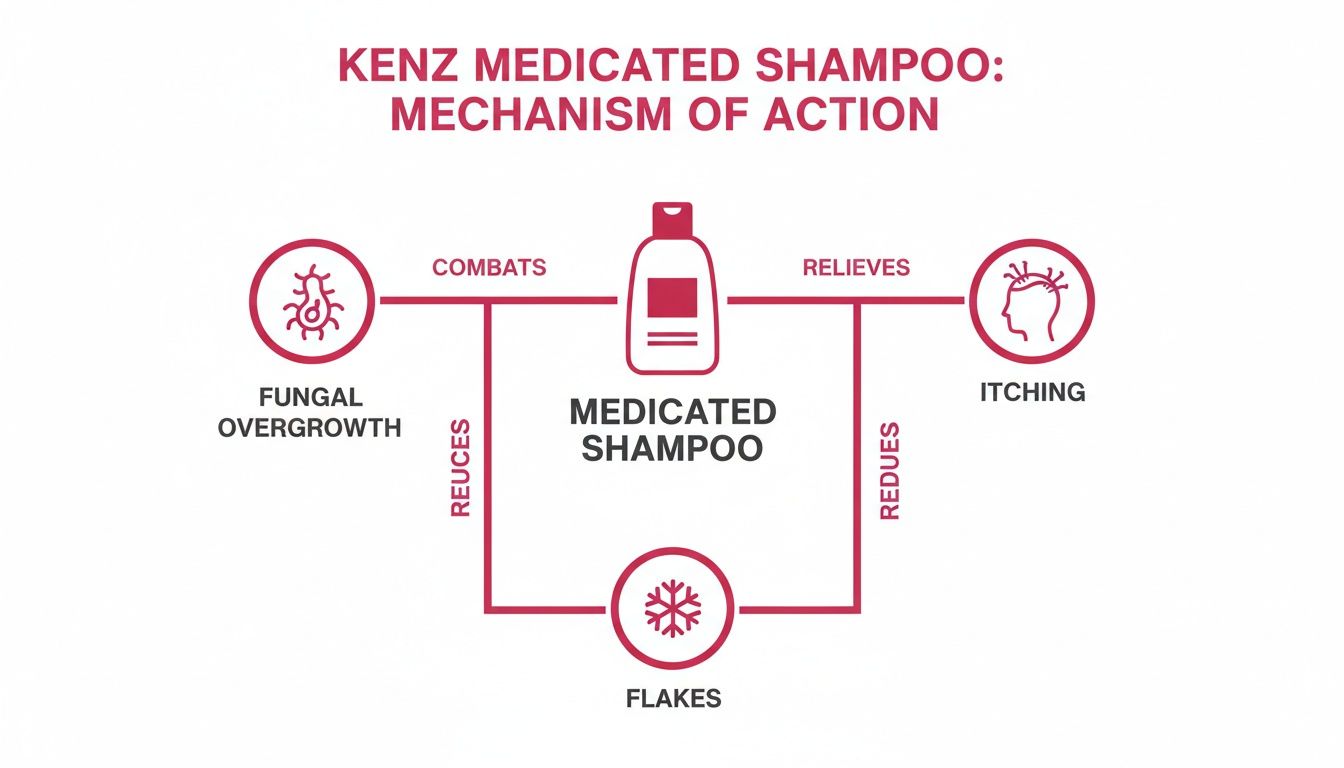
As you can see, the shampoo zeroes in on fungal overgrowth, which is the direct cause of the itching and flaking so many people struggle with.
Calming Scalp Inflammation for Better Growth
But that’s only half the story. The other key factor is inflammation. A scalp overrun with fungus is an irritated, inflamed scalp. This constant state of stress is a terrible environment for hair growth and can actually speed up thinning.
Kenz shampoo fights this on two fronts:
- It Kills the Fungus: By wiping out the Malassezia fungus, it eliminates the very thing causing the irritation in the first place.
- It Soothes the Skin: Ketoconazole itself has natural anti-inflammatory properties, which helps calm the scalp down even further.
A calm, healthy scalp is the foundation for strong hair. By creating this ideal environment, Kenz shampoo helps your follicles thrive, protecting them from both DHT and inflammation. This makes it a smart addition to any routine focused on keeping your hair.
This isn’t just theory; the data is compelling, especially for women dealing with hair thinning. The overall market for ketoconazole hit US$109.5 million in 2024, driven by its proven results. Studies have found its anti-androgenic effects can increase hair density by a remarkable 18% in just six months. This demand reflects a real need, with cases of female pattern hair loss up 15% in North America—a condition that already affects 40% of women over 50. You can explore more on these ketoconazole market trends if you’re curious.
A Proactive Ally: By reducing DHT's local impact and calming inflammation, Kenz shampoo can help slow down thinning, thicken the hair shaft, and improve overall density. It’s an excellent supporting player to use alongside other hair loss treatments.
So, while you might buy Kenz shampoo for the flakes, you'll keep using it for how it strengthens your hair from below the surface. It’s a strategic choice for anyone who wants to fight dandruff while proactively supporting a fuller, healthier head of hair.
A Practical Breakdown of Kenz Shampoo Ingredients
To get a real handle on how Kenz shampoo actually works, you have to look past the marketing and get right into the ingredient list. The best way to think about the formula is like a well-oiled team, where every single ingredient has a specific job to do. Once you know who’s on the roster, you’ll understand not just what the shampoo does, but why it’s so effective.
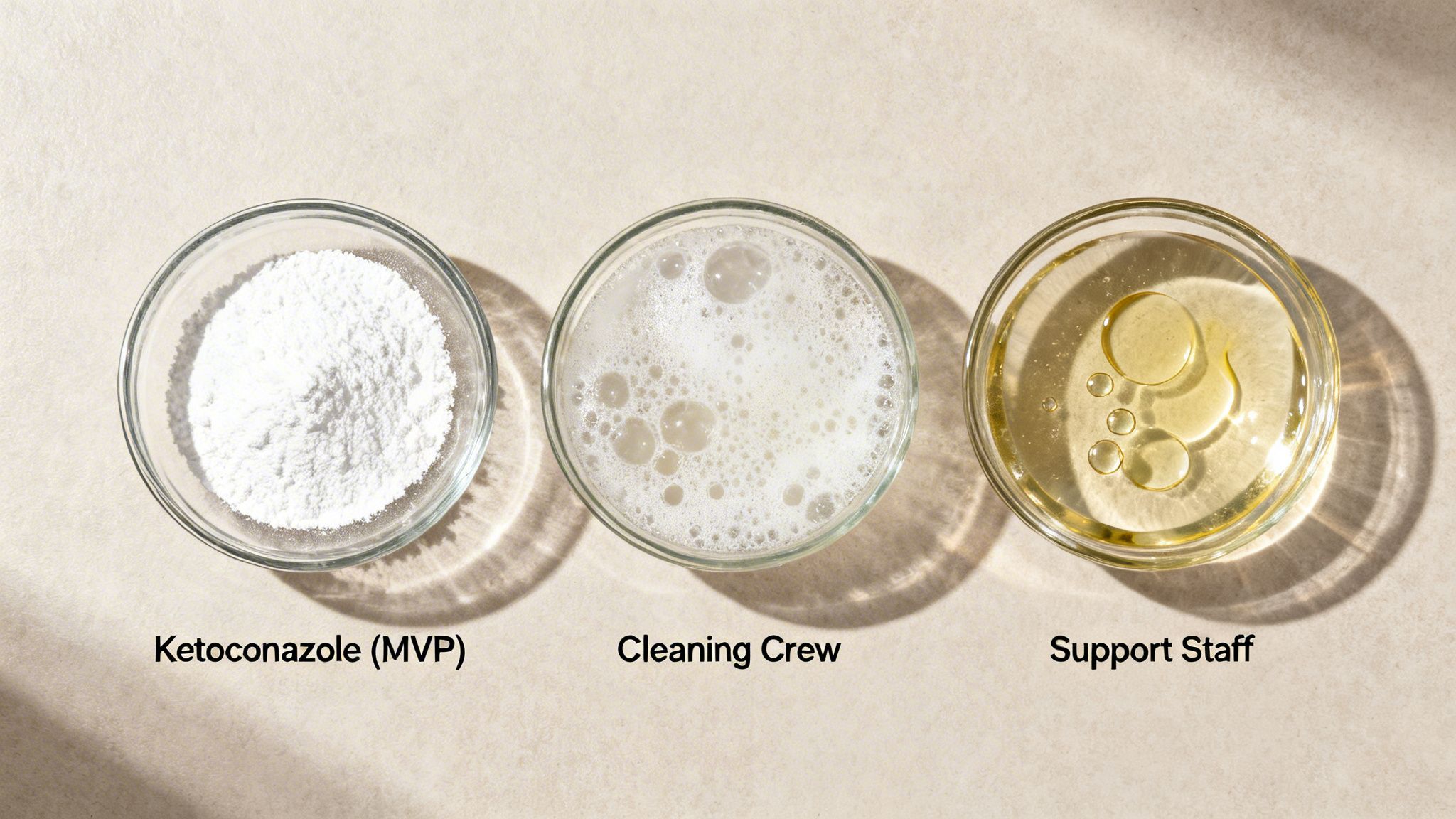
We can essentially break down the formula into three key groups: the powerhouse active, the cleansing agents, and the supporting ingredients.
The Powerhouse Active: Ketoconazole
Let’s be clear: Ketoconazole is the star of the show. This is the active antifungal ingredient that does all the heavy lifting. It isn’t in there to make your hair smell great or feel silky; its sole purpose is to hunt down and stop the growth of the Malassezia fungus, which is the primary culprit behind dandruff and scalp inflammation.
When the instructions say to let Kenz sit on your scalp for 3-5 minutes, that’s crucial. You’re giving ketoconazole the time it needs to work its way into the skin and shut down the fungus's life cycle. This is what makes a medicated shampoo fundamentally different from a regular cosmetic one. In fact, clinical studies have found that a 1% concentration of ketoconazole can slash dandruff severity by 73% in as little as four weeks.
Key Takeaway: The entire effectiveness of Kenz shampoo for fighting dandruff and restoring scalp balance comes down to this single, powerful ingredient. It's the "medicine" in this medicated shampoo.
The Cleansing Agents: Surfactants and Lather
While ketoconazole is busy fighting fungus, other ingredients have to take care of the basic job of cleaning your hair and scalp. This is where the surfactants, or the "cleansing crew," step in. They’re the ones that create that rich, satisfying lather.
- Sodium Lauryl Ether Sulfate (SLES): This is a workhorse surfactant that’s brilliant at grabbing onto oil, dirt, and product buildup so they can be washed away. It’s also what helps create a thick foam, which makes it easier to spread the ketoconazole evenly all over your scalp.
- Cocamidopropyl Betaine: You'll almost always see this paired with SLES. It’s a milder cleanser that comes from coconut oil and helps to make the formula gentler and less likely to cause irritation, creating a more balanced wash.
Together, these agents make sure your scalp is left squeaky clean, clearing the slate so the ketoconazole can do its job without having to fight through a layer of sebum or dead skin.
The Supporting Ingredients: Conditioners and Stabilizers
Last but not least, you have the supporting cast. These ingredients aren't there to fight fungus or strip away oil, but they play a critical role in making the shampoo pleasant to use and ensuring your hair doesn’t feel like straw afterward.
This group includes:
- Conditioning Agents: Things like polyquaternium or certain glycols are added to soften the hair, reduce tangles, and counteract any potential dryness from the medicated formula.
- Preservatives: These are absolutely essential for stopping bacteria and mold from setting up shop in the bottle, keeping your shampoo safe and effective from the first pump to the last.
- Fragrance: While it adds a nice scent, this is one to watch out for. If you have very sensitive skin or a known fragrance allergy, this is the ingredient most likely to trigger a reaction.
- pH Adjusters: An ingredient like citric acid is often used to get the shampoo’s pH just right for your scalp, which helps prevent irritation and keeps your skin barrier happy.
By understanding the whole team—from the star player to the supporting cast—you get the full picture of what Kenz shampoo is designed to accomplish. While ketoconazole is the hero, the other ingredients are essential for delivering it in a stable, clean, and user-friendly way. If you're interested in other ingredients that can help your scalp, you can learn more about the benefits of a tea tree oil shampoo in our other guide.
Is Kenz Shampoo the Right Choice for Your Hair?
Figuring out if Kenz shampoo belongs in your shower isn't a simple yes-or-no question. Since it's a targeted medicated treatment, its real value depends entirely on your hair type and what’s actually happening on your scalp. This is definitely not a one-size-fits-all product.
So, let's break down a few common scenarios. For some people, Kenz is a game-changer. For others, it might be an occasional fix or just not the right tool for the job. By pinpointing your main issue, you can decide if it's time to make room for Kenz on your shelf.
For Severe Dandruff or Seborrheic Dermatitis
If you're stuck in a cycle of heavy, stubborn flakes, relentless itching, and those frustrating greasy patches, Kenz shampoo was made for you. These are the textbook symptoms of seborrheic dermatitis, a condition that’s kicked into overdrive by an overgrowth of the Malassezia fungus. A regular cosmetic shampoo just isn't going to win this fight.
You need the antifungal muscle of ketoconazole to get to the root of the problem, not just rinse away the evidence. For anyone in this boat, Kenz often becomes a non-negotiable part of their routine—it’s how you take back control and get lasting relief.
For a Dry and Itchy Scalp
Here’s where things get a little tricky. A lot of the time, what feels like a "dry scalp" is actually low-grade inflammation from the very same fungus that causes dandruff. If you've already tried every moisturizing shampoo out there and the itch just won't quit, Kenz shampoo could be the unexpected hero.
By calming that underlying inflammation, it can break the maddening itch-scratch cycle and give your scalp a chance to rebalance itself. It’s the difference between putting out the fire versus just fanning away the smoke.
Key Insight: It's incredibly common to misdiagnose an inflammatory scalp issue as simple dryness. If hydrating products aren't helping, an antifungal like Kenz might be what your scalp has been crying out for.
For Those with Sensitive Skin
If your skin tends to react to, well, almost everything, you'll want to approach Kenz with a bit of strategy. It’s an effective treatment, but it's still a medicated product. The smartest way to start is with a lower concentration, like a 1% formula, which is typically much gentler than the 2% prescription-strength versions.
And before you even think about a full wash, always do a patch test. Dab a small amount behind your ear or on your inner arm and wait a full 24 hours. Look for any signs of redness or irritation. It’s a simple step that can save you from a major scalp meltdown.
For Curly and Coily Hair
Anyone with curls knows the golden rule: protect your moisture. Because medicated shampoos have a reputation for being drying, the trick is to use Kenz shampoo like a targeted scalp treatment, not an all-over hair wash.
- Focus the Lather: Use your fingertips to apply the shampoo directly onto your scalp and massage it in well.
- Protect Your Ends: Let the shampoo sit on your scalp for the required 3-5 minutes, but try to keep the suds from running down the length of your hair.
- Follow with Deep Conditioner: Once you rinse, immediately follow up with a deeply hydrating conditioner or mask. Concentrate it on your mid-lengths and ends to put that moisture right back where you need it.
The demand for ketoconazole products is booming worldwide, thanks to their proven effectiveness. Market forecasts show significant growth, especially as 2% ketoconazole formulas have demonstrated 90% effectiveness against severe seborrheic dermatitis. It also improves overall scalp health by reducing inflammation by up to 60%—a benefit that helps everyone, curls included. You can discover more insights about the ketoconazole market and its growing applications.
For the Natural Product Enthusiast

If your shower is stocked with "all-natural" and "organic" labels, adding a medicated product can feel like a step in the wrong direction. But it’s about perspective. The truth is, sometimes natural remedies just aren't potent enough to knock out a stubborn fungal problem. If you’re exploring other options for oiliness, you might want to check out our guide on shampoos for oily hair.
Think of Kenz shampoo as a short-term intervention—a tool you bring in to hit the reset button when your scalp's ecosystem is completely out of whack. It’s a targeted, science-backed solution to get things healthy again. Once your scalp is calm and balanced, you can go right back to maintaining it with your favorite products.
How to Use Kenz Shampoo for Maximum Effectiveness
When you're dealing with a medicated shampoo like Kenz, the old "lather, rinse, repeat" routine just won't cut it. To really get a handle on scalp issues, your technique and timing matter just as much as the product itself. The goal is to make sure the active ingredient, ketoconazole, gets enough contact time to do its job.
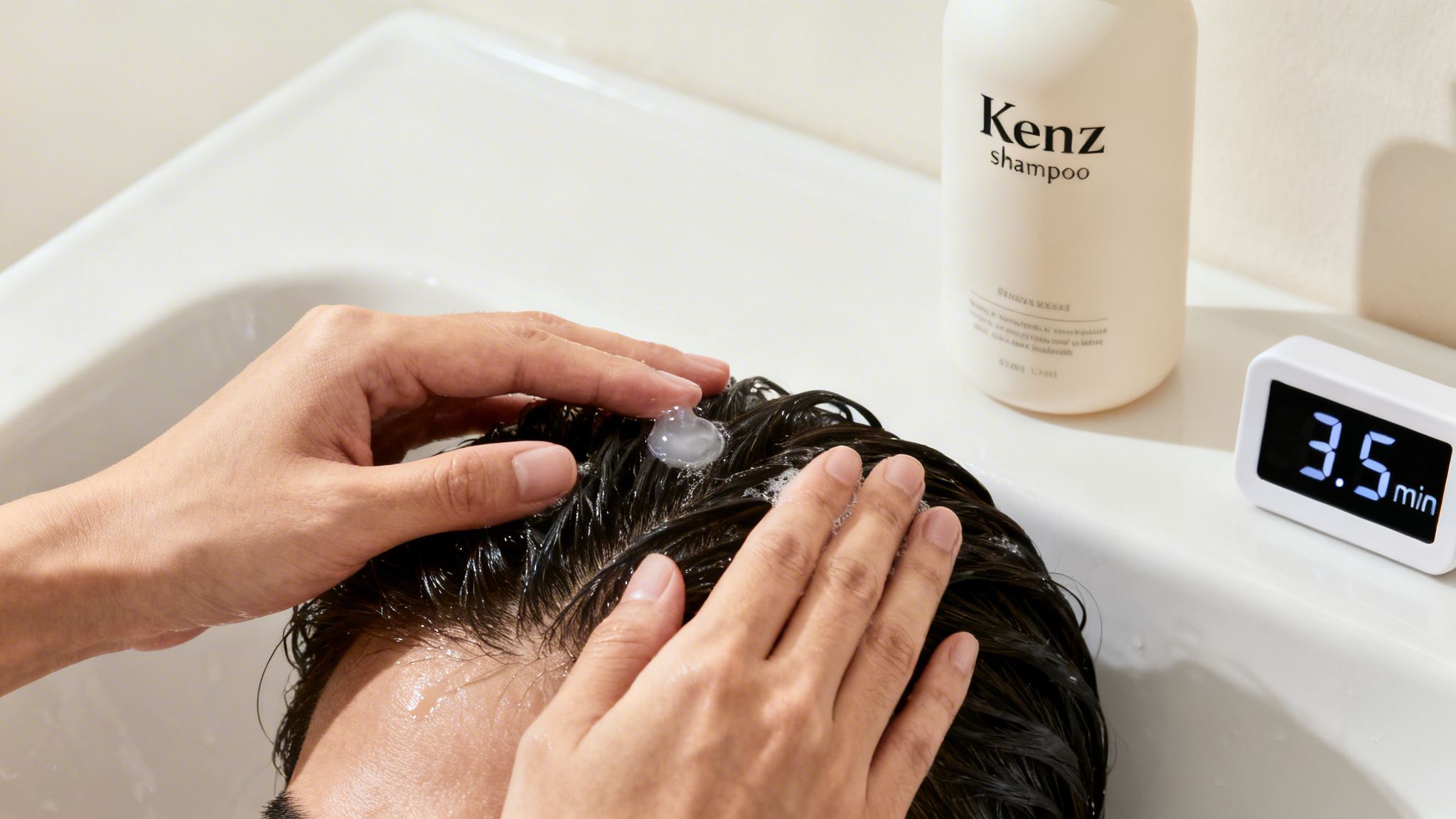
It helps to shift your mindset: you’re not just washing your hair, you're delivering a targeted treatment directly to your scalp where the problem starts.
The Correct Application Method
To get the most out of every wash, follow this straightforward process. It’s designed to maximize how much of the good stuff gets absorbed right where you need it.
Saturate Your Hair: Start by getting your hair and scalp completely wet with lukewarm water. This isn’t just about getting it wet; it helps to gently open up the hair cuticles and loosen any initial flakes or oil sitting on the surface.
Apply Directly to the Scalp: Squeeze about a quarter-sized amount of Kenz shampoo into your hands. Instead of working it through your hair, focus on massaging it directly onto your scalp with your fingertips. Pay special attention to the areas that are the most itchy, flaky, or oily.
Let It Sit: Now for the most important part—and the one most people skip. Once you’ve built a decent lather on your scalp, let it sit for 3-5 minutes. This waiting period is non-negotiable. It’s the time the ketoconazole needs to penetrate the skin and really start fighting the fungus.
Rinse and Condition Ends: Once your time is up, rinse everything out thoroughly. If you use a conditioner, only apply it from the mid-lengths of your hair down to the ends. Putting conditioner on your scalp can create buildup and work against what the shampoo is trying to do.
Pro Tip: I always tell people to set a timer on their phone for five minutes. It’s a simple trick that removes the guesswork and ensures the shampoo has enough time to be truly effective.
Finding Your Ideal Frequency
How often you should use Kenz really depends on whether you're actively fighting a flare-up or just trying to keep things calm. Using it too much can cause dryness, but using it too little won't solve the problem.
- Treatment Phase: When you're first tackling stubborn dandruff or seborrheic dermatitis, plan on using Kenz shampoo 2 to 3 times per week. Stick with this for the first two to four weeks, or until you see significant improvement.
- Maintenance Phase: After your symptoms have cleared, you can pull back. Using it just once a week or even once every two weeks is usually enough to maintain a healthy scalp and prevent a flare-up from returning.
By zeroing in on a scalp-only application and sticking to that 3-5 minute rule, you'll get the full therapeutic benefit. This targeted method also helps you avoid drying out the rest of your hair, which is a common complaint with many medicated shampoos. If you still find your ends are feeling a bit parched, you might want to learn more about how to repair damaged hair with other hydrating treatments.
Understanding Potential Side Effects and Safety
Even though Kenz shampoo is a go-to for many, it's important to remember it’s still a medicated treatment. So, let’s talk honestly about what you can expect. For most people, it's incredibly well-tolerated, but knowing what to look out for will help you use it with confidence.
Any issues that do pop up are usually minor and temporary. Think of it as your scalp adjusting to a new, powerful active ingredient. These initial reactions aren't typically a cause for concern and often resolve on their own or with a small change in your routine.
Common and Manageable Reactions
When you first start using Kenz, you might notice a few things as your scalp gets used to the ketoconazole. It’s often a sign the active ingredient is getting to work, but your skin needs a little time to adapt. This can look like:
- Temporary Dryness or Brittleness: Ketoconazole is a scalp-first ingredient, which means it can sometimes leave your hair strands feeling a bit parched.
- Mild Scalp Irritation or Itching: A small number of users report a bit of redness or feel a slight itch when they first begin the treatment.
- Changes in Hair Texture: Some people notice their hair feels a little different—maybe oilier or drier than normal. This usually happens as your scalp's oil production finds its new balance.
If you run into any of these, try this simple fix first: make sure you’re only applying conditioner from the mid-lengths to the ends of your hair, keeping it completely off your scalp. You could also try cutting back your use to just once a week to give your scalp more time to adjust.
Important Reminder: Most side effects are minor and temporary. A true allergic reaction, however, is a different story and needs immediate attention.
When to Stop and Consult a Doctor
Allergic reactions are rare, but you absolutely need to know the signs. Stop using Kenz shampoo immediately and get in touch with your doctor if you experience anything like this:
- A severe rash or hives breaking out
- Swelling of your face, lips, or tongue
- Any difficulty breathing
It's also crucial for certain people to be extra cautious. If you are pregnant, planning to become pregnant, or breastfeeding, you must talk to your doctor before starting any ketoconazole product. Even though very little is absorbed through the skin, getting a professional medical opinion is non-negotiable to ensure everyone's safety.
Frequently Asked Questions About Kenz Shampoo
Alright, even after breaking down all the science, you probably have a few practical questions. It’s only natural. Let’s get right to them—here are the answers to what people ask us most about using Kenz shampoo.
We'll clear up any lingering questions so you can feel completely confident about adding it to your routine.
How Quickly Can I Expect to See Results?
This is the number one question we get, and the honest answer is: it depends on your goal. If you're fighting dandruff and an itchy scalp, you should start feeling relief pretty fast. Most people see a real difference in flakes and irritation within the first 2 weeks of using it consistently.
For the full, lasting effect, though, you’ll need to stick with it a bit longer. Clinical studies have shown that using it twice a week for 4 weeks can slash dandruff severity by up to 73%. So, while the initial relief comes quickly, giving your scalp a full month is key to hitting the reset button.
Is Kenz Shampoo Safe for Color-Treated Hair?
If you’ve invested in your hair color, the last thing you want is for a medicated shampoo to strip it away. The good news is, yes, you can use Kenz on colored hair, but you need to be smart about it. The issue isn't the ketoconazole itself; it's usually the sulfates in the formula that can be harsh on dye.
Here’s how to get the scalp benefits without sacrificing your color:
- Use It Less Often: During the initial treatment phase, stick to the recommended 2-3 times per week. For maintenance, once a week is perfect.
- Focus on the Scalp: This is the most important tip. Lather the shampoo right at your roots and scalp where the problem is. Don't work it all the way through the lengths of your hair.
- Always Use a Color-Safe Conditioner: After rinsing, apply a quality, color-protecting conditioner from your mid-lengths to your ends. This seals the hair cuticle and helps lock in your color.
Think of it as a targeted scalp treatment, not an everyday hair wash. That's the secret to keeping your color vibrant.
What Happens If I Stop Using It? Will My Dandruff Return?
Yes, it almost certainly will. It’s crucial to understand that Kenz manages dandruff; it doesn't cure it forever. The fungus that causes dandruff, Malassezia, is a normal resident on everyone's scalp. For some of us, it just has a tendency to overgrow.
Key Concept: Think of using Kenz shampoo like weeding a garden. If you stop pulling the weeds, they'll eventually come back. The "maintenance phase"—using the shampoo once a week or so—is how you keep the fungal overgrowth from taking over again.
If you stop using it completely, the fungus will likely start to multiply again, and you can expect symptoms to reappear within 2-4 weeks. This is why that simple, once-a-week maintenance wash is so important for keeping your scalp clear for good.
Can I Use Kenz Shampoo Every Day?
You shouldn't, and you don't need to. The active ingredient, ketoconazole, is powerful and keeps working on your scalp for up to 72 hours after you use it. That's why washing just 2-3 times a week is so effective.
Using it daily is overkill and can backfire. It might disrupt your scalp's natural moisture barrier, leading to dryness, or even trigger your scalp to produce more oil to compensate. Stick to the directions—they're designed for the best results without causing new problems.
Does Kenz Shampoo Cause Hair Loss?
This is a common worry, but it stems from a misunderstanding. Kenz shampoo does not cause hair loss. In fact, it’s quite the opposite. Its anti-inflammatory action and ability to mildly block DHT can actually help you keep more of your hair by creating a healthier scalp environment.
So why do some people think it causes shedding? In the first couple of weeks, some users notice a bit more hair in the drain. This isn't hair loss—it's what's known as a "purge." Your scalp is getting rid of weak, unhealthy hairs and built-up gunk to make way for new, healthy growth. If the shedding seems extreme or lasts longer than a month, that's a good time to check in with a dermatologist.
At Hair and Body review, we believe that knowing how your products work is the key to getting results you can actually see and feel. We hope this guide has given you the clarity to decide if Kenz is the right move for your scalp. For more honest advice and in-depth reviews, feel free to explore our other resources at https://hairandbodyreview.com.