
That sinking feeling when you see a web of snapped hairs on your pillow or a halo of broken bits around your hairbrush? It’s frustrating, and it’s a definite cry for help from your hair. The best way to reduce hair breakage naturally is to get serious about strengthening your strands from the inside out, while also being much gentler on the outside.
Getting to the Root of Hair Breakage
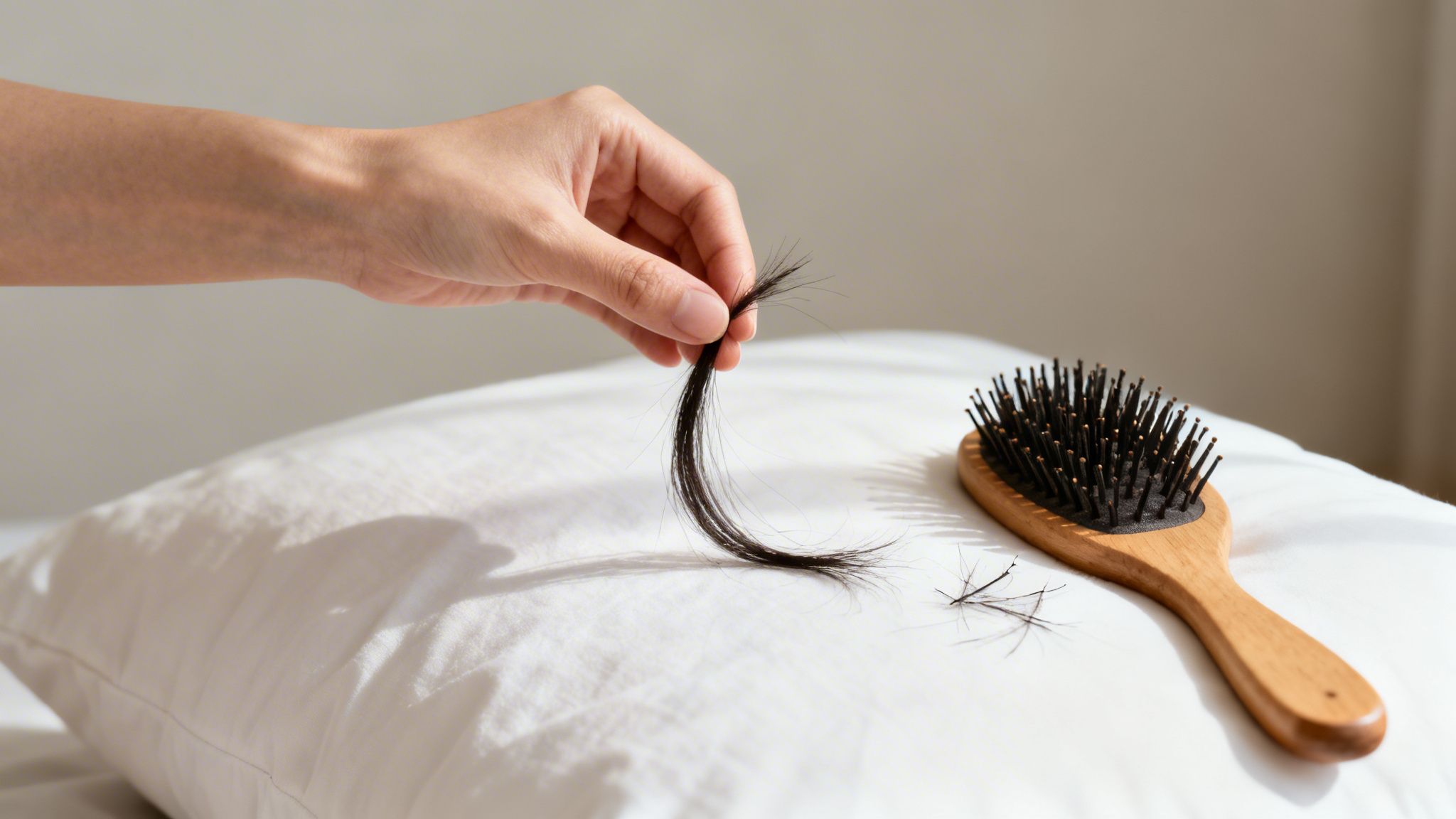
It’s easy to point the finger at your flat iron, but the real reasons your hair is snapping are often hiding in plain sight. We’re not just talking about split ends here; we’re talking about the hair shaft breaking anywhere along its length. This happens because the cuticle—your hair's protective outer layer of overlapping scales—has taken a hit.
Once that shield is damaged, moisture escapes easily. Your hair becomes parched, brittle, and primed to snap under the slightest pressure. Figuring out what’s causing that damage is the first real step to getting your hair back on track.
The Most Common Breakage Culprits
The triggers for breakage can be anything from your daily habits to what’s going on inside your body. Let's look at the usual suspects I see time and time again.
Mechanical Stress: This is just a technical term for physical wear and tear. We're talking about aggressive brushing (especially when wet!), tight ponytails or buns that pull constantly, and even the friction from your cotton pillowcase as you toss and turn. It’s like a rope fraying from being rubbed over and over.
Chemical Damage: If you regularly color, bleach, or chemically straighten your hair, you know this one. These processes have to lift the hair cuticle to work, but doing it too often or too aggressively leaves that cuticle permanently open and vulnerable. Breakage becomes almost a certainty without some serious TLC.
Nutritional Deficiencies: Strong hair is built from the inside. If you're not getting enough key nutrients, your body will ration them, and hair is one of the first things to get short-changed. Low levels of iron, zinc, and B-vitamins like biotin can directly sabotage your hair’s strength.
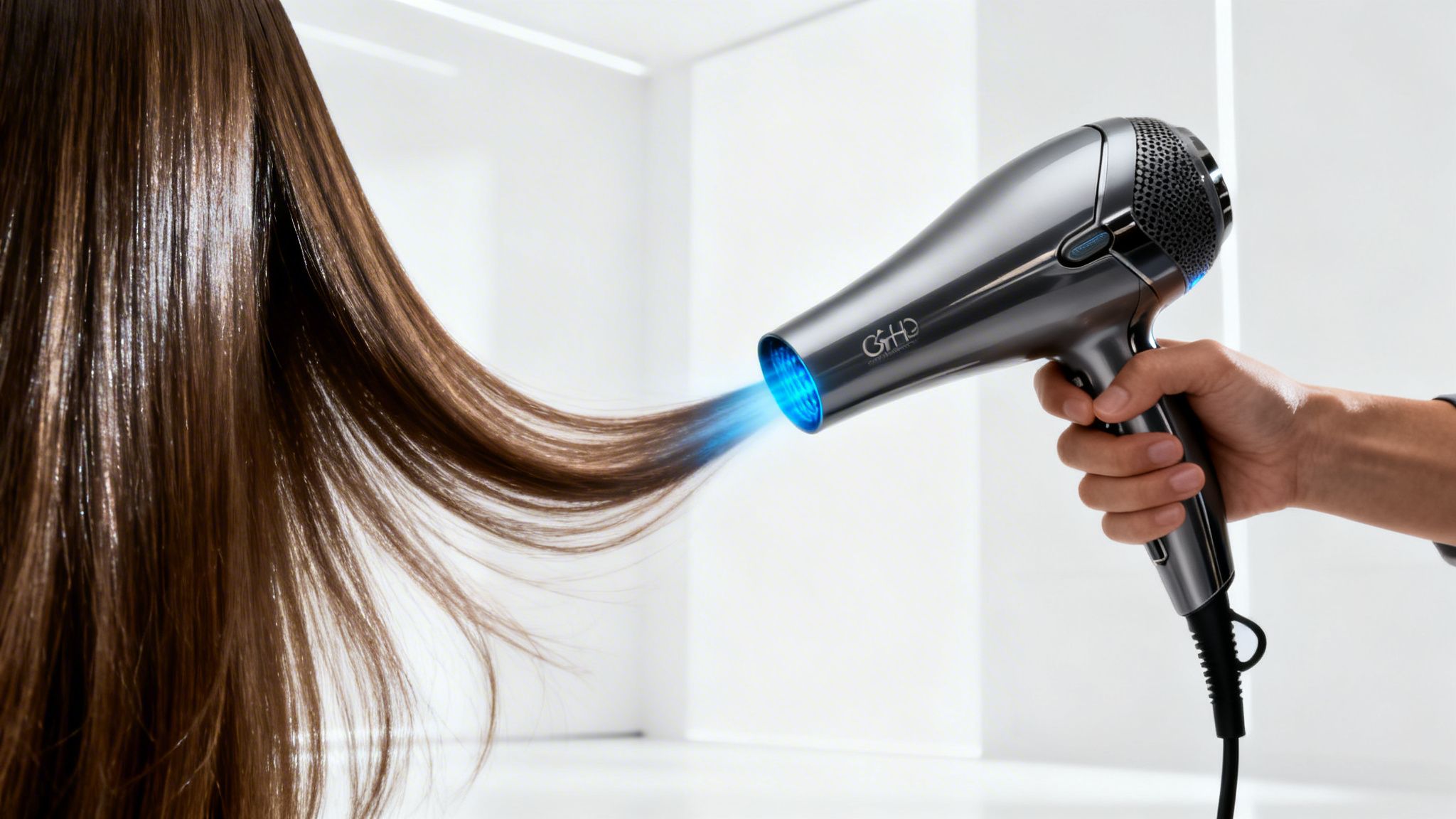
Poor Washing and Drying Habits: That squeaky-clean feeling from a harsh, sulfate-heavy shampoo is actually the sound of your hair being stripped of its essential oils. Then, rubbing it dry with a rough towel creates a ton of friction right when your hair is at its most fragile. Honestly, a lot of damage happens before a blow dryer even enters the picture, a point we dive into in our guide to proper blow-drying techniques.
To help you quickly identify what might be going on, I've put together this simple table. Find the description that matches your situation for a quick, natural fix you can start today.
Common Causes of Hair Breakage and Quick Natural Fixes
| Common Cause | What It Looks Like | Quick Natural Fix |
|---|---|---|
| Mechanical Stress | Short, broken pieces around your hairline; a "halo" of frizz; lots of hair in your brush. | Swap your cotton pillowcase for a silk or satin one tonight. This simple change drastically reduces friction. |
| Heat Damage | Dry, straw-like texture; split ends that travel up the hair shaft; hair feels "crunchy." | Commit to a 7-day heat detox. Let your hair air-dry and see how much its texture improves. |
| Chemical Processing | Gummy or overly stretchy texture when wet; extreme dryness and brittleness when dry. | Apply a DIY protein mask (like egg and yogurt) to help temporarily patch the cuticle. |
| Nutritional Gaps | Overall thinning and lack of resilience; hair seems to snap with minimal touching. | Add a handful of spinach and a few walnuts to your daily diet for a boost of iron, zinc, and omega-3s. |
By recognizing these patterns, you can pivot your routine. A few small, consistent changes—like switching your pillowcase, eating more hair-friendly foods, or using a gentler shampoo—build the foundation for hair that doesn't just look healthy, but is genuinely strong and resilient.
Building Your Gentle Hair Care Routine
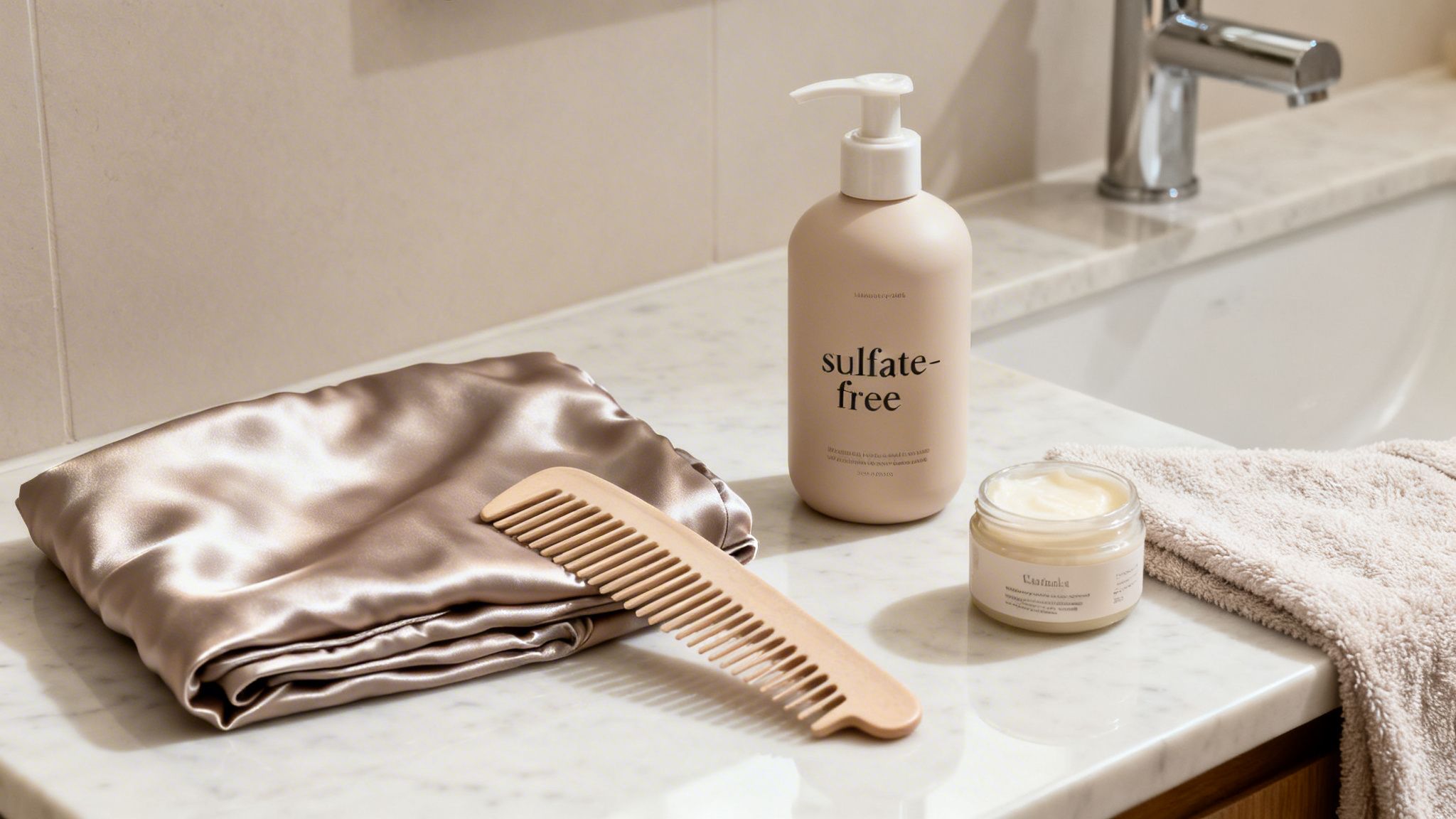
Stopping hair breakage isn't about adding a dozen new steps to your day. It’s actually about being smarter and much gentler with the habits you already have. The real goal is to cut down on the physical stress your hair endures every single day—from how you wash and condition to the way you dry and even sleep.
Learning how to reduce hair breakage naturally really starts with looking at your routine through a new lens. A few simple swaps can make a massive difference, helping your hair build strength over time instead of constantly being worn down.
Rethink Your Washing Strategy
Your wash day is the foundation of your routine, but it's also where a lot of damage can happen without you even realizing it. Most of us grew up with shampoos that create a huge, satisfying lather, but those are often packed with harsh sulfates (like sodium lauryl sulfate). They do their job, but they also strip away your hair’s natural, protective oils, leaving the cuticle rough and prone to snapping.
The single most impactful change you can make is switching to a sulfate-free shampoo. These gentler cleansers get your scalp and hair clean without that stripped, squeaky feeling. When you shampoo, try to focus the product directly on your scalp, where most of the oil and dirt builds up. The suds that run down the strands as you rinse are usually enough to clean the lengths without roughing them up.
The Art of Conditioning Correctly
Conditioner is your best friend for adding moisture back and smoothing the hair cuticle, which is key for fighting breakage. But how you apply it matters. A common mistake I see is slathering it from root to tip, which can weigh down hair and cause buildup on the scalp.
Instead, focus your conditioner on the mid-lengths and ends. This is the oldest, most fragile part of your hair, and it needs the most help. After you’ve applied it, use a wide-tooth comb to gently work it through. This lets you detangle while your hair is slippery and protected by the conditioner—a much safer bet than yanking a brush through it later.
Pro Tip: Once the conditioner is in, give your hair a gentle squeeze to get rid of excess water before you rinse. This helps the product actually sink into the hair shaft instead of just sliding off with the water.
This simple tweak helps the most vulnerable parts of your hair soak up all the good stuff without killing your volume at the root.
The Post-Wash Gentle Touch
Your hair is at its absolute weakest when it's wet. The internal protein bonds are softened, making it incredibly susceptible to damage. This is why vigorously rubbing your head with a standard bath towel is one of the worst things you can do—it creates a perfect storm of friction, frizz, and breakage.
It's time to adopt a gentler approach to drying.
- Ditch the Bath Towel: Grab a soft microfiber towel or even an old cotton T-shirt. Use it to gently squeeze and blot the water out of your hair. The smoother fabric creates far less friction.
- Let It Air-Dry (Mostly): Whenever you can, let your hair air-dry until it’s about 70-80% of the way there. If you use heat, this drastically reduces the time your hair is exposed to high temperatures.
- Detangle with Care: If you have to detangle while your hair is wet, only use a wide-tooth comb. Always start from the ends and slowly work your way up to the roots to prevent pulling and snapping.
Upgrade Your Sleep Setup
You spend roughly a third of your life in bed, which means your pillowcase has a huge impact on your hair's health. Traditional cotton pillowcases feel soft to the touch, but on a microscopic level, their fibers are rough and absorbent. As you move during the night, they snag and pull on your hair, causing tangles and breakage.
Switching to a silk or satin pillowcase is a surprisingly effective move. The smooth surface lets your hair glide without friction. This isn't just a small luxury; the data backs it up. One study showed that sleeping on silk reduces friction by a whopping 90% compared to cotton, which led to a 45% reduction in hair breakage over an eight-week period. You can learn more about the connection between hair loss and daily habits and see how these small changes add up.
Think of it as a passive, protective treatment you get every night. You'll wake up with smoother, less-tangled hair, all without any extra effort.
Powerful DIY Hair Masks to Stop Breakage
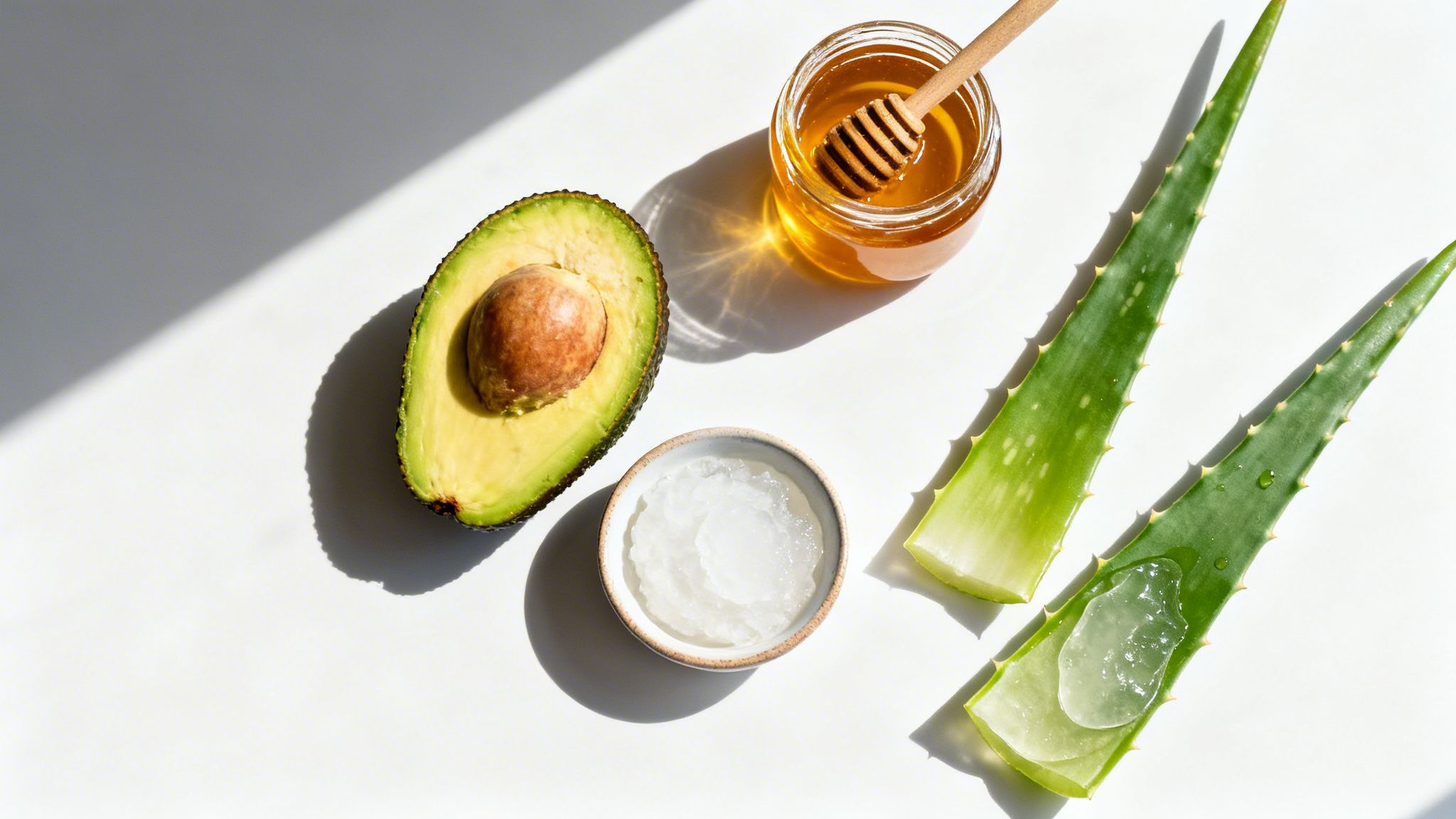
You don’t need a bathroom cabinet overflowing with expensive products to give your hair the deep nourishment it’s craving. In fact, some of the most effective ingredients for fortifying brittle strands are probably already in your kitchen. Creating your own DIY hair mask is a fantastic, simple way to reduce hair breakage naturally.
What I love most about it is knowing exactly what I'm putting on my hair—no hidden chemicals or fillers. It's also incredibly satisfying to whip up a simple treatment and see real results. Let’s walk through a few of my personal go-to recipes that I rely on to keep my hair strong and resilient.
The Power of a Simple Coconut Oil Treatment
Before we jump into blended masks, let’s talk about a true powerhouse: coconut oil. It's a game-changer because its molecular structure is tiny enough to penetrate deep inside the hair shaft, reinforcing it from within instead of just sitting on top.
This is why a simple deep conditioning treatment with coconut oil is so effective. Research shows it can cut protein loss by an incredible 60%, which is huge when you’re fighting breakage. Many women dealing with common challenges women face today find this weekly ritual helps immensely, especially for defining curls and reducing friction while detangling.
My favorite way to do this is simple: I warm about two tablespoons of virgin coconut oil until it's liquid. Then, I work it through damp hair, from roots to ends, and pop on a shower cap. I let it sit for at least 30 minutes before shampooing as usual. It’s a game-changer.
My Go-To Coconut and Aloe Hydration Mask
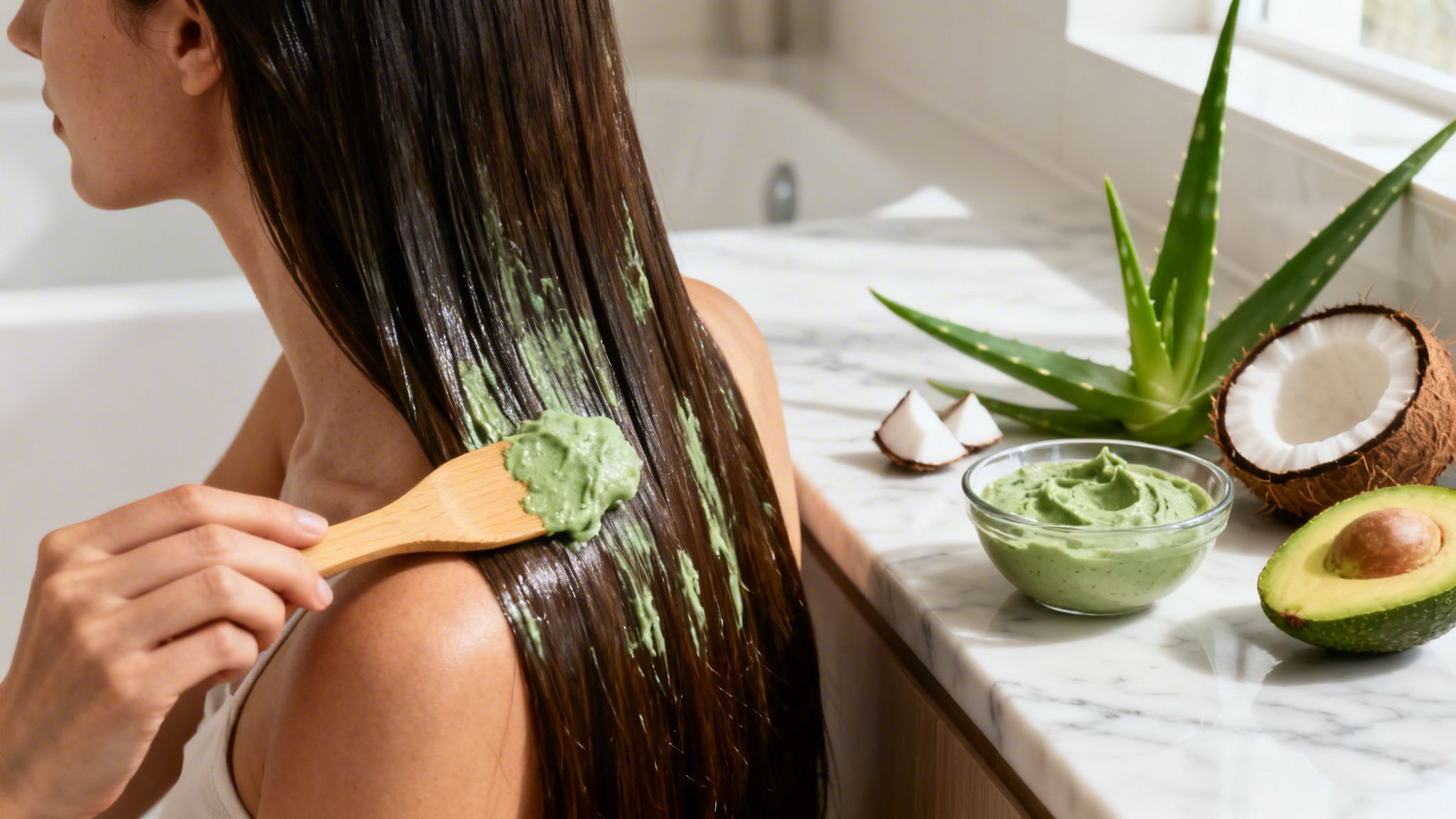
When my hair feels extra dry and fragile, I give my coconut oil treatment an upgrade by adding aloe vera. This duo is a dream team for hydration and repair. You get the protein protection from the coconut oil, plus intense moisture and scalp-soothing benefits from the aloe.
Here's What You'll Need:
- 2 tablespoons of virgin coconut oil
- 2 tablespoons of pure aloe vera gel (fresh is best, but store-bought is fine!)
- 1 teaspoon of honey (it's a natural humectant that pulls moisture into the hair)
How to Apply It:
First, melt the coconut oil and whisk it with the aloe and honey until you have a smooth, creamy mix. Work the mask through clean, damp hair, making sure to coat every strand. I always pay extra attention to the ends, since they tend to be the driest.
I like to use any leftovers to give my scalp a gentle massage, which feels great and helps stimulate blood flow. Cover your hair with a shower cap or warm towel and let it all soak in for 30-60 minutes. Finally, rinse well with lukewarm water and follow up with your normal shampoo and conditioner.
Other DIY Mask Recipes for Different Hair Needs
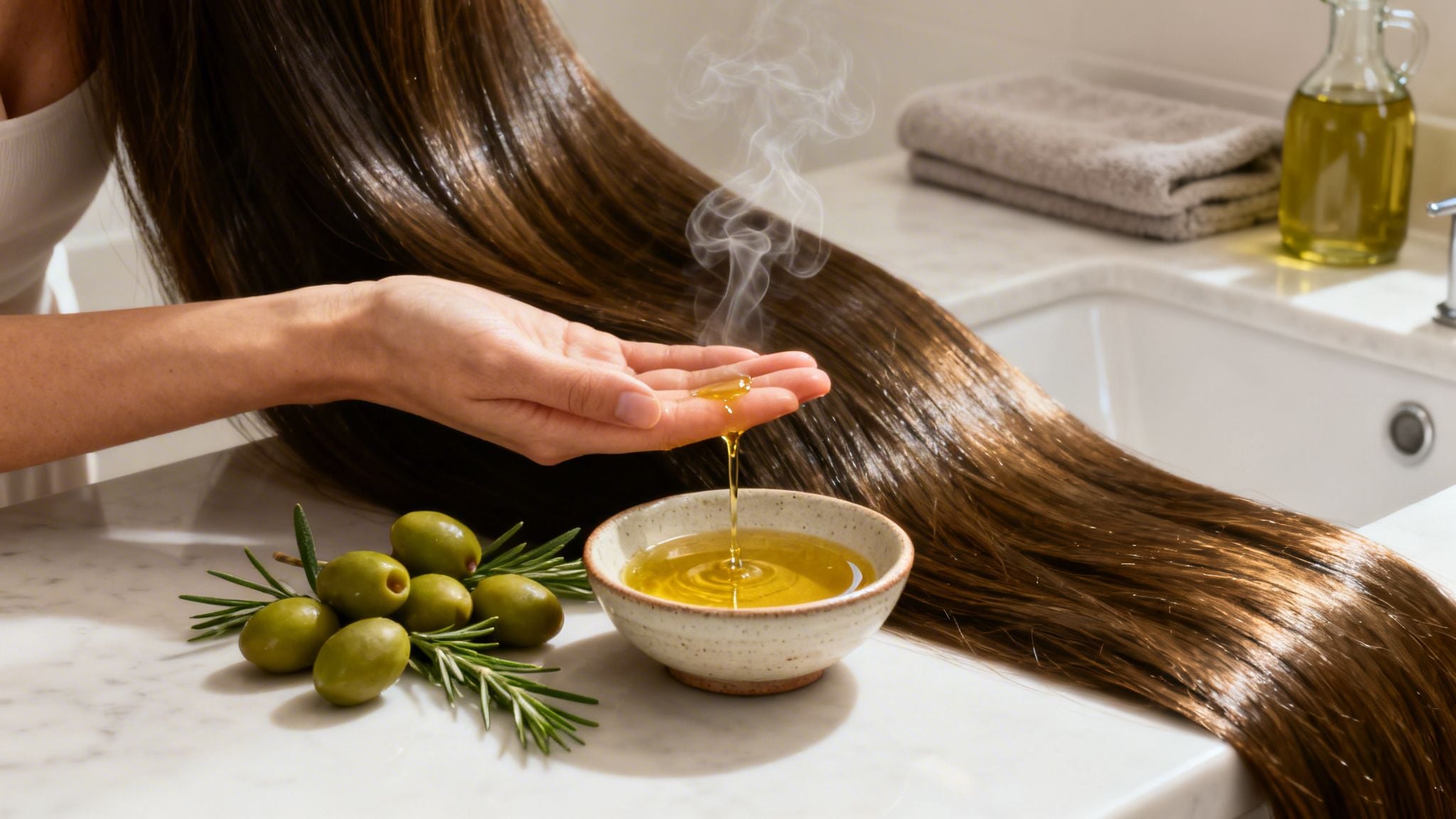
Of course, not all hair is the same, so your mask should be tailored to what you need. While the coconut and aloe mask is a fantastic all-rounder for dryness, other ingredients can target specific issues. For a different but equally effective routine, you might want to explore the benefits of a hot olive oil treatment for your hair.
Here are a couple of other recipes I keep in my rotation:
For Deep Nourishment (Avocado & Honey Mask):
- Ingredients: Half a ripe avocado, 1 tablespoon of honey, and 1 tablespoon of olive oil.
- Best For: Extremely dry, damaged, or coarse hair. The fatty acids and vitamins in avocado are phenomenal for deep moisturizing and repair.
- How to Use: Mash the avocado until it's perfectly smooth—no lumps!—then mix in the honey and olive oil. Apply to damp hair, let it sit for 20-30 minutes, and rinse thoroughly.
For Strength and Protein (Egg & Yogurt Mask):
- Ingredients: 1 whole egg and 2 tablespoons of plain yogurt.
- Best For: Fine, limp, or chemically treated hair that needs a serious protein kick. The egg and yogurt help patch up weak spots along the hair cuticle.
- How to Use: Whisk the egg and yogurt together and apply it to damp hair. Leave it on for 20 minutes, then rinse with cool water—hot water will scramble the egg in your hair! Be careful not to overdo this one; once a month is plenty to avoid protein overload.
Nourishing Your Hair from the Inside Out
While gentle routines and deep conditioners are your first line of defense, the real secret to stopping hair breakage for good starts on your plate. The strength and resilience of your hair are a direct reflection of your diet.
Think of it this way: your hair follicles are like tiny factories, and the food you eat provides the raw materials. If you’re supplying low-quality materials, you can’t expect a high-quality product. A body that's short on key nutrients will always prioritize vital organs first, leaving your hair with whatever is left over. This is exactly why a few simple dietary changes can be more powerful than any expensive hair treatment.
The Building Blocks of Strong Hair
At its core, hair is made of a protein called keratin. Without enough protein in your diet, your body’s ability to produce strong hair slows to a crawl, resulting in weak, brittle strands that snap at the slightest provocation.
But it’s not just about protein. A whole team of nutrients works together to support the hair growth cycle and reinforce the structure of every strand.
Making a change can be as simple as rethinking your breakfast. Instead of a sugary cereal, maybe you switch to a bowl of oatmeal. If you sprinkle on some pumpkin seeds and walnuts, you've just given yourself a fantastic dose of zinc and omega-3 fatty acids—both of which are crucial for a healthy scalp and stronger hair. It's all about making small, intentional swaps that add up.
True, lasting hair health isn't found in a bottle; it's built plate by plate. When you nourish your body correctly, you're giving your hair follicles the high-quality resources they need to create strands that are resilient by design.
Once you understand the specific roles these nutrients play, it becomes much easier to connect your food choices to your hair goals.
Key Nutrients and Why They Matter
Let's look at a few of the heavy hitters that are consistently linked to hair strength and how they help put an end to the frustrating cycle of breakage.
Iron: This mineral is a core part of hemoglobin, the protein that delivers oxygen to your cells—including the ones that power hair growth. Low iron can lead to anemia, and one of its most common symptoms is hair loss and breakage. A handful of spinach in your smoothie or adding more lentils to your meals are easy fixes.
Biotin (Vitamin B7): Often nicknamed the "hair growth vitamin," biotin is essential for producing keratin. A true deficiency is pretty rare, but making sure you get enough can seriously improve your hair's internal structure. You'll find it in foods like eggs, nuts, and sweet potatoes.
Vitamin E: As a powerful antioxidant, Vitamin E helps fight the oxidative stress that can wear down hair follicles over time. It's also great for supporting a healthy scalp. Sunflower seeds and avocados are absolutely packed with it.
And we can't forget omega-3 fatty acids. Found in fatty fish like salmon and in seeds like flax and chia, these healthy fats provide natural oils that keep your scalp and hair hydrated from the inside out.
Your Daily Guide to Hair-Fortifying Foods
To help you get started, I’ve put together a simple table you can use as a quick reference or even a grocery list for building stronger hair. It breaks down the most important nutrients, what they do to fight breakage, and where you can find them.
Think of this chart as your roadmap to eating for hair resilience. By weaving these foods into your weekly meals, you're taking a proactive step to build hair that can stand up to daily styling and environmental stress without snapping.
Essential Nutrients for Strong, Breakage-Free Hair
| Nutrient | Why It Prevents Breakage | Best Food Sources |
|---|---|---|
| Protein | The fundamental building block of keratin, your hair's primary structural component. | Eggs, lean meats, Greek yogurt, lentils, chickpeas |
| Iron | Boosts circulation and carries oxygen to your hair follicles, which is essential for growth. | Spinach, red meat, lentils, tofu, pumpkin seeds |
| Biotin | Plays a vital role in keratin production, improving your hair's core infrastructure. | Eggs, almonds, sweet potatoes, salmon, avocados |
| Zinc | Essential for hair tissue growth and repair. It also helps keep the oil glands around the follicles working properly. | Oysters, beef, pumpkin seeds, lentils, cashews |
| Vitamin E | A powerful antioxidant that protects hair follicles from oxidative stress and damage. | Sunflower seeds, almonds, avocados, spinach, bell peppers |
| Omega-3s | Provide essential oils that hydrate the scalp and hair, increasing shine and flexibility. | Salmon, mackerel, walnuts, chia seeds, flaxseeds |
By focusing on a diet rich in these key nutrients, you’re not just eating healthier—you’re actively constructing stronger, more resilient hair from the follicle up.
Mastering Scalp Health for Stronger Hair Growth
If you're only focusing on your hair strands to stop breakage, you're missing half the picture. Think of it this way: you can’t grow a vibrant, healthy plant in bad soil. Your scalp is the "soil" for your hair, and if it's not in top condition, the hair that grows from it will never be as strong as it could be.
A scalp that's too oily, flaky and dry, or constantly irritated is a stressed scalp. It directly compromises the quality of every strand that emerges. So, let’s get to the root of the problem—literally.
Restore Balance with an Apple Cider Vinegar Rinse
One of the biggest culprits behind a troubled scalp is a pH imbalance. A lot of shampoos lean alkaline, which forces the hair's protective outer layer, the cuticle, to lift up. A lifted cuticle is rough, snags on everything, and is incredibly vulnerable to snapping. The goal is to gently guide your scalp and hair back to their natural, slightly acidic state where they can thrive.
This is where a simple apple cider vinegar (ACV) rinse works wonders. ACV is mildly acidic, and it helps convince those lifted cuticles to lie flat and seal shut. A sealed cuticle means smoother, shinier hair that holds onto moisture and is far more resilient against breakage.
If you've been battling dull, weak, or thinning hair, this one step can make a noticeable difference. In fact, a 2021 clinical trial showed that rebalancing scalp pH with ACV helped reduce breakage by an incredible 40% over just 12 weeks. The acetic acid is the hero here, tightening the cuticles that your shampoo may have disrupted. You can explore more of these hair loss statistics and findings to see just how impactful these small changes can be.
My Go-To ACV Rinse Method:
- The Mix: I use a simple ratio of 1 part raw, unfiltered ACV to 4 parts water. A spray bottle or an applicator bottle with a nozzle makes applying it so much easier.
- When to Apply: After shampooing and rinsing completely, spray the mixture directly onto your scalp and let it run down your hair strands.
- Massage and Wait: Take a minute to gently massage it into your scalp with your fingertips. Let it sit for about 2-3 minutes.
- The Final Rinse: Rinse thoroughly with cool water. And don't worry—the vinegar smell completely vanishes once your hair is dry!
I recommend doing this just once a week. It acts as a fantastic clarifier to get rid of product buildup while resetting your scalp’s natural pH.
Key Takeaway: A balanced scalp is a clean, well-functioning scalp. An ACV rinse isn't just a trend; it's a science-backed way to reset your hair's foundation, seal the cuticle, and dramatically reduce the risk of breakage.
Boost Circulation with Scalp Massage
Healthy blood flow is everything for your hair. Your blood vessels are the delivery system, bringing essential oxygen and nutrients right to your hair follicles. If that circulation is sluggish, your follicles are essentially being starved of the building blocks they need to construct strong, healthy hair.
A regular scalp massage is probably the easiest—and most enjoyable—way to stimulate that blood flow. You don't need any special tools, just a few minutes of your time. You can do it in the shower while shampooing, while your deep conditioner is sinking in, or even at night while you're winding down. Improving scalp health is a core idea we also touch on in our guide to oat milk-based hair care.
My 5-Minute Wash Day Massage:
I love doing this in the shower. Using the pads of your fingertips (never your nails!), start at your temples. Apply firm but gentle pressure, moving in small circles.
Slowly work your way up toward the crown of your head, keeping that same circular motion. Then, move down the sides of your head toward the area just behind your ears.
Finally, bring your hands to the nape of your neck and massage upwards toward the back of your head. I like to repeat this whole circuit for about five minutes.
This little ritual does more than just nourish your follicles; it’s a fantastic way to release tension. By giving your scalp this much-needed attention, you are laying the groundwork for your strongest, healthiest hair ever.
Putting It All Into Practice: Your Action Plan
Alright, we've covered a lot of ground. Now, let’s pull all this knowledge together into a simple routine you can actually stick with. When it comes to seeing real change, the most effective way to reduce hair breakage naturally is all about consistency. This isn't about a total overhaul overnight, but about building small, positive habits that lead to big results.
I find it helps to frame it as a personal challenge. Think of the next month as your “30-Day Strong Hair Challenge.” This approach lets you focus on one key area each week, making the whole process feel less overwhelming and much more achievable.
Your 30-Day Strong Hair Challenge
Week 1: The Gentle Touch. Your only mission this week is to handle your hair with care. Ditch the rough towel for a microfiber one (or even an old t-shirt), use a wide-tooth comb only when your hair is slick with conditioner, and make the switch to a silk or satin pillowcase. These small changes dramatically reduce friction.
Week 2: Deep Moisture. Now it's time to infuse your hair with some serious hydration. Commit to one deep conditioning session. You can whip up a DIY mask—like that coconut oil and aloe vera recipe we talked about—or grab your favorite store-bought treatment. Leave it on for a good 20-30 minutes and let it work its magic.
Week 3: Focus on the Foundation. Healthy hair starts at the scalp. This week, give yourself a scalp massage two or three times before you wash. After one of your washes, finish with a clarifying ACV rinse to get rid of buildup and help rebalance your scalp's pH.
Week 4: Nourish from Within. Let's double down on diet. Make a conscious effort to incorporate hair-strengthening foods into your meals. Think iron-rich spinach, biotin-packed eggs, and protein-heavy lentils or chicken. You can't build strong strands without the right building blocks!
This simple timeline visualizes the core of your new scalp care routine, focusing on massage to boost circulation and an ACV rinse to restore balance.
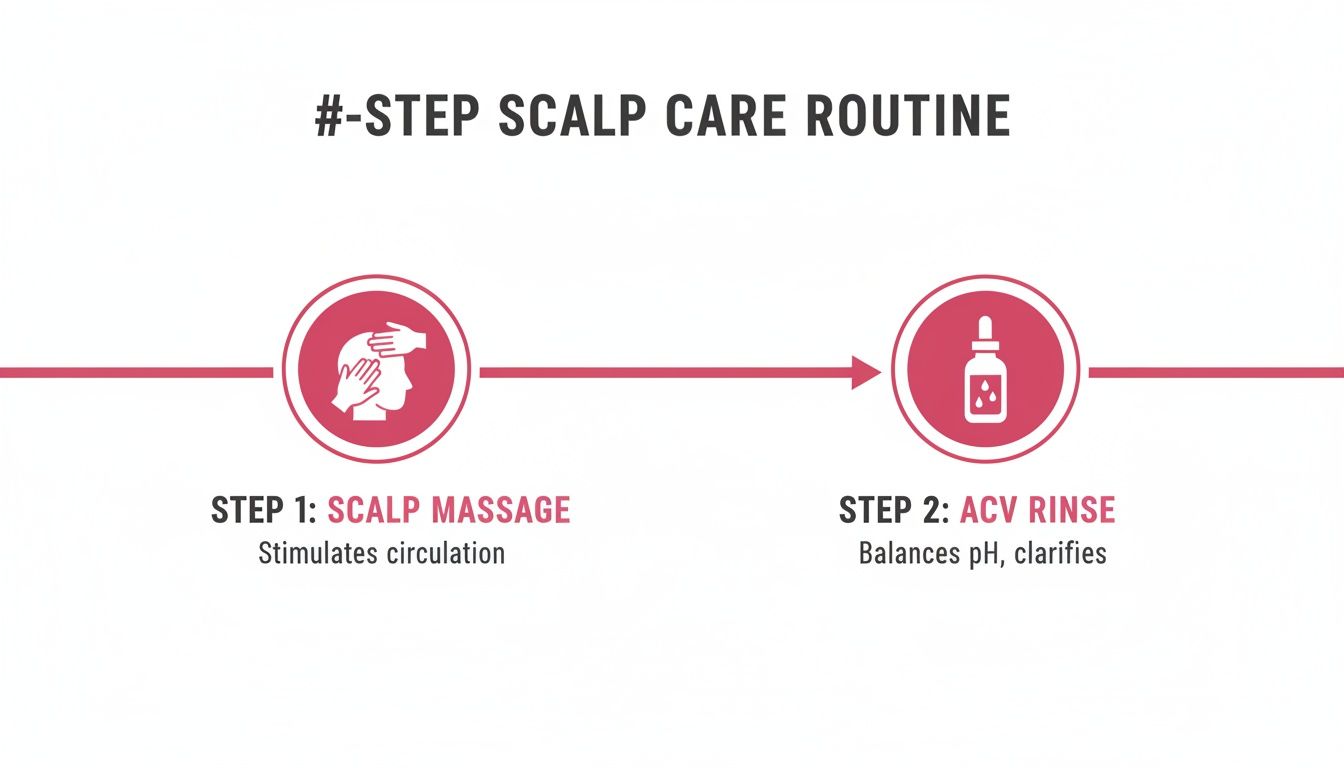
These two steps are a powerhouse combination. The massage brings nutrient-rich blood to the follicles, while the rinse seals the hair cuticle, creating a shield against daily stressors.
By taking on this challenge, you're putting yourself in the driver's seat. Remember, this is a long-term investment in your hair's health, not a quick fix. Your most powerful tool on this journey is simple, steady consistency.
Frequently Asked Questions
When you're starting a new hair routine, it's natural to have questions. I get asked these all the time, so I've put together some quick answers to the most common concerns about tackling hair breakage the natural way.
How Long Until I See Less Breakage?
You'll probably feel a difference right away. After your first deep conditioning treatment, your hair should feel softer and be easier to detangle. That's an immediate win!
But seeing a real, noticeable drop in breakage takes time. Your hair has to go through its growth cycle. If you stay consistent, you should see significantly stronger hair with less snapping in about 2-3 months. I always tell people to take a "before" photo in good lighting—you'll be amazed when you compare it a few months later.
Are These Natural Methods Safe For Color-Treated Hair?
Yes, absolutely. In fact, I'd argue these gentle, nourishing routines are perfect for color-treated hair. When you color your hair, it becomes more porous and thirsty for moisture. Natural masks and oils give it exactly the kind of deep hydration it's craving.
The one non-negotiable rule is to always do a patch test before trying a new DIY recipe to make sure you won't have a reaction. As a little bonus, a good apple cider vinegar rinse can help seal your hair's cuticle, which can actually help your color last longer.
What If I Have A Sensitive Scalp?
If your scalp is sensitive, you need to be extra careful. Before you slather any new ingredient all over your head, always do a patch test. Just apply a small amount to a hidden spot, like behind your ear, and wait 24 hours. This is so important, especially for stronger ingredients like apple cider vinegar or certain essential oils.
If you find your scalp is easily irritated, stick to ultra-gentle options. A calming chamomile tea rinse or a colloidal oatmeal scalp mask can soothe inflammation while still giving your hair some love.
How Often Should I Use DIY Hair Masks?
This really comes down to listening to your hair. For moisturizing masks packed with ingredients like avocado, honey, or aloe vera, once a week is a great schedule to keep your hair hydrated.
With protein masks—the ones with egg or yogurt—you need to be more strategic. Too much protein can actually make your hair stiff and brittle, leading to more breakage. I recommend using a protein treatment just once every 2-4 weeks. If your hair ever starts to feel rigid or straw-like, that's your signal to pull back on the protein and go all-in on moisture for a while.
At Hair and Body review, our goal is to help you feel confident and cared for. If you're looking for more expert advice and product reviews you can count on, come explore more of our resources at https://hairandbodyreview.com.