
If your hair feels more like straw than silk, you've probably tried slathering on every oil and butter you can find, only to have it feel dry again hours later. The problem isn't the products; it's the process. The secret lies in a two-part approach: first, you need to get water into the hair strand, and then you have to seal it in.
Think of it like this: water-based products with humectants (like glycerin or aloe vera) are what truly hydrate the hair's core. Then, oils or creams act as a moisturizer, creating a barrier that prevents all that precious hydration from escaping. This method ensures your hair doesn't just look better for a moment but actually becomes healthier from the inside out.
Your Quick Guide To Solving Dry Hair
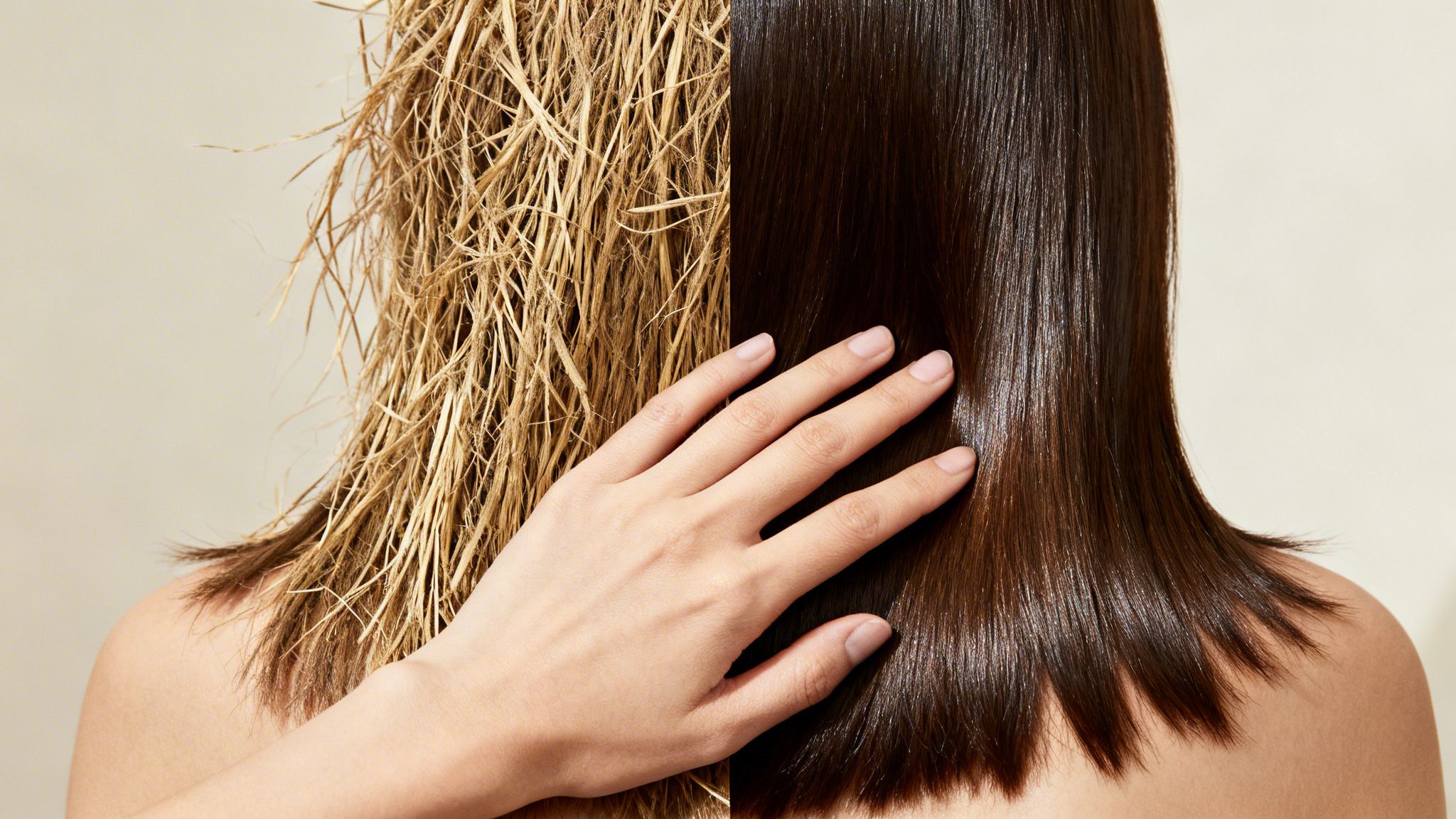
When hair is chronically dry, you're dealing with more than just a bad hair day—it's a sign of a structural problem. True hair hydration isn't about piling on the thickest conditioner you can find. It’s a science. I always compare it to caring for a plant: you can’t just spray oil on the leaves and expect it to thrive. You have to water the roots first.
For hair, this means understanding the crucial difference between hydration and moisturization. They are not the same thing.
- Hydration is all about getting water into the hair. You do this with products that contain humectants—think ingredients like aloe vera, glycerin, or hyaluronic acid. These amazing molecules attract water and pull it deep into the hair's cortex, which is what gives your hair its flexibility and life.
- Moisturization is the essential second step. This is where you use ingredients called emollients and occlusives, like rich shea butter, argan oil, or even certain silicones. They form a protective seal around the hair shaft, locking in the water you just added.
If you skip one of these steps, you’re either giving your hair a drink that immediately evaporates or sealing in strands that were already parched to begin with. This guide is your emergency plan to get both parts right, starting now.
Understanding Why Your Hair Is Dry
Before you can fix the problem, it really helps to know what's causing it. A few key culprits can rough up your hair's outer cuticle layer, letting moisture escape and leaving you with that brittle, crunchy feeling. Things like sun exposure, wind, and even dry indoor heating are constantly working against you.
Your daily routine plays a massive role, too. Over-washing, especially with harsh shampoos loaded with sulfates, strips away your scalp's natural oils (sebum). That sebum is your body's own leave-in conditioner, meant to travel down the hair shaft and keep it moisturized. And if you're a fan of heat styling, using a flat iron or blow dryer without a good heat protectant is like boiling the water right out of your hair, causing instant damage.
Key Insight: Sometimes, it’s just the way your hair is built. Curly and coily hair types are naturally much drier because the twists and turns of the hair strand make it nearly impossible for those natural scalp oils to reach the ends. This leaves them exposed and thirsty for moisture.
Quick Moisture Fixes for Different Hair Types
Not all dry hair is created equal, which is why a one-size-fits-all solution rarely delivers. Your hair’s texture and porosity will determine the best way to get a quick moisture boost. For example, what works for thick, coily hair will likely weigh down fine, straight hair in a heartbeat.
Here’s a quick-reference table for targeted actions you can take on your very next wash day.
Quick Moisture Fixes for Different Hair Types
| Hair Type | Quick Moisture Action | Why It Works |
|---|---|---|
| Fine, Straight Hair | Use a lightweight leave-in spray with glycerin on damp hair. | Provides water-based hydration without the heavy oils that can make fine hair look greasy or flat. |
| Medium, Wavy Hair | Apply a curl cream with jojoba oil from mid-lengths to ends. | Balances moisture and controls frizz by sealing the cuticle, encouraging wave definition without weighing them down. |
| Thick, Curly Hair | Co-wash (wash with conditioner only) and apply a rich leave-in cream. | Avoids stripping natural oils while delivering intense moisture that helps curls clump and reduces breakage. |
| Coily, Kinky Hair | Layer a liquid hydrator, a sealing oil, and a thick butter (LOC Method). | Maximizes moisture retention by trapping water inside the hair shaft, which is critical for high-porosity or coily textures. |
By tailoring your approach, you're not just throwing products at a problem; you're giving your hair exactly what it needs to absorb and retain the moisture it's been craving.
Building Your Ultimate Moisture-Rich Hair Care Routine
If you're constantly fighting dry, straw-like hair, you already know there’s no single magic potion. The real secret to lasting hydration is building a smart, consistent routine that works in layers. It's all about getting water into the hair shaft and—just as importantly—making sure it stays there.
Think of it like a solid skincare routine. You wouldn't just slap a heavy oil on a parched face; you'd layer a hydrating serum first. Applying that same logic to your hair is what turns the frustrating question of "how to moisturize dry hair" into a simple, repeatable strategy for genuinely healthy hair.
The Game-Changer: A Pre-Shampoo Treatment
Before you even step into the shower, give your hair a head start with a pre-shampoo treatment, or "pre-poo." This step is an absolute must if your hair is fragile, color-treated, or highly porous. All it involves is applying a protective oil or conditioner to your dry hair and letting it sit for at least 20 minutes before washing.
This simple act creates a barrier that shields your delicate strands from the stripping nature of some shampoos. It dramatically cuts down on friction and swelling while you wash, which means less breakage and frizz later.
- For Fine Hair: A lighter oil like grapeseed or jojoba will do the trick without weighing you down.
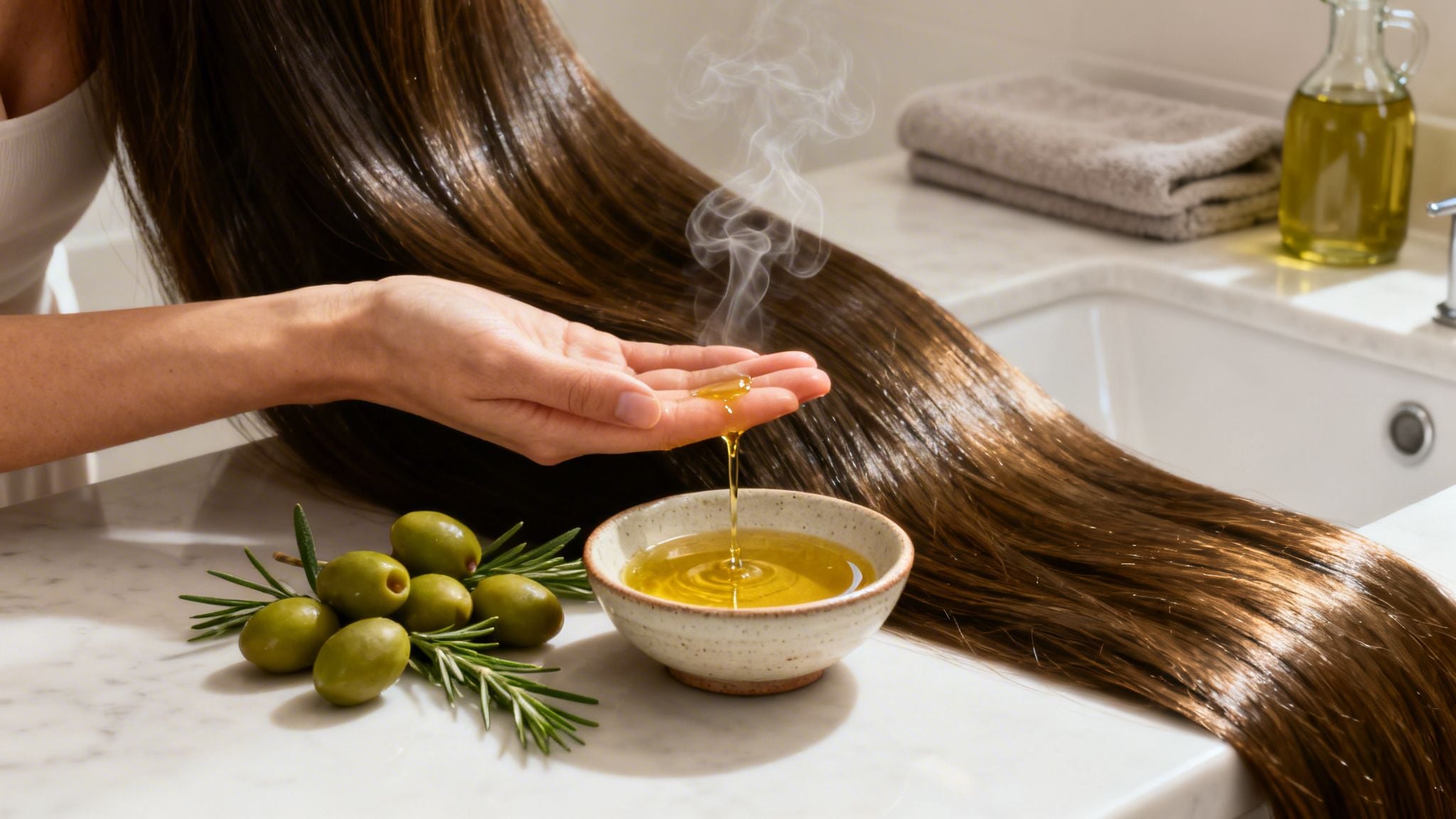
- For Thick or Coarse Hair: Don't be shy. Go for richer options like coconut or olive oil to create a more substantial shield.
This one addition can make a world of difference in preserving your hair's existing moisture and setting the stage for the rest of your routine.
Choose Your Cleanser and Conditioner Wisely
The products you use in the shower are the cornerstone of your moisture routine. Harsh, sulfate-filled shampoos are notorious for stripping your hair’s natural oils, often leaving it feeling drier than when you started. Always reach for a sulfate-free, hydrating shampoo that cleanses without causing collateral damage.
Your conditioner’s job is to immediately start putting that moisture back. I always look for formulas with powerful humectants—ingredients like glycerin, aloe vera, and hyaluronic acid that act like magnets, pulling water molecules into the hair.
A common mistake I see is rinsing conditioner out almost immediately. Give it a real chance to work its magic! Let it sit for at least a few minutes so those hydrating ingredients can actually penetrate the hair cuticle. Then, rinse with lukewarm or cool water to help seal it all in.
There's a reason the professional hair care market is projected to skyrocket to $24.5 billion by 2026. Premium conditioning services, which command a 35.7% share of this market, are laser-focused on restoring moisture for the 60% of women globally who report having dry hair. Deep-conditioning treatments with ingredients like shea butter and argan oil can boost moisture retention by a staggering 25-35%, a key factor in preventing hair loss linked to chronic dryness. You can dive deeper into these professional market trends in this detailed report.
The Art of Layering: How to Lock In Moisture
This is where you seal the deal. Once you're out of the shower and your hair is damp, it's time to layer your products strategically to lock in hydration for the long haul.
First, go in with a water-based leave-in. This should be a lightweight liquid, like a leave-in conditioner or a hydrating mist. This is your primary dose of hydration, so spritz it liberally, focusing on your mid-lengths and ends where hair is driest.
Next, it’s time for a moisturizing cream. This product is usually a bit thicker and contains a mix of hydrators and softeners, like shea or mango butter. It adds another layer of moisture and helps make the hair feel pliable and soft.
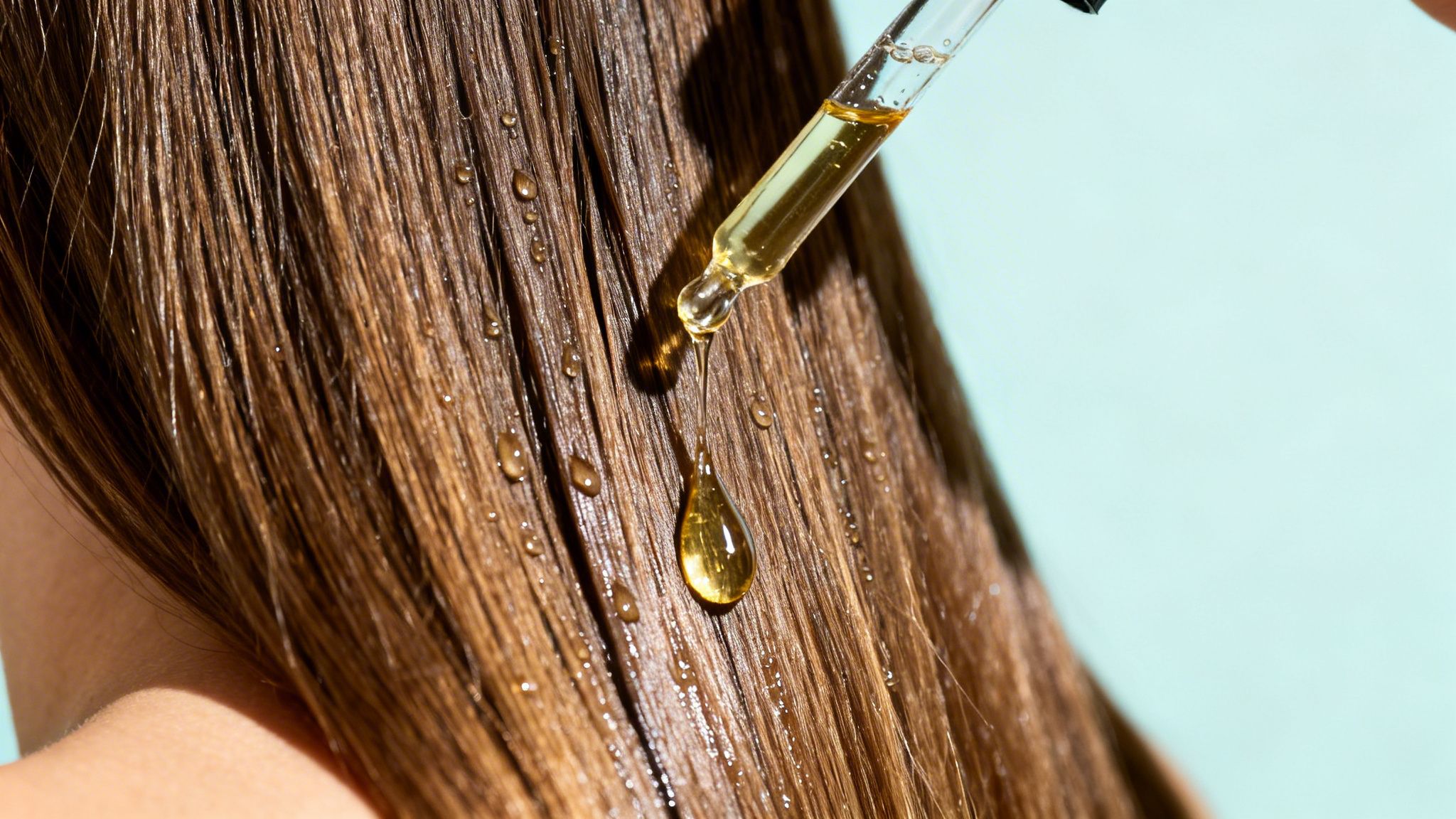
Finally, you need to seal with an oil. This is the non-negotiable final step. A good sealing oil creates a barrier that prevents all that water you just added from escaping. You only need a few drops—warm them up in your palms and gently glaze them over your hair, paying extra attention to the ends.
A Real-World Example
Let's say you have thick, wavy hair that gets frizzy and dry, especially in the winter. Here’s what your routine would look like:
- Pre-Poo: Apply coconut oil to your dry ends 30 minutes before you plan to wash.
- Wash: Use a creamy, sulfate-free shampoo, focusing your massage on the scalp to avoid drying out your ends.
- Condition: Slather on a rich conditioner with glycerin and let it sit for a full five minutes before rinsing.
- Layer: While your hair is still damp, spritz it with an aloe vera leave-in spray. Rake a curl cream containing shea butter through your waves. Finally, seal the ends with a few drops of argan oil.
This methodical approach ensures your hair isn't just hydrated, but that the moisture is locked in tight, giving you soft, defined waves that actually last. This is how you solve the puzzle of parched hair for good.
Master Your Wash and Styling Routine
When your hair is feeling dry, it's natural to think the solution is more—more washing, more conditioning, more products. But I’ve found that the real secret to restoring moisture often lies in doing less. The way you handle your hair day-to-day can either lock in precious hydration or strip it away, and some of our most common habits are the biggest culprits.
So many of us get caught in a vicious cycle: we wash our hair daily to feel "clean" or manage greasy roots, but this strips away the natural sebum our scalp produces. Your scalp then overcompensates, leading to an oily scalp and brittle, thirsty ends. The first step to breaking this cycle is to give your hair a break. Stretching the time between washes allows those natural, protective oils to travel down the hair shaft, moisturizing it exactly the way nature intended.
This is where a great dry shampoo becomes your secret weapon. It’s not just for making second-day hair presentable; it’s a strategic tool for preserving your hair's health.
The Smart Way to Use Dry Shampoo
Dry shampoo has completely changed the game for hair care. It’s no longer just an emergency fix but a core part of a healthy hair routine, and the market reflects that shift. It's projected to become a $5.37 billion industry by 2030 for a reason. In North America, many women are already using it 3-4 times a week to avoid the stripping effects of daily washing, which studies show helps hair stay 15-20% more moisturized. You can read more on how dry shampoo is shaping modern hair care routines.
But application is everything. Don't just blast your whole head with it.
- Work in sections. Lift pieces of hair around your crown and part line, where oil tends to build up most.
- Spray the roots only. Hold the can about six to eight inches from your scalp and apply a light mist.
- Give it a minute. Let the powder sit for a minute or two to do its job and absorb the excess oil.
- Massage and brush it out. Use your fingertips to massage your scalp, then brush through to get rid of any white residue.
This targeted approach soaks up oil where you don't want it, without coating your already-dry ends with unnecessary product. If you're looking for a product that won't leave your hair feeling gritty, check out our review of popular dry shampoo options that are known for being effective yet gentle.
Shield Your Strands with Protective Styles
Another powerful, yet often overlooked, technique is protective styling. These styles do more than just look chic; they create a physical barrier that saves your hair from daily wear and tear.
Think about it: your hair constantly rubs against your sweater, gets snagged on your purse strap, or gets whipped around in the wind. All that friction roughs up the hair's outer layer (the cuticle), causing it to lift and release moisture.
Expert Tip: Simple styles like a loose braid, a high bun, or a classic French twist are your best friends. By tucking your ends away, you're protecting the most fragile part of your hair from moisture-zapping friction and environmental damage.
How to Handle Heat Without Dehydrating Your Hair
Heat is one of the fastest ways to suck the life out of your hair. Hot tools can literally boil the water inside each strand, causing it to evaporate and leaving your hair fragile and brittle. If giving up your flat iron or curling wand isn't an option, you have to learn to use them safely.
- Always, always use a thermal protectant. This is completely non-negotiable. A good spray creates a buffer that helps distribute heat more evenly and slows down moisture loss.
- Turn down the heat. You rarely need the maximum setting. For most hair types, styling between 300-350°F (150-175°C) is more than enough to get the job done without scorching your hair.
- Master the one-pass technique. It’s far better to move the tool slowly down a section of hair one time than to make several quick, repetitive passes.
By combining a smarter wash schedule with protective styling and mindful heat use, you build a powerful defense against dryness. This proactive approach stops moisture loss before it starts, which makes every hydrating mask or deep conditioner you use that much more effective.
Powerful Hydrating Ingredients and DIY Hair Masks
The real secret to reviving dry, thirsty hair isn't some miracle product—it’s knowing what to look for on the ingredient label. Once you learn to decode those tiny words on the back of the bottle, you can stop guessing and start choosing products with the confidence of a pro.
Think about it this way: a successful moisture routine needs a three-part strategy. You need ingredients that hydrate, others that soften, and finally, some that seal it all in. If any one of these is missing, you're just putting a temporary bandage on the problem.
- Humectants are your hydrators. They’re like little moisture magnets, pulling water from the air right into the hair strand. Key players here are glycerin, aloe vera, honey, and hyaluronic acid.
- Emollients are the softeners. These are often rich butters and oils that smooth down the hair's outer layer (the cuticle), making it feel pliable and less rough. Look for shea butter, mango butter, and avocado oil.
- Occlusives are the sealants. These are primarily oils that form a lightweight barrier, locking in all that wonderful moisture you just added so it doesn't immediately evaporate.
When you have all three working together, you get moisture that actually lasts. That's the difference between hair that feels soft for an hour and hair that is genuinely healthy and resilient.
The Best Natural Oils for Sealing Moisture
Stepping into the world of natural oils can feel overwhelming. The key is understanding that not all oils do the same job. Your hair's porosity—how easily it absorbs and holds onto water—is the single most important factor in finding your perfect match.
To help you get started, here’s a quick comparison of some of the most popular natural oils and what they do best.
Natural Oils for Hair Moisture A Comparison
This table breaks down which oils work best for different hair types, so you can choose wisely instead of just grabbing the first one you see.
| Natural Oil | Primary Benefit | Best For Hair Porosity | How to Use |
|---|---|---|---|
| Coconut Oil | Its small molecules penetrate the hair shaft to reduce protein loss and add strength from within. | Excellent for high-porosity and medium-porosity hair that feels weak or mushy when wet. | Best as a pre-shampoo treatment to prevent damage during washing. Use very sparingly on ends to seal. |
| Argan Oil | Delivers a lightweight, non-greasy seal that tames frizz and creates incredible shine. | A fantastic all-rounder, especially for medium-porosity and fine hair that gets weighed down easily. | Apply a couple of drops to damp hair after your leave-in conditioner to lock everything in. |
| Jojoba Oil | The composition is incredibly similar to your scalp's natural sebum, helping to balance oil production. | Perfect for low-porosity hair that often gets greasy buildup. It seals lightly without feeling heavy. | Great for scalp massages to soothe dryness or on ends for a weightless seal. |
| Avocado Oil | Packed with fatty acids, it penetrates deeply to moisturize and soften very brittle, coarse hair. | A true hero for high-porosity hair and anyone with extremely dry strands needing intense nourishment. | Use it in a deep conditioning mask or as a final, heavy-duty sealant after styling. |
Once you understand your hair's preferences, you can find the oil that works for you. A hot olive oil treatment, for instance, can be a game-changer for deep conditioning, and you can learn more about its benefits in our detailed guide.
Simple and Effective DIY Hair Masks
You don’t need a bathroom cabinet overflowing with expensive products to give your hair a serious moisture boost. Sometimes, the most potent treatments are waiting right in your kitchen.
Before you mix anything up, you have to decide if it's a wash day or if you can buy yourself some time. Sometimes, less is more when it comes to preserving moisture.
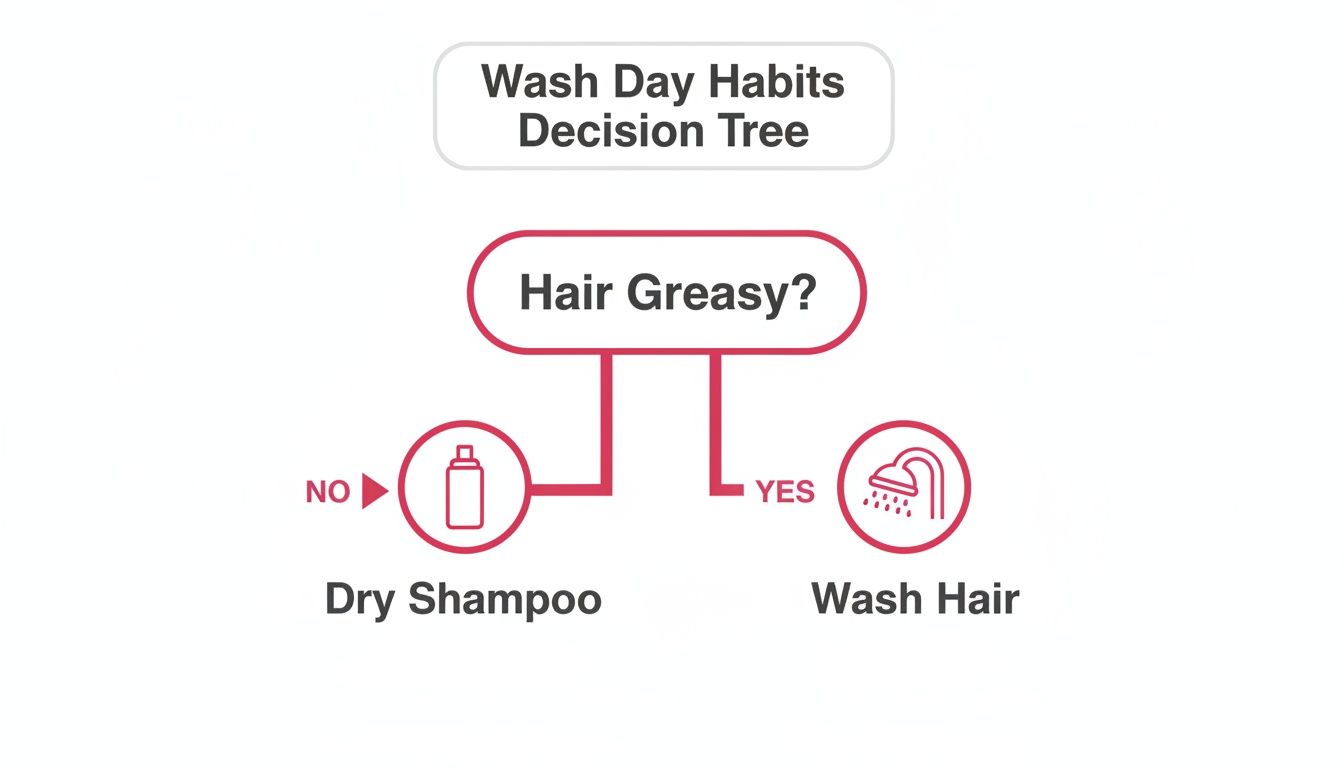
As you can see, reaching for dry shampoo on days when your hair isn't truly dirty is a great strategy to avoid stripping natural oils, saving the deep conditioning for when your hair really needs it.
My Pro Tip: The whole point of a hair mask is to deliver a concentrated shot of nutrients. For best results, always apply them to clean, damp hair and let them sit for at least 20 minutes. A shower cap will trap heat and help the ingredients penetrate even deeper.
Here are three of my favorite tried-and-true recipes.
1. The Intense Repair Mask (For Very Dry or Damaged Hair)
This is the emergency treatment I recommend when hair is feeling utterly fried. The avocado delivers rich fatty acids, the olive oil provides a heavy seal, and the honey pulls in extra moisture.
- You'll Need: 1/2 ripe avocado, 2 tablespoons olive oil, 1 tablespoon honey.
- To Make: Mash the avocado until it’s perfectly smooth—you don't want chunks in your hair! Stir in the olive oil and honey to form a creamy paste. Slather it on from roots to ends, pop on a shower cap, and let it work its magic for 30 minutes before rinsing well.
2. The Gentle Hydration Mask (For Fine or Easily Weighed-Down Hair)
If your hair gets greasy or limp with heavier treatments, this one's for you. Aloe vera offers pure, water-based hydration without the weight, and jojoba oil gives a light, effective seal.
- You'll Need: 3 tablespoons pure aloe vera gel, 1 tablespoon jojoba oil.
- To Make: Simply whisk the two ingredients together. Focus the application on your mid-lengths and ends, where hair is the driest, and avoid the roots. Let it sit for 20 minutes before rinsing.
3. The Protein and Moisture Balancing Mask (For Brittle or Limp Hair)
Healthy hair needs a good balance of protein (for strength) and moisture (for flexibility). If your hair feels weak and stretchy, or stiff and brittle, it’s out of balance. This mask helps restore it.
- You'll Need: 1/2 cup plain yogurt, 1 ripe banana, 1 tablespoon honey.
- To Make: A blender is your best friend here to avoid banana bits! Blend all ingredients until completely smooth. Apply the mixture all over your hair, paying extra attention to brittle areas. Leave it on for 20-30 minutes and rinse with lukewarm water.
Advanced Tools and Techniques for Locking in Moisture
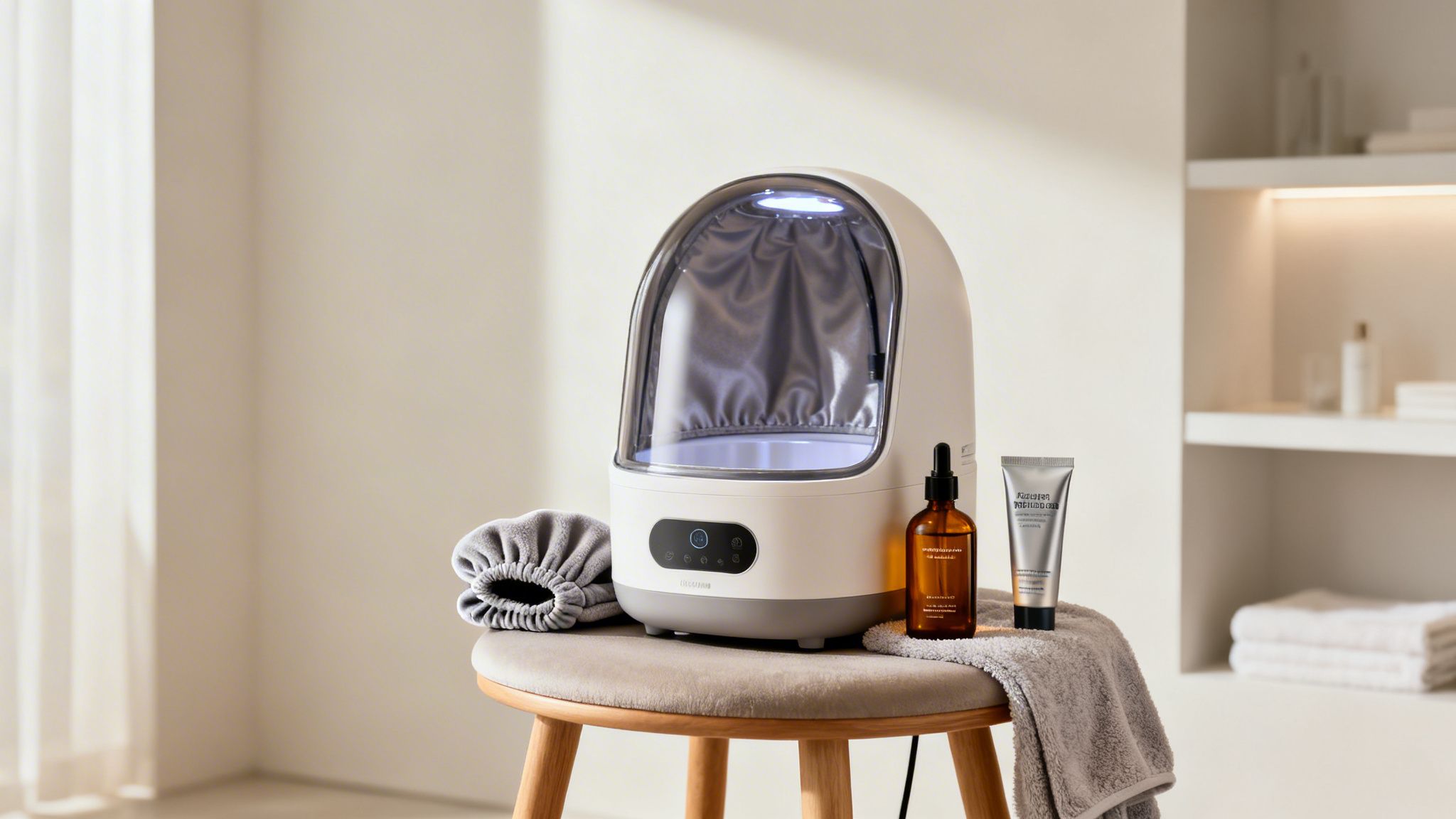
Sometimes, even the best conditioners and leave-ins don’t seem to make a dent. If you feel like your hair is constantly thirsty no matter what you throw at it, it’s probably time to level up your routine with some advanced tools and layering strategies.
These aren't just fancy gadgets; they're designed to solve a fundamental problem. If your hair has low porosity, its cuticles are tightly sealed, blocking moisture from getting in. On the flip side, high porosity hair has gaps in the cuticle that let moisture escape as fast as you apply it. This is where a little extra tech and technique can make all the difference.
Using a Hair Steamer for Ultimate Penetration
For anyone with low-porosity hair, a hair steamer can be a total game-changer. You know the frustration—products just seem to sit on top of your strands, never really sinking in. That's because the cuticle layer is so tightly packed.
A hair steamer uses warm, moist heat to gently lift that cuticle, creating a pathway for your deep conditioner or mask to penetrate deeply. The steam infuses the hair with water while opening it up to all the nourishing ingredients you’re applying. Just 15-20 minutes under the steamer during a conditioning treatment can dramatically improve your hair's softness and elasticity. It’s often the missing piece of the puzzle for hair that seems to resist every product.
The Power of Dry Hair Caps
Once you’ve managed to get all that wonderful moisture into your hair, the next battle is keeping it there. A simple dry hair cap, usually lined with satin or microfiber, is an incredibly effective tool for this. Instead of adding external heat, these caps trap your own body heat to help products absorb over time without any risk of damage.
This gentle warmth encourages the hair cuticle to close back down over your leave-in conditioner and sealing oils. They’ve become a staple for good reason. The global market for these caps is projected to jump from $1,088.15 million in 2021 to an estimated $1,487 million by 2025. It’s a simple, low-effort way to boost hydration, which is why so many people with curly hair swear by them to lock in moisture and fight frizz. You can read more about the rise of dry hair caps on cognitivemarketresearch.com.
Nailing the LOC and LCO Layering Methods
The order you apply your products matters—a lot. The LOC and LCO methods are systematic layering techniques that have become gospel in the curly and coily hair communities, but they can work wonders for anyone with seriously dry hair.
Key Takeaway: Both methods use the same types of products but in a different sequence. The right order for you depends entirely on how your hair absorbs and retains moisture.
- L = Liquid (a water-based leave-in or hydrating mist)
- O = Oil (a sealing oil like jojoba, argan, or avocado)
- C = Cream (a thicker moisturizer or butter)
The LOC Method: Liquid, Oil, Cream
This order is the go-to for high-porosity hair. You start by hydrating with your liquid, then immediately apply a layer of oil to seal that water in. The cream goes on last to provide another layer of moisture and help weigh the cuticle down, locking everything in tight.
The LCO Method: Liquid, Cream, Oil
This sequence is typically better for low-porosity hair. After the liquid, you apply the cream to moisturize. Because the oil is applied last, it acts as a final, lightweight sealant after the cream has had a chance to penetrate—a common hurdle for this hair type.
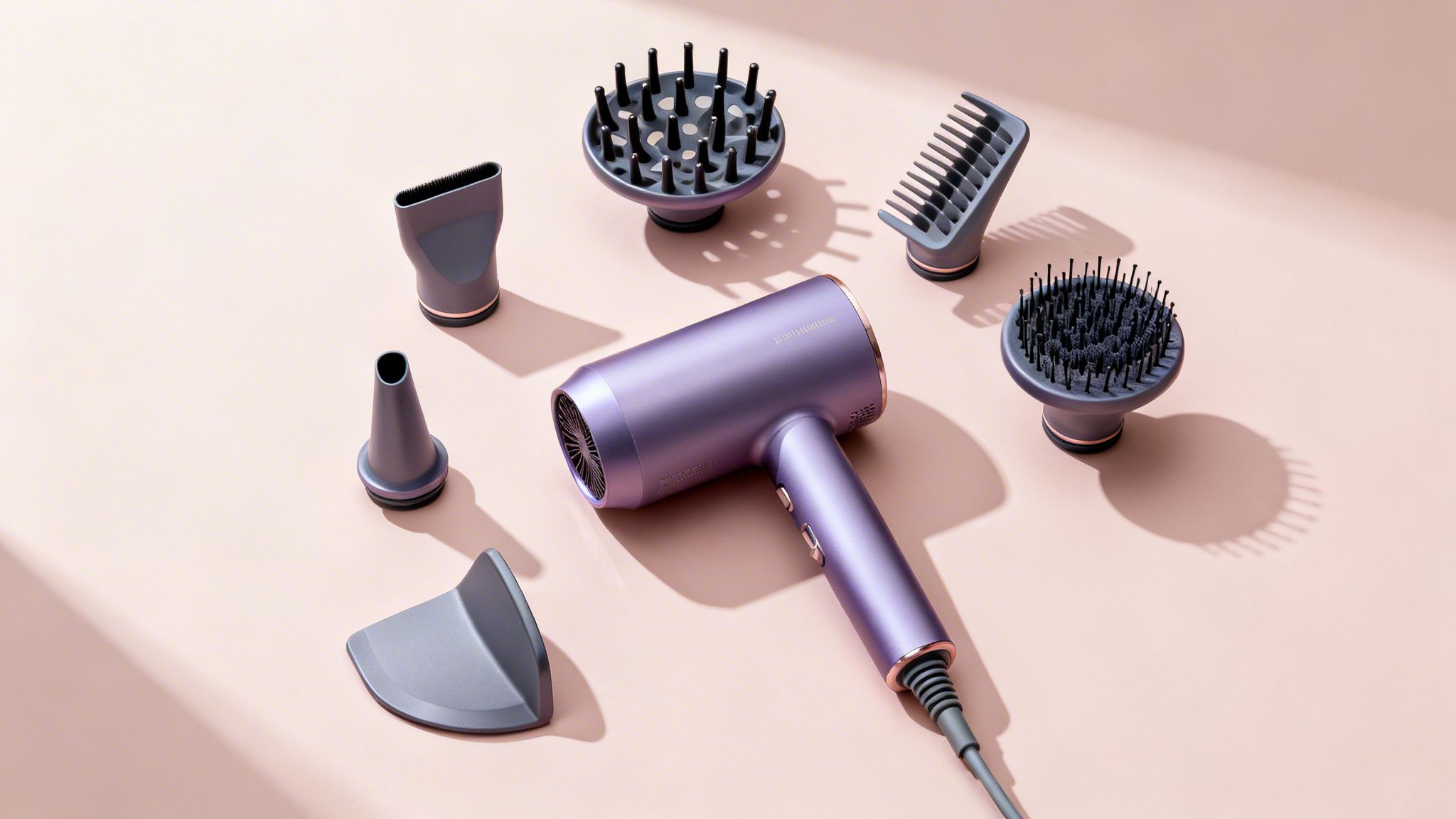
Perfecting your technique goes beyond just products. Learning how to properly use tools, like a diffuser, is also key to styling without undoing all your hard work. You can explore our guide on essential hair dryer tools to learn more.
Your Questions on Hair Moisture Answered
It’s easy to get lost in a sea of conflicting advice when you’re trying to finally fix dry hair. We hear from so many readers who are doing everything "right" but still can't seem to get the lasting moisture they’re after.
Let's cut through the noise. Here are our straight-to-the-point answers to the most common questions we get about quenching thirsty hair.
How Often Should I Deep Condition My Dry Hair?
Finding the right deep conditioning schedule is a balancing act, but for most people battling dryness, a once-a-week treatment is the sweet spot. This gives your hair a potent dose of hydration without running the risk of over-moisturizing it.
Of course, this isn't set in stone. If your hair is in serious crisis mode from bleach, color, or constant heat styling, you might need to up the frequency. Try deep conditioning twice a week for the first month or so to really kickstart the repair process and bring back some life and elasticity.
On the other hand, if your hair is fine or has low porosity, a weekly mask can be too much of a good thing, leaving it feeling limp or weighed down. In that case, pulling back to once every two weeks is usually a much better fit. Listen to your hair—if it starts feeling gummy or overly soft, that’s your cue to deep condition less often.
Can My Diet Really Affect My Hair's Moisture Levels?
Yes, one hundred percent. You can slather on the most expensive masks in the world, but true, sustainable hair health really starts from the inside. Your diet has a direct impact on your body’s ability to grow strong, hydrated hair.
Think of it this way: your body is dehydrated on the inside, your hair will be one of the first things to show it on the outside. Staying hydrated with plenty of water is your foundation. From there, focus on incorporating nutrients that support your scalp's natural oil (sebum) production.
- Healthy Fats: Foods like avocados, salmon, nuts, and seeds are fantastic for this.
- Essential Vitamins: Make sure you’re getting plenty of vitamins A, C, D, and E, which are all crucial for scalp health.
- Key Minerals: Iron and zinc deficiencies are notorious for causing dry, weak hair, so keep an eye on your intake.
Your hair is often the first place a nutritional gap will show up. If your strands are chronically dry no matter what products you use, it's a good sign that it’s time to take a look at your diet.
Why Does My Hair Still Feel Dry After Using Moisturizing Products?
This is one of the most frustrating hair problems out there, but it almost always comes down to one of a few key issues. If you’re using products labeled "moisturizing" and still coming up dry, it’s time to play detective.
First, you might be using products that are wrong for your hair's porosity. Low-porosity hair has a tightly sealed cuticle that resists moisture, so it needs lightweight, watery formulas that can sneak in. High-porosity hair is the opposite; its open cuticle drinks up moisture but loses it just as fast, so it needs richer creams and butters to fill in the gaps and seal everything in.
Second, you could be missing a crucial step: sealing. Many moisturizers are packed with humectants, which are great at pulling water into the hair. But if you don't lock that moisture in with an oil or a creamy leave-in, it will evaporate right back out, leaving your hair feeling just as parched as when you started.
Finally, you could be dealing with product buildup. Over time, some products can form a film on your hair that physically blocks any moisture from getting in. If your hair feels dull or has a coating on it, a good clarifying shampoo (used once a month or so) can reset your hair and allow your hydrating products to do their job again.
Are Silicones Actually Bad for Dry Hair?
The great silicone debate is tricky because there’s no simple yes or no answer. Silicones are popular for a reason—they deliver that instant gratification of smooth, shiny, frizz-free hair and do an excellent job of sealing the cuticle.
The trouble comes from the heavy, non-water-soluble silicones. These are the ones that can build up on the hair shaft over time, creating a plastic-like coating that feels great at first. The problem is, this coating can eventually prevent moisture from penetrating the hair, leading to even more dryness underneath that glossy exterior.
You don't have to ban them entirely. If you love the way silicones make your hair look and feel, just be smart about it.
- Opt for products with water-soluble silicones (look for ingredients with a "PEG" prefix).
- Commit to using a clarifying shampoo once or twice a month to hit the reset button and remove any potential buildup.
This balanced approach lets you get the cosmetic benefits you love without sacrificing your hair's long-term hydration.
At Hair and Body review, our mission is to give you honest, expert-backed guidance for your unique hair journey. For more deep dives into products and personalized advice, check out our full range of resources at https://hairandbodyreview.com.