
So, what makes an organic facial cleanser the best? It's simple, really. It’s a cleanser that can wash away the day's grime without taking your skin's natural moisture with it. The top contenders rely on gentle, nourishing botanicals like jojoba oil or saponified olive oil, and they steer clear of harsh, stripping sulfates. The right one for you will leave your skin feeling calm and happy—never tight, dry, or angry.
Why Choosing Your Cleanser Is a Foundational Step
Think of your cleanser as the gatekeeper to your entire skincare routine. If you nail this first step, every serum, cream, and treatment you layer on top can do its job so much more effectively. Honestly, it's probably the single most important choice you'll make for the long-term health of your skin.
For years, we were all told that "squeaky clean" was the goal. This led to a whole generation of harsh, foaming cleansers that literally stripped the life from our skin, creating a cycle of irritation, dryness, and breakouts. That tight feeling isn't a sign of clean skin; it's a cry for help from your skin's protective barrier.
The Modern Shift to Nourishing Cleansers
Thankfully, we know better now. True cleansing isn't about obliteration. It's about a respectful reset—removing makeup, dirt, and excess oil while leaving your skin's natural defenses intact. The best organic cleansers are built on this very philosophy. They work by supporting your skin's microbiome, that delicate community of good bacteria that keeps your complexion resilient and balanced.
This approach turns the old-school thinking on its head. It proves you don't need a laundry list of synthetic chemicals to get a proper clean. In fact, for anyone with sensitive, mature, or reactive skin, the opposite is often true. A "less is more" mindset, centered on high-quality, powerful botanicals, usually yields far better results.
The goal is to work with your skin, not against it. A well-formulated organic cleanser supports your skin's natural functions, helping it look and feel its best without irritation or compromise.
Quality Over Quantity in Your Formula
Modern research is finally catching up to what organic skincare artisans have known for years: you don't need a cocktail of harsh surfactants and chemical compounds to effectively cleanse the skin. It turns out that more ingredients do not equal better performance. This insight has completely validated the approach of brands that prioritize a handful of potent, high-quality botanicals over a long, confusing ingredient list. You can dive into some of the latest research on skin-friendly cleansing practices to see the science for yourself.
By choosing a cleanser that follows this principle, you're not just washing your face—you're setting the stage for a healthier, more radiant complexion. This guide will walk you through exactly how to find a cleanser you can finally trust.
How to Decode Organic Labels and Certifications
Walking down the skincare aisle can feel like you’re trying to crack a code. You see words like “organic,” “natural,” and “clean” splashed across beautiful bottles, but what do they really mean? It’s easy to get lost in the marketing claims, so let’s cut through the noise together.
Think of it this way: you wouldn't buy expensive produce just because the sign says "farm fresh" without checking if it's actually organic. Your skincare deserves that same discerning eye. Not all “green” claims are created equal, and knowing how to spot the real deal is the secret to finding a cleanser you can trust.
Distinguishing Certifications from Buzzwords
First things first, let’s separate the regulated certifications from the unregulated marketing terms. Many words used in the beauty world aren’t legally defined, which means brands can use them pretty much however they want. It’s a practice known as “greenwashing.”
For instance, terms like “natural,” “clean,” and “eco-friendly” have no official standard backing them up. A product with these labels might have some lovely botanical ingredients, sure. But those words alone don’t guarantee a thing about its formula, how pure it is, or how it was made.
A legitimate certification, however, is a different story. It's a stamp of approval from a trusted third-party organization. These groups have incredibly strict rules that companies must follow to earn their seal, ensuring the product truly meets a high standard for organic content and ethical production.
Key Organic Certifications to Know
When you’re hunting for a genuinely organic facial cleanser, your best bet is to look for a few key certification seals on the packaging. These are the gold standards in the industry. Seeing one on a label means the product has passed a tough verification process.
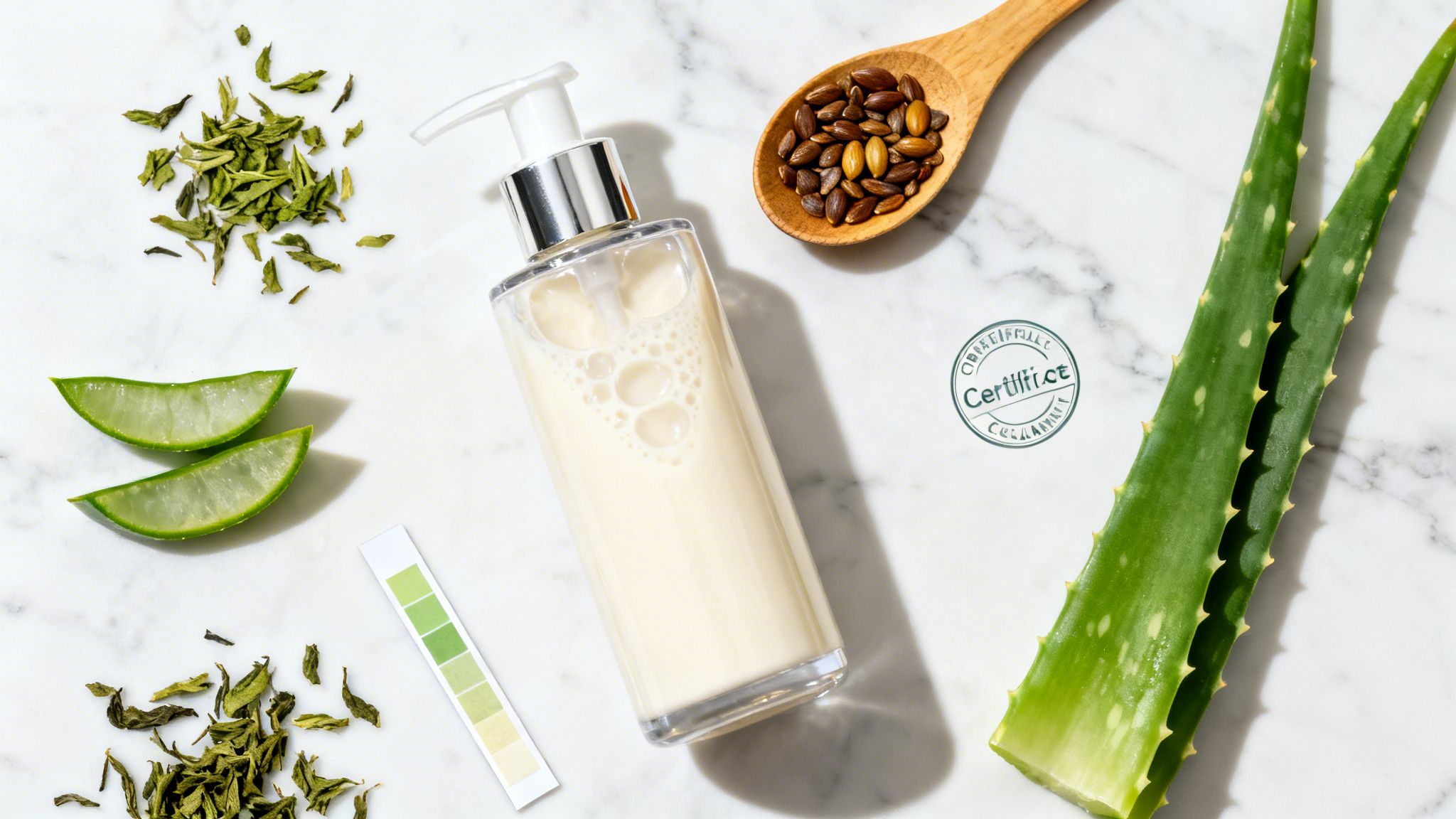
USDA Organic: This is one of the most recognizable seals in the United States. If a cleanser has the USDA Organic logo, it means at least 95% of its ingredients (not counting water and salt) are certified organic. If a product is made with 70-94% organic ingredients, the label can say "made with organic ingredients," but it can't use the official seal.
COSMOS (COSMetic Organic Standard): This is the heavyweight champion in Europe, bringing together several certification bodies (like the Soil Association in the UK and Ecocert in France). COSMOS has two main levels: COSMOS ORGANIC demands a very high percentage of organic ingredients, while COSMOS NATURAL focuses on ensuring the formula comes from natural origins, even if fewer of those ingredients are certified organic.
NSF/ANSI 305: This certification was created specifically for personal care products. If you see a product labeled "contains organic ingredients," this seal is your proof that it contains at least 70% organic content by weight.
A true certification isn't just a pretty logo; it's a guarantee of accountability. It means an independent body has verified a brand's claims—from how it sources raw materials to its final formula—so you can buy with total confidence.
A Simple Checklist for Spotting the Real Deal
Feeling more empowered? Good. Here’s a quick mental checklist you can run through in the store to separate the truly organic products from the "greenwashed" ones. This will help you choose a cleanser based on facts, not just clever marketing.
Look for a Seal: Don't just take the word "organic" on the front of the bottle at face value. Flip it over and search for a recognized certification mark like USDA, COSMOS, or NSF.
Scan the Ingredient List: Real-deal organic ingredients are almost always marked with an asterisk (*), with a note at the bottom that says something like, "*Certified Organic Ingredient." It’s a clear sign of transparency.
Question Vague Terms: Get skeptical if a product leans heavily on buzzwords like "natural" or "botanical" but has no certification to back them up. These words sound nice, but they offer no real guarantee of quality or purity.
With this framework in your back pocket, you can slice right through the marketing fluff. You’ll be able to confidently pick a cleanser that not only aligns with your values but also gives your skin the gentle, effective care it deserves.
Matching Cleanser Ingredients to Your Skin's Needs
Alright, you know how to spot a genuinely organic product. Now for the fun part: becoming an ingredient detective. This is where we connect the dots between what your skin is doing—whether it's feeling tight, breaking out, or showing a little redness—and the botanicals that can actually help.
Think of an ingredient list less like a chemistry test and more like a recipe for your skin. The goal here is to get you to a place where you can scan a label and know, almost instantly, what's going to work for you and what's a definite pass. That’s how you find your holy grail cleanser, not just one that’s popular online.
Your Guide to Soothing Sensitive Skin
If your skin throws a fit at the drop of a hat—we're talking redness, itchiness, or that dreaded stinging sensation—your mission is simple: find the gentlest, most calming cleanser possible. You’re looking for ingredients famous for their anti-inflammatory and soothing powers. These are the botanicals that comfort your skin while cleansing, not strip it bare and leave it even more reactive.
Think of calming heroes that won’t mess with your skin's delicate protective barrier. It’s interesting how insights from other areas, like using a warm oil treatment for nourished hair, often crossover into skincare. At the heart of it, both are about using nourishing oils to protect and replenish.
For sensitive complexions, keep an eye out for:
- Chamomile: A classic for a reason. It’s fantastic for dialing down redness and calming general irritation.
- Aloe Vera: This does more than just cool a sunburn. It delivers a shot of hydration and helps repair the skin barrier.
- Calendula: Known for its gentle, healing touch, calendula is perfect for skin that's easily inflamed.
- Jojoba Oil: This one is a superstar because its structure is almost identical to your skin's own oil, making it incredibly balancing and non-irritating.
Quenching Thirsty and Dry Skin
For anyone with dry skin, the daily struggle is real. You need to wash away the day without washing away the precious natural oils your skin desperately needs. If your face feels tight and squeaky after cleansing, that’s a huge red flag. Your perfect match will be a rich, creamy formula loaded with hydrating ingredients.
Your cleanser should be the first step in your hydration routine, not something that works against it. It needs to clean while depositing moisture, leaving your skin feeling soft and comfortable. That means foaming cleansers, especially those with harsh sulfates, are usually public enemy number one. Instead, look for cleansing oils, balms, and creams.
For dry skin, the right cleanser does more than just clean; it's the first step in your hydration routine. It should support your moisture barrier, not compromise it.
Look for these deeply nourishing ingredients:
- Shea Butter: A rich, buttery emollient that’s brilliant at sealing in moisture and soothing dry patches.
- Avocado Oil: Absolutely packed with fatty acids and vitamins that deeply nourish and replenish tired, thirsty skin.
- Honey: It’s a natural humectant, which is a fancy way of saying it literally pulls moisture out of the air and into your skin for lasting hydration.
As the infographic below shows, understanding organic labels is a critical piece of the puzzle. Misleading marketing can easily point you toward a product with hidden irritants that will only make dryness or sensitivity worse.
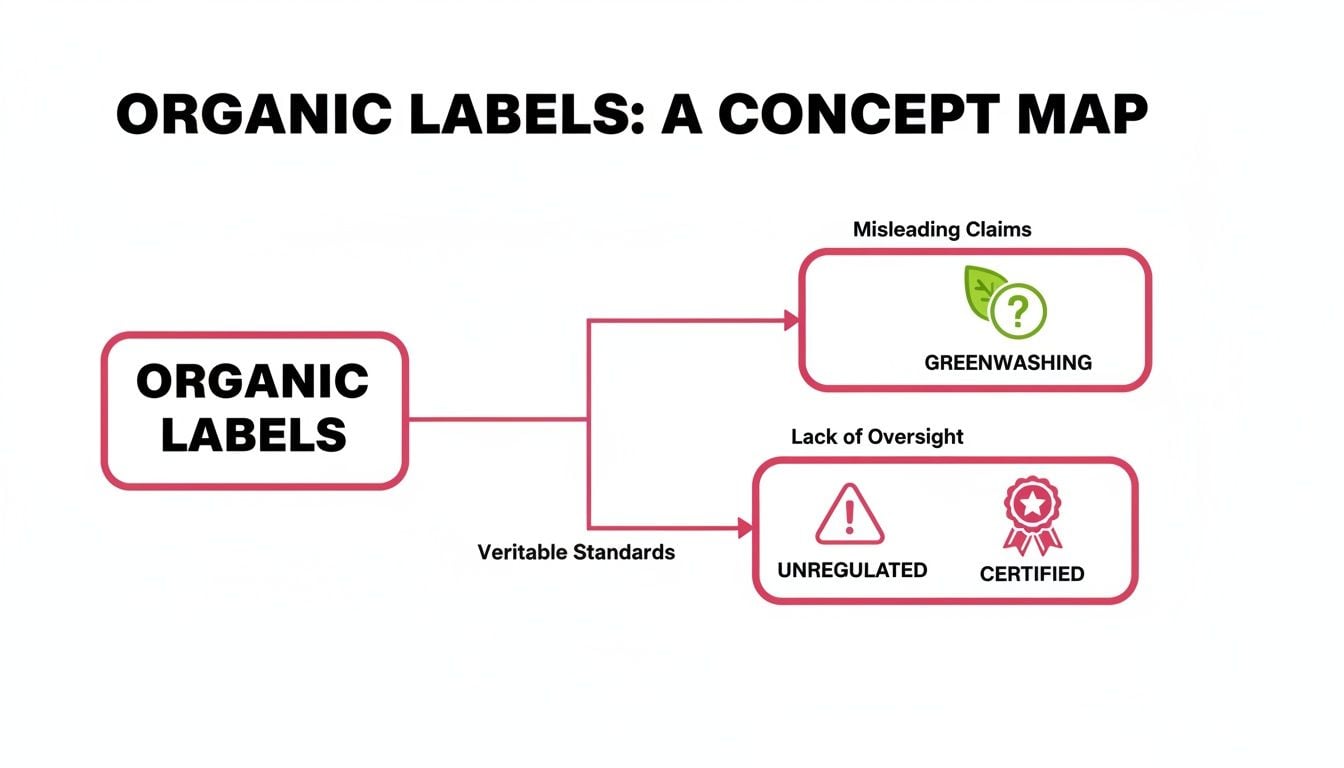
This visual breaks down the good, the bad, and the ugly of organic claims, reminding us why knowing your ingredients is your best defense.
Balancing Oily and Acne-Prone Skin
Let's bust a huge skincare myth: oily skin does not need a harsh, stripping cleanser to feel clean. In fact, that aggressive approach usually backfires, sending your oil glands into overdrive to compensate for what you just stripped away. The real secret to managing oil and breakouts is all about balance.
You need a cleanser that can effectively get rid of excess oil and impurities without destroying your skin's moisture barrier. Many organic ingredients are fantastic at this, offering antibacterial and clarifying benefits while keeping the skin calm. A great example is the "like dissolves like" principle—a well-formulated cleansing oil can be a game-changer for oily skin, dissolving excess sebum without stripping anything.
Top ingredients to look for include:
- Tea Tree Oil: A true powerhouse with natural antibacterial properties to help fight acne-causing bacteria.
- Willow Bark Extract: As a natural source of salicylic acid, it gently exfoliates and helps keep pores clear.
- Grapeseed Oil: A wonderfully lightweight and non-comedogenic oil that cleanses thoroughly without a greasy feel or clogged pores.
Supporting Mature and Aging Skin
As our skin matures, its needs shift. Cell turnover slows down and we produce less collagen and elastin, which can lead to fine lines and a loss of that bouncy firmness. A great cleanser for mature skin will be gentle, hydrating, and packed with antioxidants to fend off environmental stress.
Think of your cleanser as the prep step—it should support skin renewal and create a nourished canvas for the rest of your anti-aging routine. You want to avoid anything that leaves your skin feeling tight, as that can actually make fine lines look more prominent.
Look for these age-supporting botanicals:
- Green Tea: It’s loaded with potent antioxidants (polyphenols) that are brilliant at fighting free-radical damage from pollution and UV exposure.
- Rosehip Seed Oil: Famous for its high content of vitamins A and C, this oil is celebrated for promoting cell regeneration and improving skin tone and texture.
- Frankincense: This ancient resin has amazing toning and rejuvenating properties that can help improve skin's elasticity and appearance.
Now that you know what to look for based on your skin's primary needs, let's put it all together. The table below is a quick-reference guide to help you match ingredients to your concerns.
Organic Ingredient Matchmaker for Your Skin Type
This table will help you quickly identify the powerhouse organic ingredients that will love your skin back, and which ones you might want to be a bit more careful with.
| Skin Concern | Look For These Ingredients | Ingredients to Approach with Caution |
|---|---|---|
| Dry/Dehydrated | Shea Butter, Avocado Oil, Honey, Hyaluronic Acid, Squalane, Jojoba Oil | Strong essential oils (e.g., Peppermint, Eucalyptus), Alcohol, Willow Bark in high concentrations |
| Sensitive/Reactive | Chamomile, Calendula, Aloe Vera, Cucumber Extract, Colloidal Oatmeal | Fragrance (even natural), harsh essential oils, potent acids (Glycolic, Lactic) |
| Oily/Acne-Prone | Tea Tree Oil, Willow Bark Extract, Grapeseed Oil, Neem Oil, Green Tea | Coconut Oil, Cocoa Butter (can be comedogenic for some), rich, heavy creams |
| Mature/Aging | Rosehip Seed Oil, Green Tea, Frankincense, Sea Buckthorn Oil, Vitamin C sources (e.g., Camu Camu) | Harsh physical scrubs (e.g., nutshell powders), drying foaming agents, high-alcohol toners |
| Combination | Jojoba Oil, Grapeseed Oil, Honey, Green Tea (balancing ingredients) | Ingredients that are too stripping (for dry areas) or too rich (for oily areas) |
Remember, this is a starting point. Your skin is unique, so paying attention to how it responds is the most important step of all. Now, let’s talk about how to properly test a new cleanser to make sure it’s the one.
Finding a Great Cleanser at Any Price Point
One of the biggest myths I hear is that "organic" is just another word for "expensive." If that's what has been holding you back, I have some good news: finding an amazing organic facial cleanser that works for your skin doesn't mean you have to drain your bank account.
Of course, you'll find plenty of high-end, luxury organic brands with a price tag to match. But the market has completely opened up, and effective, clean skincare is more accessible than ever. The most important thing to remember is that a high price doesn't automatically mean it's a better product.
Navigating the Price Spectrum
When you start shopping, you’ll see that the prices for organic cleansers are all over the map. You can find simple, effective formulas from budget-friendly brands sitting on the same shelf as complex, botanical-rich potions from prestige lines.
What's really exciting, though, is the incredible growth in the mid-range market. This is where the magic happens. Many of the most effective, highest-rated cleansers are in a price bracket that won't make you wince.
Don't ever assume a higher price tag means a better product. I’ve seen some of the most beloved and effective organic cleansers turn out to be incredibly affordable. Thoughtful formulation always trumps cost.
Real-World Pricing: What to Expect
So, what should you actually expect to pay? As of 2026, the non-toxic facial cleanser market has options ranging from as low as $9 to over $90.
But here's the revealing part: a huge number of the top-recommended cleansers, the ones people rave about for their gentle feel and real results, are concentrated in the $18 to $42 range. You can find more data on non-toxic cleanser pricing from NonToxic Lab.
This proves you no longer have to make a painful choice between your budget and your skin's health. For example, a true fan-favorite like the Cocokind Oil to Milk Cleanser costs just $18 and works beautifully for almost every skin type.
Finding Value at Any Budget
Finding the best value simply comes down to knowing what to look for on the ingredient list and matching it to your budget.
Here’s a quick breakdown of what you can expect at different price points:
Affordable Finds (Under $20): These cleansers usually have simple, clean formulas. They might not feature rare, exotic oils, but they absolutely deliver a gentle and effective clean using quality organic ingredients.
Mid-Range Marvels ($20 – $45): This is the sweet spot where you'll find many of the best organic facial cleansers. These products often have more sophisticated blends, higher concentrations of active botanicals, and are more likely to have official certifications.
Luxury Splurges ($45+): In this tier, you're paying for a premium experience. Think unique or rare ingredients, advanced formulation science, and luxurious textures, scents, and packaging.
At the end of the day, the right choice is a cleanser your skin loves and your wallet can handle. With today's incredible selection, you can find your perfect match without any compromises.
Building Your Ideal Cleansing Routine
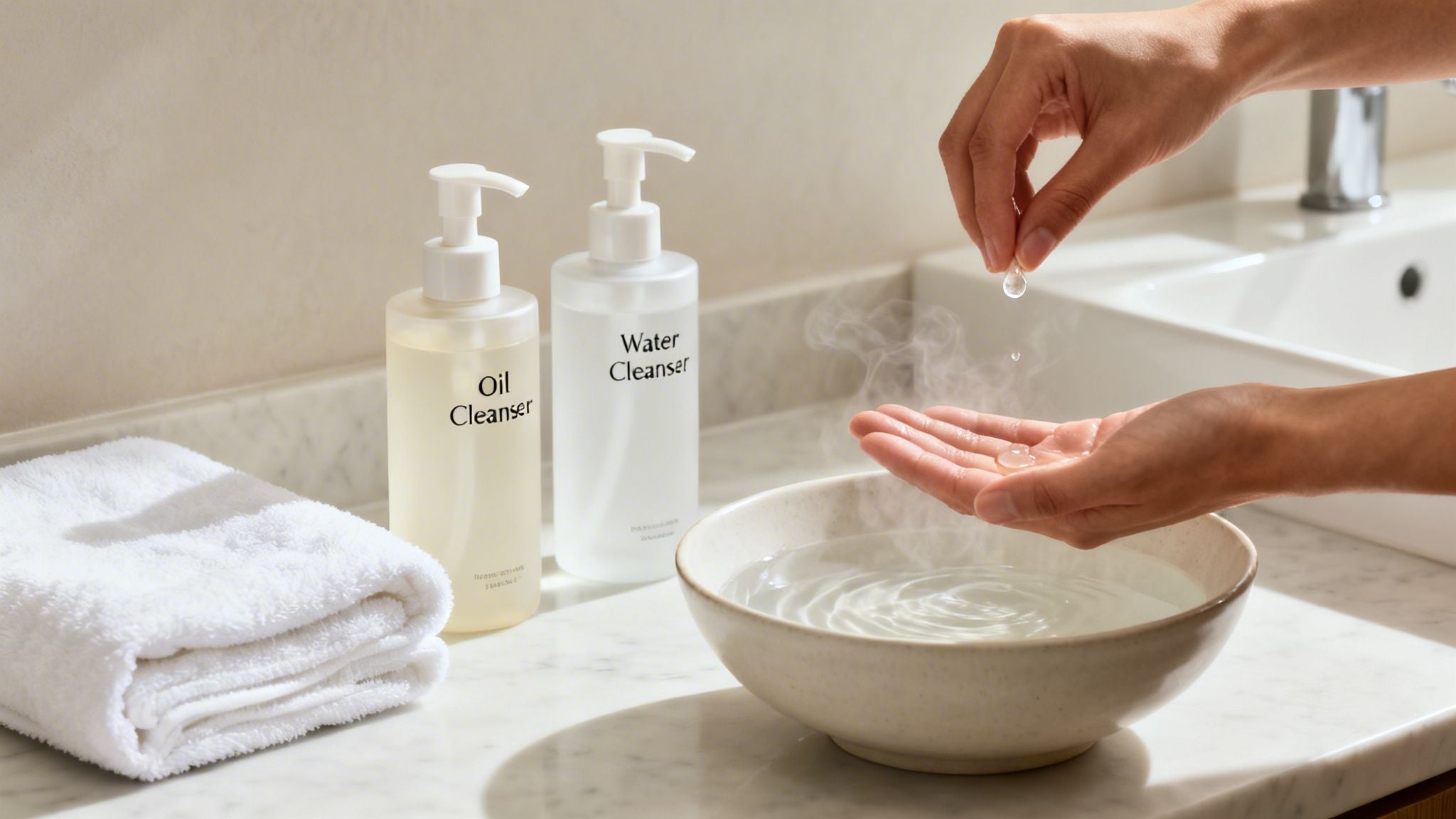
You’ve finally found the perfect organic cleanser—you've decoded the labels and matched the ingredients to your skin. That's a huge win! But now comes the part that truly unlocks its potential: how you use it.
Think of it this way: you can have the most beautiful, farm-fresh ingredients, but if you blast them with heat or rush the process, you won't get the delicious meal you were hoping for. Your cleanser works the same way. The right technique is what protects your skin barrier and ensures you get every bit of goodness from the bottle.
Simple Habits for a Healthier Cleanse
Before we get into a daily schedule, there are two non-negotiable rules I tell everyone. These small habits make a world of difference in keeping your skin balanced and happy.
First, always use lukewarm water. It's tempting to use hot water for that "squeaky clean" feeling, but it’s incredibly stripping and can leave your skin feeling tight, irritated, and vulnerable. On the flip side, ice-cold water shocks the skin and isn't great at dissolving dirt and cleanser. Lukewarm is the gentle sweet spot your skin will thank you for.
Second, and this is crucial, always patch test a new product. Think of it as your insurance policy against a full-face reaction. Just apply a tiny amount to a hidden spot, like behind your ear or on your inner arm. Let it sit for a minute, rinse it off, and then wait 24-48 hours. No redness, itching, or bumps? You're clear to go.
The Power of the Double Cleanse
You've probably heard the buzz around "double cleansing," and I'm here to tell you it's not just hype. For anyone who wears makeup or daily sunscreen, it's a total game-changer. The method is simple: cleanse first with an oil-based cleanser, then follow up with your regular water-based (gel or cream) one.
The magic behind it is the simple chemistry of "like dissolves like." The oil cleanser grabs onto and melts away all the oil-based things on your face—makeup, SPF, and your own excess sebum. Then, the water-based cleanser comes in to wash away any leftover residue, leaving your skin perfectly clean without feeling stripped raw.
This two-step process gets your skin truly clean without any harsh scrubbing. Since cleansing is the foundation of any good regimen, you might find our guide on how to build a skincare routine for aging skin helpful for planning your next steps.
Your Morning vs. Evening Routine
Your skin’s needs change from morning to night, so it makes sense that your cleansing routine should, too. Here’s a simple way to structure your day for the best results with your new organic cleanser.
Morning Routine (The Gentle Wake-Up)
In the morning, your goal is to simply refresh the skin and wash away any oils produced overnight. Unless your skin is very oily, a light, gentle cleanse is all you need.
- Splash: Wake your skin up with a splash of lukewarm water.
- Cleanse: Use just a pea-sized amount of your cleanser. Gently massage it over damp skin for about 30 seconds.
- Rinse & Pat: Rinse well and gently pat your face dry with a clean, soft towel. Never rub!
Evening Routine (The Day-Melting Reset)
This is the main event. Your evening cleanse needs to be more thorough to remove makeup, sunscreen, city grime, and pollution. This is the perfect time to double cleanse.
- First Cleanse (Oil): Start with dry skin. Massage your oil cleanser all over your face for a full 60 seconds to really break everything down. Add a little water to emulsify it into a milky texture, then rinse.
- Second Cleanse (Water-Based): Now, on damp skin, apply your cream or gel cleanser. Massage for another 30-60 seconds, paying extra attention to areas where you get congested.
- Rinse & Pat: Rinse everything off completely and pat your skin dry. Now you have a clean canvas, ready to absorb your serums and moisturizers.
Turning cleansing into a mindful moment rather than a chore is a powerful shift. It's a trend we're seeing more of as people recognize that what they wash their face with is just as important as how they do it. This growing awareness is why organic options have become so much more popular, a sentiment shared by experts like those at Baby LeBebe who discuss the rise of organic cleansers.
Your Final Checklist for Picking the Perfect Cleanser
Alright, let's pull all this information together. The world of organic skincare can feel like a maze, but finding the right cleanser is easier than you think when you know what to look for.
Think of this as your cheat sheet. Bookmark this page and pull it up when you're shopping. These simple questions will cut through the marketing noise and help you choose a cleanser that leaves your skin feeling calm, clean, and truly happy.
First: Know Your Skin & Your Goals
Before you even look at a product, you have to get clear on what your skin is telling you. This is, without a doubt, the most important step.
- What’s my skin type? Is it dry and tight? Oily in the T-zone? Prone to redness and irritation? Maybe it's showing signs of aging? Be honest about what you see and feel every day.
- What’s my #1 priority? Am I trying to soothe sensitivity, get a handle on breakouts, boost that glow, or simply get a deep, hydrating clean? Focus on your main goal first.
- What texture does my skin love? Think about past experiences. Does your skin feel amazing after using a milky cream, a silky oil, a light gel, or a buttery balm?
Second: Become an Ingredient Detective
Now it's time to flip the bottle over. The back label tells the real story, not the flashy promises on the front.
Remember, a short, focused list of high-quality botanicals is almost always better than a long, confusing list of synthetics. Real magic is in the formulation, not the marketing.
- Is it officially certified organic? Look for those trusted seals. A USDA Organic or COSMOS logo is your guarantee that the ingredients and sourcing meet rigorous standards.
- What are the first five ingredients? The formula's foundation should be packed with things that help your skin. Are you seeing calming agents like chamomile, hydrators like shea butter, or balancing oils like jojoba?
- Does it have any of my personal "no-go" ingredients? Scan for harsh sulfates (like SLS), synthetic fragrances, or any specific essential oils that you know irritate your skin. This same principle of careful selection applies everywhere, from your face wash to finding the right gentle kids' shampoo and conditioner for your family.
Finally: Be Practical
The most effective cleanser in the world is useless if it sits in your cabinet unused. Your choice has to fit your real life.
- Does the price work for my budget? You don’t have to break the bank. Fantastic cleansers are available at every price point.
- Will I actually enjoy using this every day? The experience matters! If you hate the smell or the feel, you won't stick with it. Your daily cleanse should feel like a small moment of self-care, not a chore.
Frequently Asked Questions
Switching up a core part of your skincare routine, like your cleanser, always brings up questions. It's completely normal! We've heard them all, so we've put together answers to the most common concerns to help you feel great about moving to an organic facial cleanser.
Can I Use an Organic Oil Cleanser on Oily Skin?
Yes, you absolutely can! This is one of the biggest myths in skincare, but the logic behind oil cleansing is solid chemistry: like dissolves like. A well-formulated organic oil cleanser is actually a master at dissolving excess oil, stubborn makeup, and sunscreen without stripping your skin.
Think about it this way: when you use a harsh, foaming cleanser to dry out oily skin, you're sending it into panic mode. Your skin overcompensates by producing even more oil to protect itself. A gentle oil cleanser, on the other hand, helps to balance and regulate your skin's natural oil production. Just look for non-comedogenic oils like jojoba or grapeseed that are known for cleansing effectively without clogging pores.
Why Does My Organic Cleanser Not Foam Much?
That big, satisfying lather you might be used to usually comes from sulfates like Sodium Lauryl Sulfate (SLS). These are powerful detergents that you won't find in certified organic cleansers for a good reason—they can be incredibly harsh on your skin’s protective barrier, leading to dryness, irritation, and sensitivity.
Organic formulas use gentler, plant-derived surfactants that clean your skin perfectly well without all the suds.
A low-foaming formula is often a good sign. It tells you the product is working with your skin's natural chemistry instead of against it. A deep clean has nothing to do with big bubbles.
How Long Should I Patch Test a New Cleanser?
Please, don't skip this step. Patch testing is your best defense against a potential full-face reaction, especially if your skin is on the sensitive side. It’s quick, easy, and can save you a world of trouble.
- Apply a Small Amount: Pick a discreet spot, like behind your ear or on your inner wrist. Dab a tiny bit of the new cleanser on the area.
- Mimic Normal Use: Let it sit for about 30-60 seconds—the same amount of time you’d spend washing your face—and then rinse it off completely.
- Wait and Watch: Keep an eye on that spot for the next 24 to 48 hours. If you see any redness, feel any itching or burning, or notice little bumps, that’s your skin telling you this cleanser isn’t the one.
Taking this simple precaution makes finding your perfect organic cleanser a much safer and more enjoyable process.
At Hair and Body review, our goal is to help you build a routine you love. For more expert advice and honest product guides, visit us at https://hairandbodyreview.com.