
If you've ever found yourself staring at a wall of hair products, wondering which one will actually fix your dry, damaged hair, you're not alone. The secret isn't in the marketing hype; it’s in understanding the powerful trio of ingredients that a great hair mask uses to work its magic. We're talking about ingredients that hydrate, others that seal, and a final group that rebuilds.
Finding the right balance of these for your hair is the key to finally getting the soft, strong, and healthy results you're after.
Your Path To Revitalized Hair Begins Now
Let's be honest—dealing with hair that feels like straw, frizzes at the mere mention of humidity, and just looks plain dull can be incredibly frustrating. It’s a common battle, especially for those of us who love our heat tools, enjoy a fresh color, or simply exist in the world where sun and pollution take their toll.
This is where a good hair mask comes in. Think of it less as just another conditioner and more as an intensive therapy session for your hair. While your daily conditioner works on the surface, a mask is formulated to go deeper, delivering a potent, concentrated dose of restorative ingredients exactly where they're needed most.
More Than Just A Quick Fix
A regular conditioner is great for daily maintenance, but it mostly just smooths the outside of the hair strand. The best hair masks for dry damaged hair are built differently. Their job is to penetrate the hair shaft, repairing damage from the inside out and fundamentally changing your hair's health and texture over time.
This guide is your roadmap to getting that healthy hair back. We’ll break down the science of how hair gets damaged and, more importantly, how you can fix it. By the end, you’ll be able to confidently choose and use the perfect mask to bring your hair back to life.
Think of a hair mask as the emergency service for your hair. Shampoo cleanses and conditioner maintains, but a mask is the specialist you call in for deep, targeted repair. It delivers a level of nourishment a daily routine just can't match.
Understanding The Building Blocks Of Repair
To really heal your hair, you need to know what you're putting on it. Let's demystify those ingredient labels and focus on the three core components of any effective hair mask.
Here’s a quick breakdown of the main players you should be looking for to rescue dry, damaged strands.
Quick Guide to Key Hair Mask Ingredients
| Ingredient Type | Primary Function | Common Examples |
|---|---|---|
| Humectants | The Moisture Magnets. They draw water into the hair shaft. | Glycerin, Hyaluronic Acid, Honey, Aloe Vera |
| Emollients | The Smoothers & Sealers. They lock in moisture and create shine. | Shea Butter, Argan Oil, Coconut Oil, Avocado Oil |
| Proteins | The Structural Rebuilders. They fill in gaps to strengthen weak strands. | Keratin, Collagen, Silk Amino Acids, Wheat Protein |
In short, humectants pull in the hydration, emollients lock it all down, and proteins rebuild the very foundation of your hair.
By learning to spot these ingredients, you'll be able to look past the promises on the front of the jar and find a product with the perfect blend for what your hair truly needs. Your journey to stronger, healthier hair starts with this knowledge.
Why Your Hair Actually Feels Dry and Damaged
Ever wonder why your hair gets that dry, brittle feeling? To find a real solution, we have to get to the root of the problem—or in this case, the structure of the hair strand itself.
Think of your hair’s outer layer, the cuticle, like the shingles on a well-built roof. On healthy hair, these tiny, overlapping scales lie flat and tight. This smooth surface is what gives your hair that beautiful, light-reflecting shine. More importantly, it forms a protective barrier that seals in moisture, keeping each strand flexible and strong.
But when hair is damaged, that "roof" is in rough shape. The shingles are lifted, cracked, or even missing in action. This creates a rough, jagged surface that snags easily and looks dull because it can't reflect light.
This is more than just a cosmetic issue. Those gaps in the cuticle leave the inner core of your hair, the cortex, completely exposed. The cortex is the heart of the strand, holding all its moisture and protein-based strength. When it’s exposed, moisture escapes constantly, and the hair's internal structure weakens. This is the direct cause of breakage and split ends—the very integrity of the hair is gone.
Your daily conditioner can smooth things over for a little while, but it often just patches the surface. To fix this kind of deep-seated damage, you need something more potent. This is where a great hair mask comes in; it’s designed to go deeper and help repair the strand from the inside out.
The Main Culprits Behind Hair Damage
Damage rarely comes from a single source. It’s usually a combination of habits and treatments that gradually wear down your hair’s defenses. Pinpointing the cause is the first step to breaking the cycle. Most damage falls into one of three camps.
1. Chemical Damage
This is the heavy hitter of hair damage, caused by treatments that force a chemical change in your hair’s structure.
- Bleaching and High-Lift Color: These services blast open the hair's cuticle to remove pigment. The process is incredibly effective for changing your color, but it’s also incredibly destructive to the hair's internal bonds.
- Perms and Relaxers: To change your hair's texture from straight to curly (or vice versa), these treatments have to break down and then rebuild the protein bonds in your hair, leaving it far more porous and fragile.
- Chlorine: That "pool hair" feeling is real. Chlorine strips away the natural oils that protect your hair, and when combined with sun exposure, it can quickly make strands brittle and dry.
2. Thermal Damage
This one is all about heat—specifically, too much of it without enough protection.
- Flat Irons and Curling Wands: Any tool cranked up past 385°F (196°C) can literally boil the water inside your hair strands. This creates tiny, destructive steam explosions that permanently damage the hair’s protein. It’s a major cause of those little white dots you see on split ends.
- Blow-Drying on High Heat: Aiming a high-heat dryer at soaking wet hair is a recipe for flash-drying the surface, which dehydrates the strand and roughs up the cuticle.
Let's be clear: heat styling damage is irreversible. Once you’ve fried the protein in your hair, you can't un-fry it. The best you can do is manage the damaged sections to prevent more splitting while protecting the new, healthy hair growing in.
3. Mechanical Damage
This is the everyday wear and tear that comes from physical stress and friction. It might seem minor, but it adds up.
- Aggressive Brushing: Ripping a brush through knots, especially when your hair is wet and at its most elastic and fragile state, will stretch the strands past their breaking point.
- Tight Hairstyles: Those super-snatched ponytails, tight buns, and braids create constant tension. Over time, this leads to breakage, especially around the delicate hairline (traction alopecia is a real concern!).
- Friction from Towels and Pillowcases: Vigorously rubbing your hair with a rough cotton towel is a surefire way to lift and tear at the cuticle. Similarly, a cotton pillowcase can snag and pull on your hair all night long.
Spotting these habits in your own routine is the key. Once you know what’s causing the problem, you can stop the cycle and finally give your hair a real chance to heal.
Decoding Hair Mask Ingredients for Real Results
Walking down the hair care aisle can feel overwhelming. To find a truly great hair mask for your dry, damaged hair, you have to learn to look past the fancy jars and clever marketing. The secret to a mask that actually works isn't magic; it's a specific combination of ingredients designed to tackle damage from three different angles.
Think of it as a complete rescue mission for your hair. First, you have to get moisture into the hair strand. Then, you need to seal it in so it doesn't immediately escape. Finally, you have to patch up the existing damage to prevent more breakage. Each step relies on a different hero ingredient.
The Moisture Magnets: Humectants
The entire repair process kicks off with hydration. This is where humectants come into play. I like to think of them as tiny moisture magnets. Their whole purpose is to pull water molecules out of the air and draw them deep inside the hair shaft, flooding it with the moisture it's been craving.
This is absolutely essential for hair that feels brittle and straw-like. When hair is dehydrated, it loses its elasticity and snaps easily. Humectants work to fix this from the inside out, refilling the water reserves in the hair's core.
You'll often see these on an ingredient list:
- Glycerin: A true workhorse ingredient that pulls in moisture and leaves hair feeling noticeably softer.
- Hyaluronic Acid: Borrowed from the skincare world, this superstar can hold over 1,000 times its weight in water, making it an incredible hydrator for thirsty hair.
- Honey and Aloe Vera: Great natural options that do double duty, hydrating the hair while also soothing an irritated scalp.
By pulling that moisture in, humectants set the stage perfectly for the next step of the repair process.
The Smoothers and Sealers: Emollients
Once you’ve got all that lovely moisture inside the hair, you need to make sure it stays there. That’s the job of emollients. If you imagine a damaged hair cuticle as a roof with raised, rough shingles, emollients are what come along and smooth those shingles back down into a flat, protective layer.
These are usually rich oils and butters that create a light, flexible coating around each strand. This coating does two things: it stops the moisture you just added from escaping, and it creates a smooth, even surface that reflects light. The result? Hair that feels silky to the touch and has a beautiful, healthy-looking shine.
Look for these popular emollients:
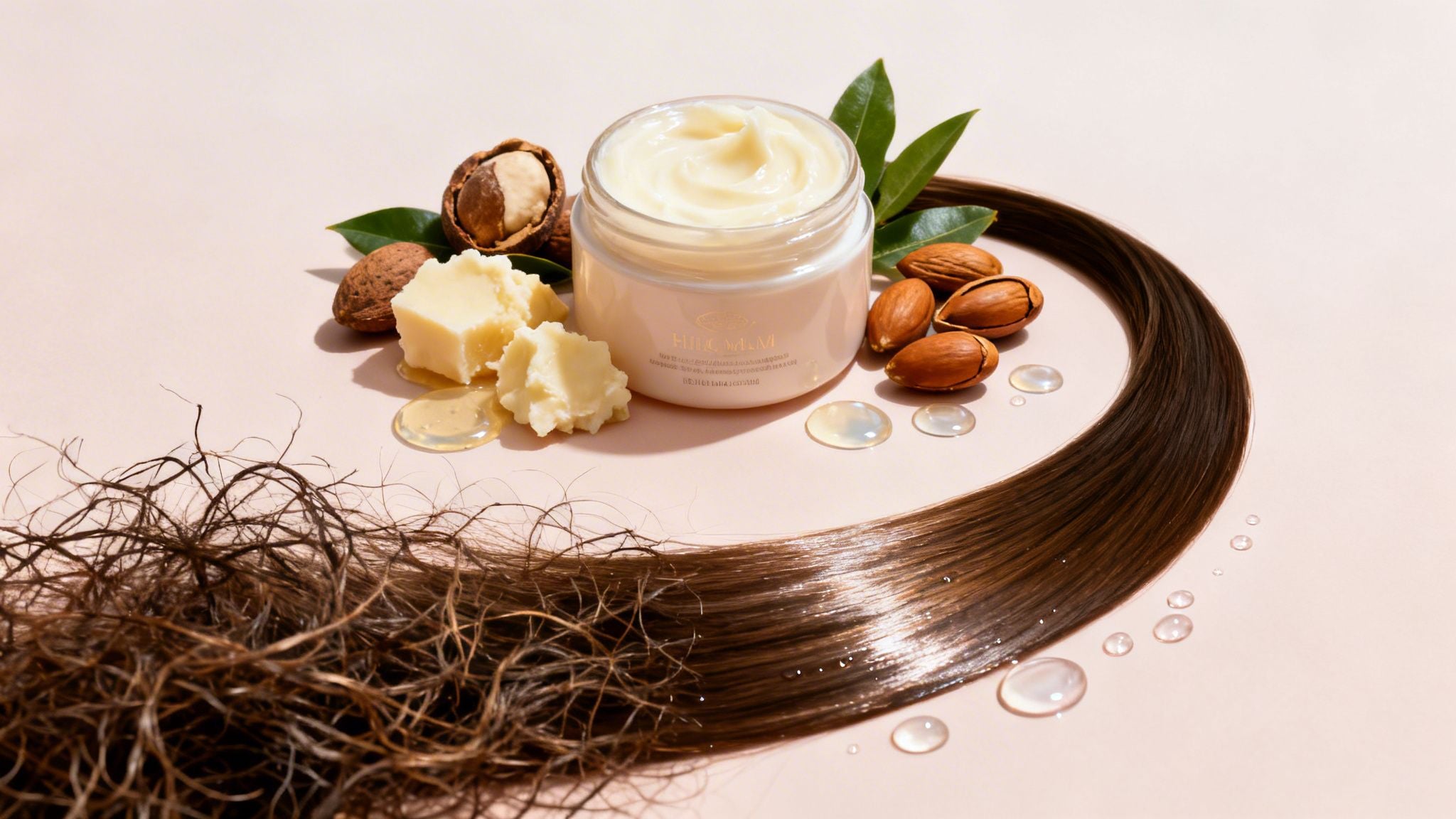
- Shea Butter: A thick, luxurious butter that’s fantastic for sealing the cuticle and delivering serious softness.
- Argan & Coconut Oil: These oils are famous for their ability to not only smooth the hair's surface but also penetrate a bit, adding moisture and fighting frizz.
- Avocado Oil: Loaded with fatty acids, this oil is a champ at making coarse, unruly hair feel more supple and manageable.
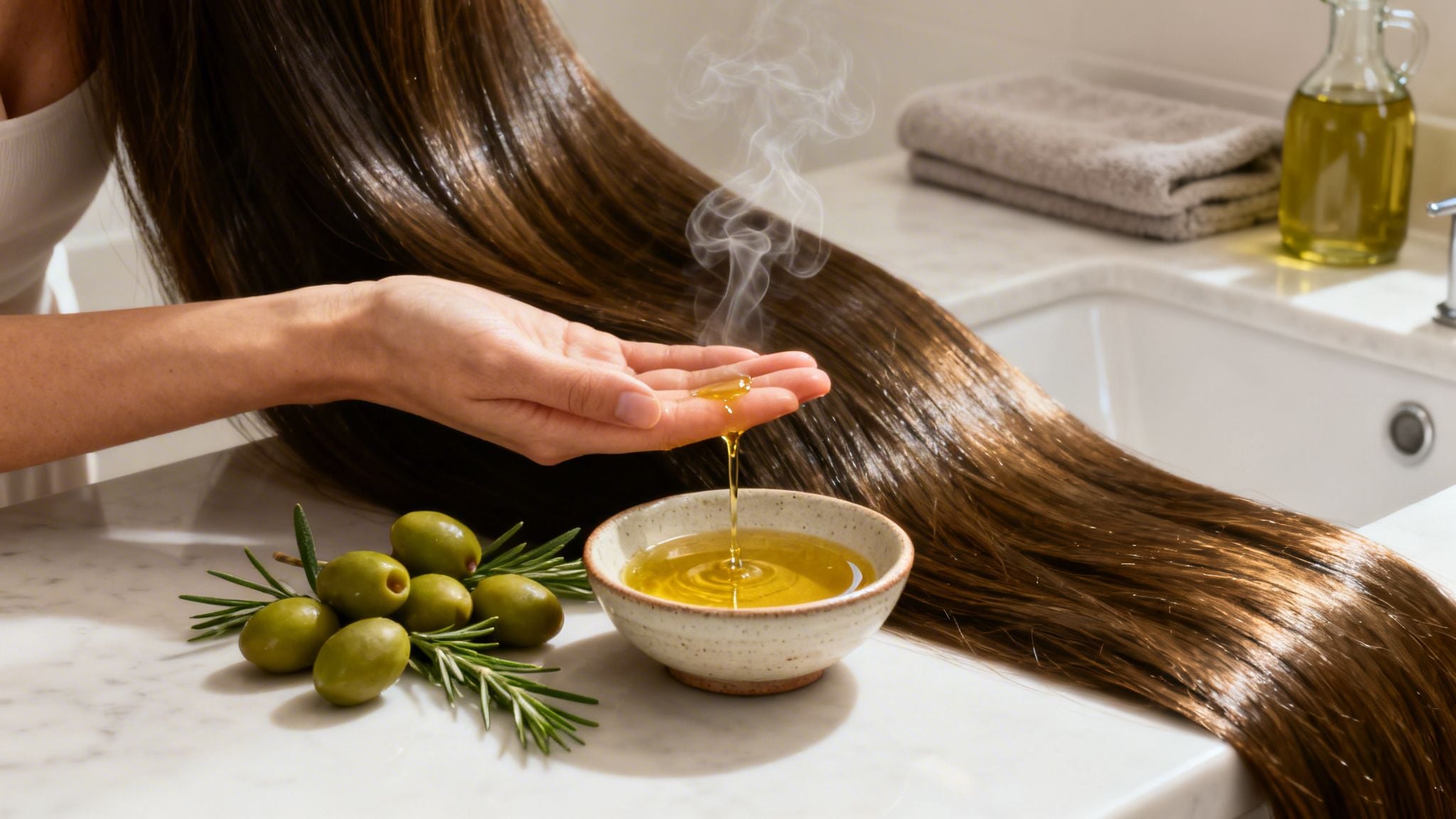
If you want a deeper dive into how different oils can help, a hot olive oil treatment is a classic for a reason. Ultimately, emollients are what transform a rough, frizzy texture into a sleek, polished finish.
The Structural Support: Proteins
The final piece of the puzzle is rebuilding. This is where proteins are non-negotiable. When your hair is damaged from bleach, heat styling, or even just aggressive brushing, it develops tiny cracks and gaps in its structure. Proteins act like a sort of "spackle," filling in those weak spots to reinforce the entire strand.
These ingredients bond directly to your hair, patching up the damage and reinforcing its natural keratin framework. This makes your hair stronger and much more resilient against future damage. It’s what truly repairs the hair and stops the cycle of breakage.
Think of keratin and silk amino acids as the literal building blocks of hair repair. They patch up weak points all along the hair shaft, which is the only way to stop split ends from traveling higher and prevent that dreaded snapping sound when you brush.
Learning to spot these key ingredients is far more important than falling for a brand's marketing claims. It puts you in control, allowing you to find what will genuinely work for your specific hair needs. For more on matching formulas to hair types, professional resources like the guides on Wella.com are a great place to look.
Of course, it also helps to know what you’re up against. Damage is rarely from a single source; it’s usually a mix of chemical treatments, heat, and everyday wear and tear.
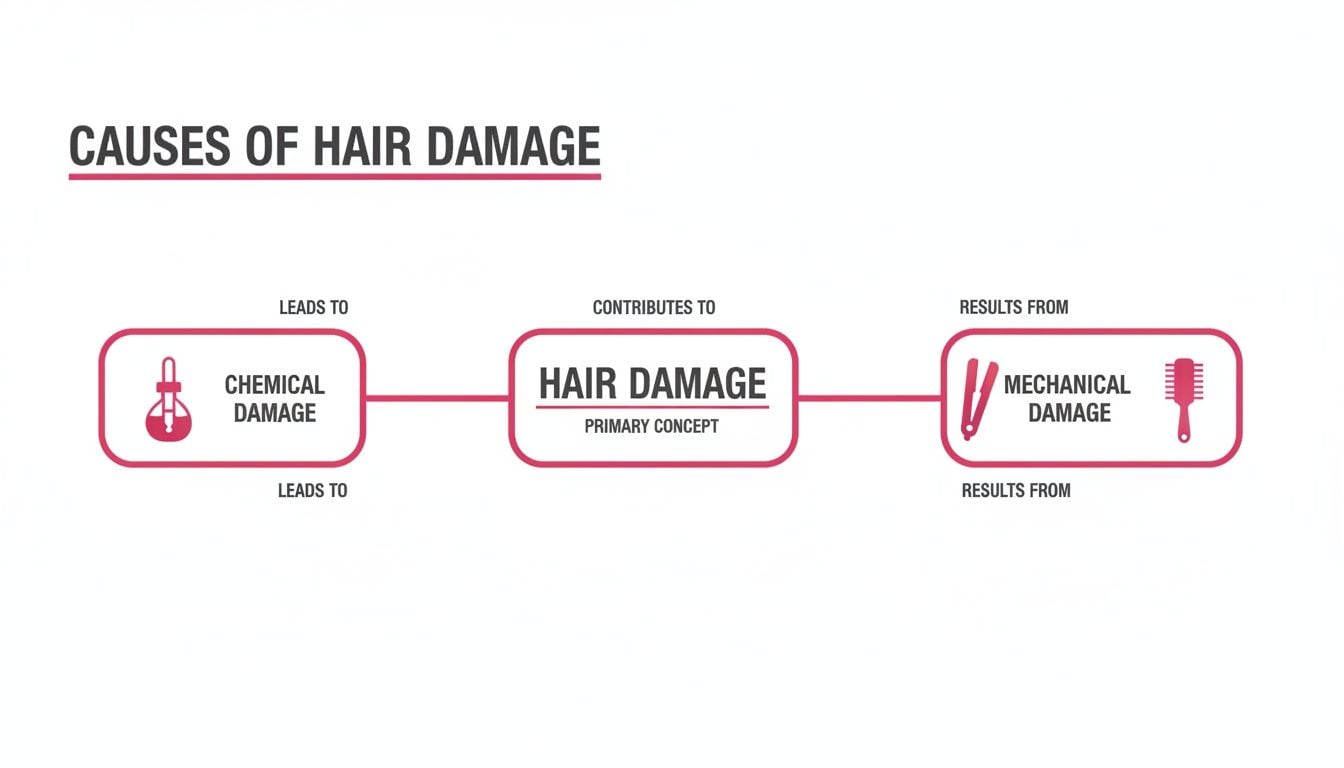
This chart gives you a quick visual of how everything from your flat iron to your hair tie can contribute to breaking down your hair’s natural defenses. The goal is to find a healthy balance in your hair mask. Too much moisture without protein can make hair feel gummy and weak, but too much protein without enough moisture can make it feel stiff and brittle. By understanding this trio—humectants, emollients, and proteins—you can finally decode any ingredient label and choose a product that will give you the real, lasting results you’re looking for.
Choosing the Right Hair Mask for Your Hair Type
There’s no such thing as a one-size-fits-all hair mask. What sends one person's thick curls into a state of hydrated bliss could easily turn fine, straight hair into a greasy mess. Finding the right treatment for your dry, damaged hair isn't about chasing a single "best" product, but about finding the perfect match for your hair’s unique personality.
It all comes down to matching the ingredients in the jar to the needs of your strands. Forget generic advice—a truly effective routine is personal.
Masks for Fine or Thin Hair
If you have fine hair, you know the struggle all too well. You're desperate for moisture and repair, but nearly every deep conditioner seems to leave your hair flat, limp, and weighed down. The mission is to find a mask that strengthens and hydrates without killing your volume.
Your best bet is a lightweight formula that puts proteins like keratin or silk amino acids front and center, rather than heavy butters. These ingredients are fantastic for patching up weak spots in the hair shaft, building resilience from the inside out. Lighter oils, such as argan or grapeseed oil, are also great choices for delivering moisture without that heavy, greasy feeling.
Think of it like this: Your fine hair needs a lightweight coat for warmth, not a heavy parka. A protein-rich mask acts like that perfectly fitted coat, providing structure and protection without being bulky.
Masks for Thick or Coarse Hair
On the flip side, if you're working with thick, coarse, or highly textured hair, your main battle is likely against intense dryness and a rough feel. Your strands can handle—and honestly, are probably begging for—much richer, heavier formulas. Don't be shy about reaching for the heavy hitters.
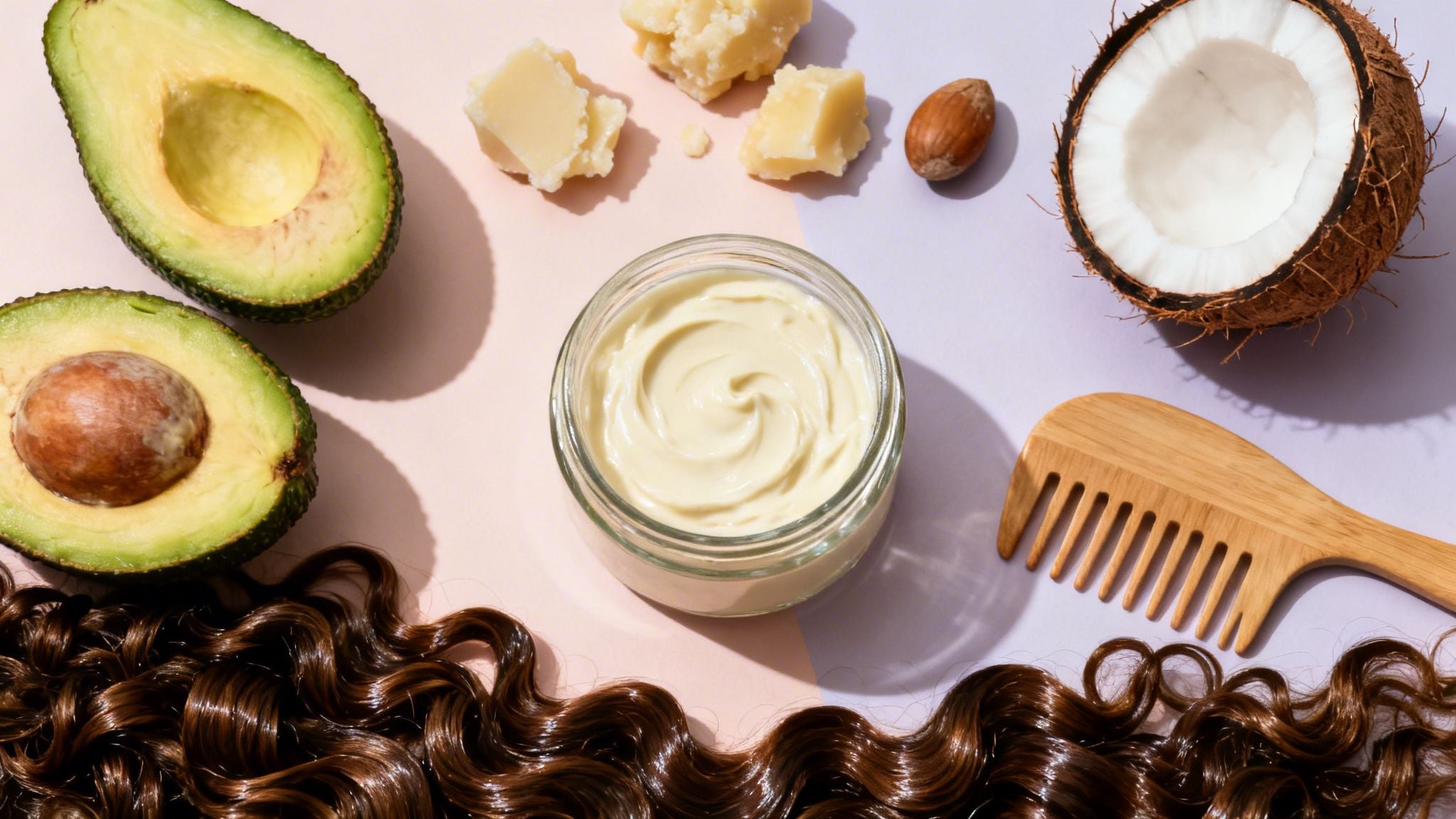
The ideal mask for you will be packed with dense butters and oils that can penetrate those thick strands and lock in some serious moisture. Keep an eye out for these ingredients:
- Shea Butter: An incredibly rich emollient that softens hair and seals the cuticle down beautifully.
- Avocado Oil: Loaded with fatty acids, this oil is a champion at making coarse hair feel more flexible and manageable.
- Coconut Oil: Famous for its ability to work its way deep into the hair shaft, delivering moisture where it counts.
These richer ingredients are your ticket to taming frizz, adding a soft and luxurious feel, and giving stubborn hair some much-needed pliability.
Masks for Curly and Coily Hair
Curly and coily hair patterns (from type 3A to 4C) are naturally drier than straight hair. It’s simple physics—the scalp's natural oils have a much tougher journey navigating all those beautiful twists and turns. This means hydration and slip are your absolute top priorities.
A great mask will drench your curls in moisture while making detangling feel like a dream. Look for formulas that blend powerful humectants (like glycerin and aloe vera) with emollients that provide excellent slip. "Slip" is that silky, slick feeling that lets your fingers or a comb glide through your hair without causing snags, knots, and breakage.
Ingredients like mango butter and jojoba oil are fantastic for creating that essential slip. For those with natural hair, finding the top deep conditioners for your specific curl pattern is an absolute game-changer for keeping your curls defined, healthy, and happy.
Getting the Most Out of Your Hair Mask: A Pro-Level Application Guide
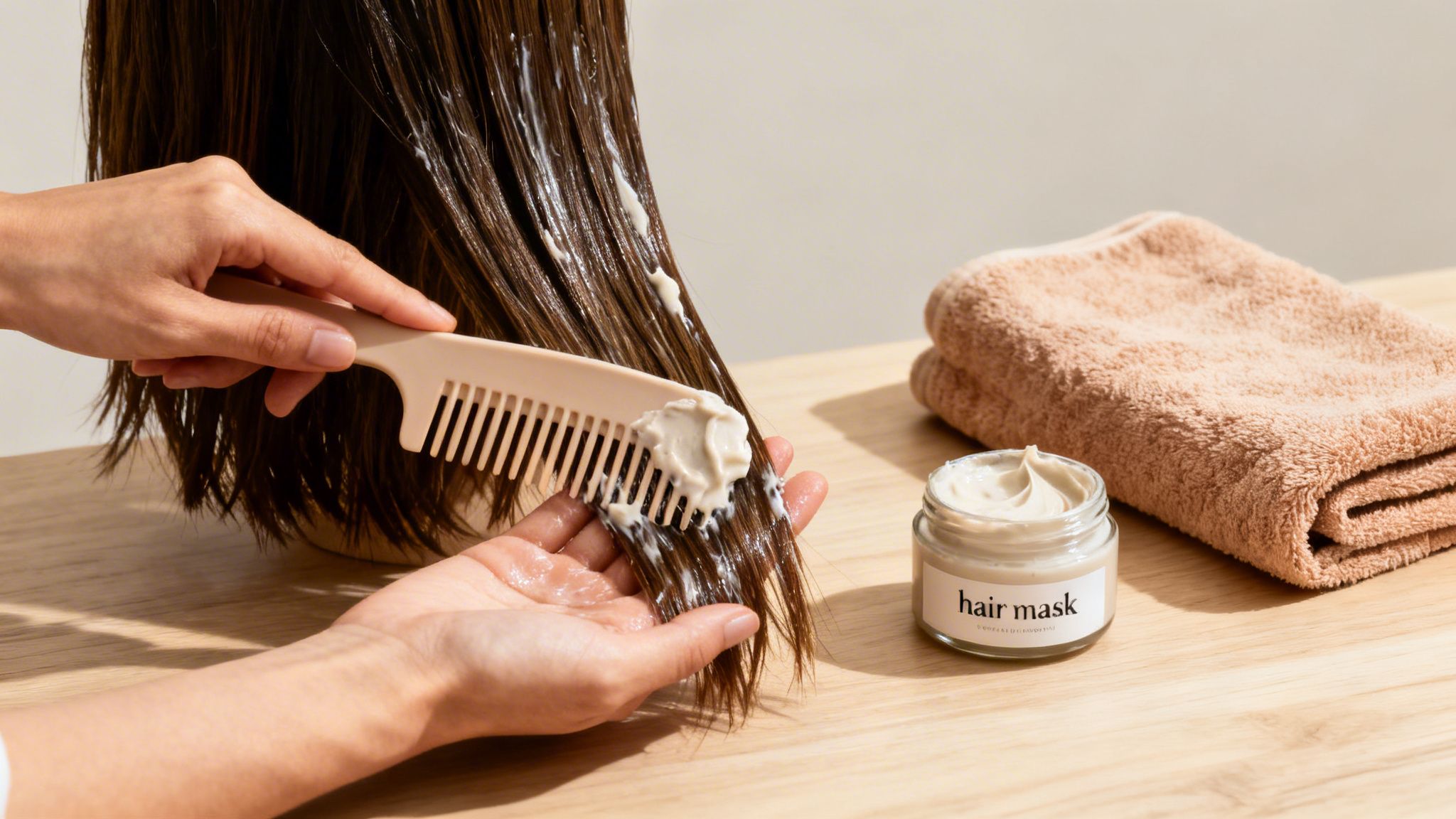
You’ve invested in a great product, but here's a little secret from years of experience: the mask itself is only half the equation. How you apply it makes all the difference. It’s the gap between "I used a mask" and "Wow, my hair feels incredible."
Think of it like this: you wouldn't paint a priceless piece of art on a dirty canvas. The same principle applies to your hair. We're going to walk through the right way to do it, step by step, so you can turn your bathroom into a mini-salon and get every last bit of goodness from your chosen treatment.
Step 1: Start with a Clean Slate
First things first, your hair needs to be clean. Really clean. Over time, things like product residue, natural scalp oils, and even minerals from hard water can build up, creating a film that stops your mask from doing its job.
Once or twice a month, I always recommend a good clarifying shampoo to strip all that gunk away. For your regular mask day, your favorite gentle shampoo is perfect. The point is to give the mask a clear path to get in and work its magic on the hair shaft.
Step 2: Wring It Out
After shampooing, gently squeeze the excess water from your hair. This is a step people often skip, but it’s crucial. Applying a mask to sopping wet hair just dilutes the formula, making it runny and far less effective. Your hair should be damp, not dripping.
Your hair is like a sponge. If it’s already saturated with water, there’s simply no room for it to absorb the rich, nourishing ingredients from your mask. By gently blotting it with a towel first, you open up space for all that goodness to soak in.
Step 3: Target the Damage
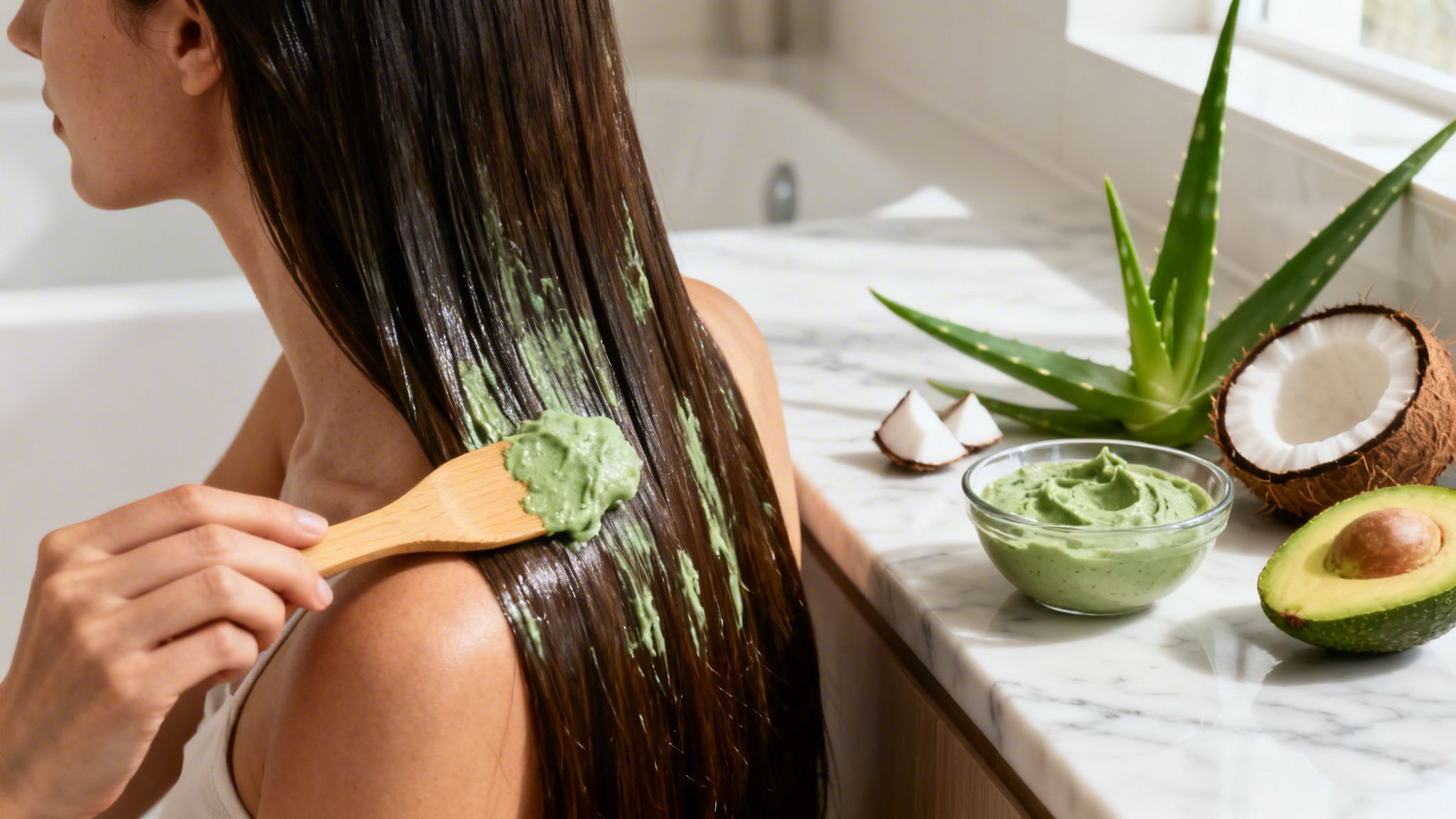
Now for the main event. Scoop out a quarter-sized amount and warm it up between your palms. This is where you want to be strategic: focus the application on your mid-lengths and ends. This is the oldest part of your hair and where dryness, split ends, and damage are most common.
If you have fine or oily-prone hair, be careful about slathering it on your roots—it can weigh your hair down. As you work the product through with your fingers, make sure every strand is lightly coated. If breakage is a big concern for you, there are specific techniques to reduce hair breakage naturally with a hair mask that can provide extra reinforcement.
Step 4: Comb It Through and Turn Up the Heat
Once the mask is applied, grab a wide-tooth comb and gently work it through your hair from the mid-lengths down. This ensures you get an even coating everywhere, so you don't end up with some patches feeling amazing while others feel left out.
Want to take it to the next level? Add a little heat. Wrap your hair in a warm, damp towel or pop on a simple shower cap. The warmth gently lifts the hair's outer layer, the cuticle, allowing the mask’s active ingredients to penetrate much deeper for a truly intensive treatment.
Step 5: Let It Marinate, Then Rinse Right
Patience is a virtue, especially here. Let the mask sit for the time specified on the label, which is usually between 5 and 20 minutes. Cutting the time short means you won't get the full benefit, but leaving it on for hours doesn't really add much and can sometimes be counterproductive.
When your time is up, rinse with lukewarm or cool water. This is key for sealing the cuticle back down and locking in all the moisture and nutrients you just gave your hair. Rinse until your hair feels smooth but no longer slippery. That’s it! You've just turned a simple hair wash into a powerful repair ritual.
Answering Your Most Common Hair Mask Questions
When you start looking for the perfect hair mask, you'll find the internet is full of conflicting advice and confusing terms. It's easy to get overwhelmed. Let's clear up some of the biggest questions I hear all the time so you can use these treatments with confidence and actually get the results you’re paying for.
Can I Leave a Hair Mask On Overnight?
It’s so tempting to think "more is more" when it comes to hair masks, right? The logic seems sound—if 20 minutes is good, eight hours must be amazing. But it really depends on the type of mask you're using.
For masks that are all about moisture—the creamy ones packed with oils and butters—leaving them on overnight can give you an extra boost of softness, especially if your hair is very coarse or thirsty.
But with protein-based masks, it’s a totally different story. These work by filling in gaps in the hair's cuticle, adding strength and structure. Leaving them on for too long can lead to something called protein overload. Imagine trying to fix a tiny crack with way too much cement; it becomes stiff, brittle, and even more likely to break. That's what happens to your hair.
The golden rule? Always follow the directions on the jar. The chemists who developed the formula have figured out the sweet spot for maximum absorption, which is usually around 20 to 30 minutes. After that, your hair simply can't soak up any more of the good stuff.
What Is the Difference Between a Hair Mask and a Deep Conditioner?
Marketing departments often use "hair mask" and "deep conditioner" as if they're the same thing, but an expert knows there’s a real difference in their job description.
Think of it like this: a deep conditioner is your weekly hydrating boost, like a tall glass of water for your hair. A hair mask is more like a trip to the specialist.
Deep Conditioners: These are basically more intense versions of your daily conditioner. Their main goal is to deliver a quick hit of moisture, making your hair feel softer and easier to manage. They're great for routine maintenance.
Hair Masks: A mask is a highly concentrated, targeted treatment. It’s formulated with a powerful dose of active ingredients—like specific proteins, vitamins, or lipids—designed to tackle serious problems. You bring in a mask for deep repair work, like recovering from bleach damage, mending breakage, or fighting chronic dryness.
A deep conditioner is fantastic for keeping healthy hair happy, but a hair mask is the heavy hitter you call in for a true rescue mission.
How Do I Know if My Hair Needs Moisture or Protein?
This is the million-dollar question. Answering it correctly is the key to finally seeing real results from your products. Give protein to hair that needs moisture, and it'll feel like straw. Give moisture to hair that needs protein, and it'll feel limp and mushy.
Luckily, your hair will tell you exactly what it needs. All you have to do is a simple strand test.
- After shampooing (before conditioner), gently pull a single, wet strand of hair from your head.
- Hold it between your fingers and give it a slow, gentle stretch.
- Watch how it behaves.
The reaction tells the whole story:
| Strand Reaction | What It Means | What to Use |
|---|---|---|
| Stretches a lot, feels gummy or weak, then snaps | Your hair is over-moisturized and needs strength. | A protein-rich mask. |
| Feels brittle and snaps almost immediately with no stretch | Your hair is dehydrated and desperately needs flexibility. | A moisture-rich mask. |
| Stretches a little, then springs back to its original length | You've got a healthy balance! | A balanced mask for maintenance. |
This simple test takes all the guesswork out of choosing a treatment. It ensures you’re giving your strands exactly what they’re craving at that moment, so you never waste time or money on the wrong product again.
Can a Hair Mask Actually Repair Split Ends?
Let's get this one straight, because it’s a myth that just won't die: no product can permanently fuse a split end back together. Once the hair shaft frays, it's like a frayed rope. You can't magically weave the fibers back into one solid piece.
The only real cure for a split end is a trim. Cutting it off is the only way to stop that split from traveling further up the hair shaft and causing even more damage.
So, where do hair masks fit in? Their power lies in prevention and cosmetic concealment. A good mask will contain ingredients that temporarily "glue" the split together, smoothing the cuticle so it looks and feels healthier. This not only improves the appearance but, more importantly, can help prevent the split from getting worse before your next haircut.
By keeping your hair strong and hydrated with regular masks, you build its resilience and make it far less likely to split in the first place. Think of it as your best line of defense.
At Hair and Body review, we believe that understanding your hair is the first step to achieving your goals. For more expert-backed reviews and personalized advice to help you find the perfect products for your routine, explore our comprehensive guides at https://hairandbodyreview.com.