

If your hair feels greasy just hours after a wash, your first instinct might be to grab the harshest, most stripping shampoo you can find. But the real secret is to go in the opposite direction, choosing a gentle, balancing shampoo that cleans without causing your scalp to panic.
Your Quick Guide to Managing Oily Hair
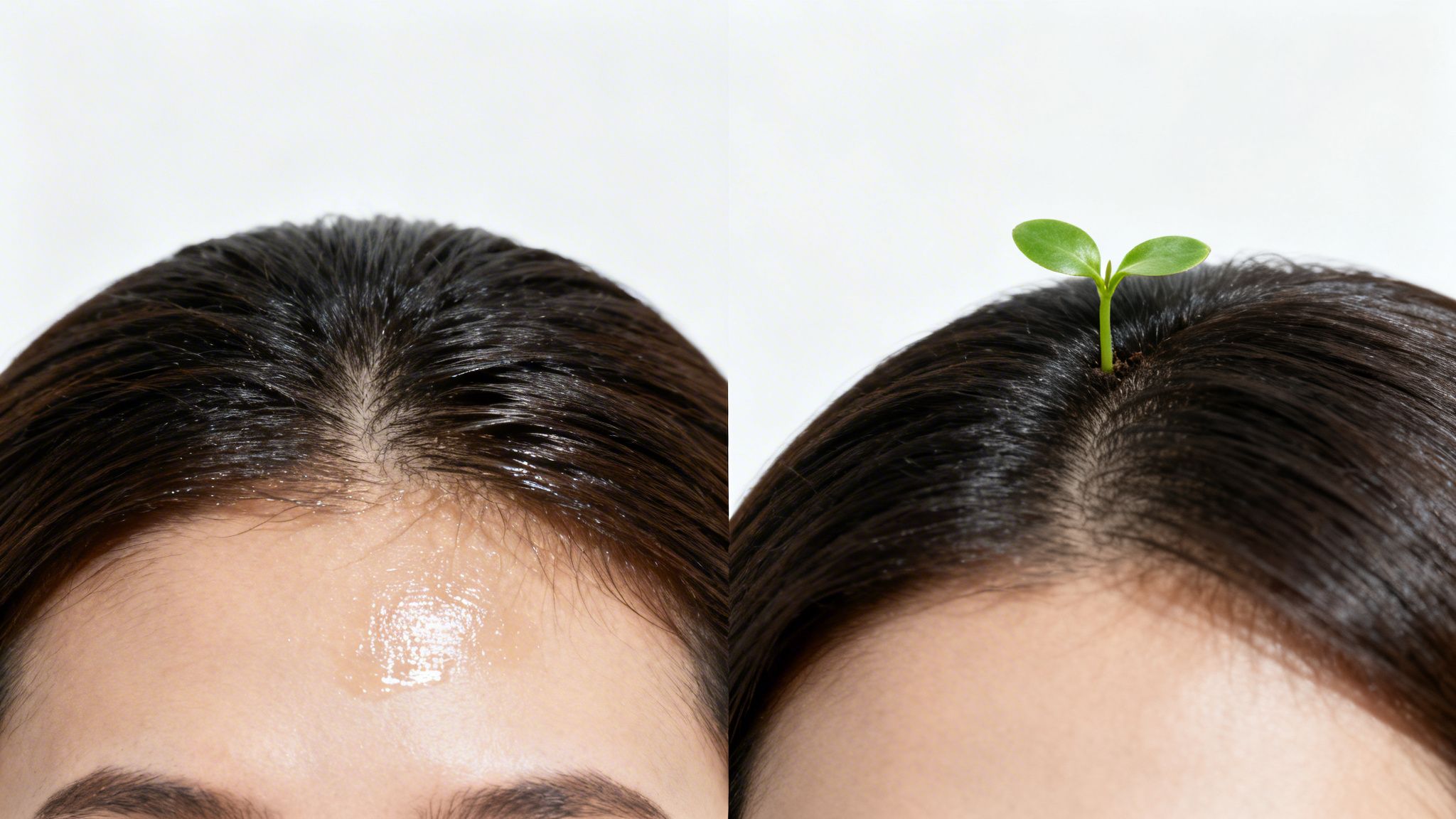
It's an incredibly frustrating cycle: you wash your hair in the morning, and by lunchtime, it already feels flat, stringy, and greasy. If this sounds familiar, you're not alone. Many people think the answer is a "squeaky clean" feel, but this approach almost always backfires.
Think of your scalp's oil production as a delicate thermostat. When you use an aggressive shampoo packed with harsh detergents like sulfates, you’re not just cleaning—you’re completely stripping the scalp of its natural, protective oils. Your scalp's thermostat goes into overdrive, pumping out even more oil to compensate for the sudden dryness. This kicks off a vicious cycle of over-washing and over-production.
The Goal Is Balance, Not a Barren Scalp
The key to breaking free isn't to turn your scalp into a desert; it's to create a healthy, balanced environment. A truly effective shampoo for oily hair works with your scalp, not against it. It should gently lift away the excess sebum and product buildup while leaving your scalp’s essential moisture barrier intact.
This is where becoming a savvy ingredient reader really pays off. You want a formula that can walk this fine line.
Knowing what to look for—and what to run from—on an ingredient label is your new superpower. The table below is a cheat sheet to help you find the right stuff and avoid the ingredients that make oily hair worse.
Key Shampoo Ingredients for Oily Hair
| Ingredient Type | What to Look For | Why It Works | What to Avoid |
|---|---|---|---|
| Cleansers | Gentle, coconut-derived surfactants (like Cocamidopropyl Betaine). | Cleans effectively without stripping the scalp's natural oils. | Harsh Sulfates (SLS/SLES). |
| Exfoliants | Salicylic Acid, Willow Bark Extract. | Gently dissolves oil and dead skin cells clogging the hair follicles. | Abrasive physical scrubs. |
| Botanicals | Tea Tree Oil, Rosemary, Peppermint, Witch Hazel. | These have natural clarifying and astringent properties that help regulate oil and soothe the scalp. | Heavy, occlusive oils (like Coconut or Olive Oil) in high concentrations. |
| Moisturizers | Glycerin, Panthenol (Pro-Vitamin B5). | Provide lightweight hydration to keep the scalp from overcompensating with oil. | Heavy Silicones (like Dimethicone) and Waxes. |
Ultimately, a good shampoo for oily hair focuses on scalp health first, knowing that fresh, voluminous hair will follow.
The most important shift you can make is moving from a mindset of stripping oil to one of balancing the scalp. A happy, healthy scalp produces just the right amount of oil, giving you hair that stays clean and fresh for much longer.
The Great Sulfate Debate
For years, sulfates (like Sodium Lauryl Sulfate) were the star players in shampoos. They create that rich, satisfying lather most of us have been taught to associate with being clean. The problem is, for those with oily or sensitive scalps, they are often the main culprits in that over-production cycle. They’re fantastic at removing dirt and oil, but they don't know when to stop, taking your scalp's essential moisture right along with them.
Making the switch to a sulfate-free shampoo can be a total game-changer. Your scalp might need a week or two to adjust and recalibrate its oil production—don't give up if it doesn't feel perfect after the first wash! But the long-term payoff is hair that is finally free from that daily wash-and-grease cycle.
Understanding the Root Cause of Oily Hair
To really get a handle on greasy hair, you have to know what you’re up against. That slick, weighed-down feeling comes from a natural substance your own body produces called sebum. Your scalp is dotted with tiny sebaceous glands, and their job is to produce this oily, waxy stuff to keep your scalp moisturized and your hair protected.
Think of it this way: a healthy scalp is in balance, producing just enough sebum to do its job. But when those glands kick into high gear, the excess oil spills out and travels down your hair strands, making your roots look flat and feel greasy. Finding the right shampoo for oily hair is all about figuring out why your scalp is overproducing in the first place.
And let's be clear—oily hair isn't a sign of being unclean. It's usually your scalp's way of reacting to a whole mix of things, from your internal biology to your daily habits, that have thrown its delicate ecosystem out of whack.
What Controls Your Scalp's Oil Production
So, what signals those glands to go into overdrive? It's rarely just one thing. More often, it’s a combination of factors all working together to create the perfect storm for oiliness. Pinpointing your personal triggers is the first real step toward finding a solution that lasts.
Here are the most common culprits:
- Hormones: Androgens—hormones found in everyone—are major players in oil production. Any time they fluctuate, like during puberty, your menstrual cycle, or due to conditions like PCOS, you can expect your oil output to ramp up.
- Genetics: This one's simple: if your parents dealt with oily hair, there’s a strong chance you will, too. You can thank them for the size and activity level of your sebaceous glands.
- Stress: Ever notice your hair gets greasier during a stressful week? That's not your imagination. When you're stressed, your body pumps out more cortisol, a hormone that can tell your scalp to produce more sebum.
- Environmental Factors: High humidity, pollution, and even frequently wearing hats or helmets can trap heat and sweat, making oil more noticeable and spreading it through your hair faster.
This is such a common struggle that it has built a massive industry. Oily hair is a top concern for a huge number of women, which explains the high demand for shampoos that actually work. In major markets like North America and Europe—which together are expected to make up over 50% of the global shampoo market by 2026—scalp health is a driving force. In fact, some reports show that up to 70% of women feel that stress and pollution make their oily scalp worse, pushing brands to innovate beyond basic cleansers. You can dig into more data on the global shampoo market and its drivers.
The Vicious Cycle of Overwashing
When your roots get greasy, what’s your first instinct? Wash it. Probably with a strong, stripping shampoo that makes your hair feel squeaky clean. While it feels good for a moment, this is one of the biggest mistakes you can make. It traps you in a frustrating feedback loop.
When you use a harsh shampoo to strip every last bit of oil from your scalp, your skin panics. It senses dryness and thinks it's under attack. To protect itself, it sends an emergency signal to your sebaceous glands: "Produce more oil, and fast!" The result? Your hair gets even greasier, even quicker than before.
Breaking this cycle is everything. The goal isn't to obliterate oil entirely, but to gently guide your scalp back to a state of balance. That means moving away from aggressive stripping and toward a smarter, more supportive routine. Once you understand this, it’s easy to see why a thoughtfully formulated shampoo for oily hair is so much more effective than just grabbing the strongest cleanser you can find.
How to Choose the Right Shampoo for Your Oily Hair
Walking down the shampoo aisle can feel like a pop quiz you didn't study for. With countless bottles promising to “clarify,” “purify,” and “balance,” how do you know what will actually help your oily hair and what’s just slick marketing? The secret is learning to look past the promises on the front and understand the ingredients on the back.
A harsh, stripping shampoo is like using a pressure washer to clean a delicate painting—it gets the job done, but it also causes a lot of damage. A well-formulated shampoo for oily hair should be more like a gentle, effective sunrise, cleansing your scalp without sending it into a panic. The goal isn't just to remove oil, but to create an environment where your scalp doesn't feel the need to produce so much of it in the first place.
Clarifying vs. Balancing vs. Purifying: What's the Difference?
You’ll see these words thrown around a lot, often interchangeably. While they're all aimed at tackling grease, they each have a slightly different job. Knowing the lingo helps you pick the right tool for the job.
Clarifying Shampoos: These are the heavy-duty deep cleaners. Think of them as a "reset button" for your hair, designed to strip away stubborn product buildup, hard water minerals, and, of course, excess oil. They are fantastic for occasional use—maybe once a week or every few weeks—but are usually too intense for daily washing.
Balancing Shampoos: This is your sweet spot for regular use. A great balancing shampoo cleanses thoroughly but also includes ingredients that lightly hydrate and soothe the scalp. This helps regulate sebum production, preventing your scalp from going into overdrive to replace the oils that were just washed away.
Purifying Shampoos: Very similar to balancing shampoos, these focus on fostering a clean, healthy scalp. They often lean on natural antiseptic or antibacterial ingredients like tea tree oil or rosemary to keep follicles clear and refreshed, preventing the grime that contributes to that greasy feeling.
For most people fighting a constant battle with oil, a balancing or purifying shampoo is the best bet for your main wash, keeping a clarifying formula on hand for a periodic deep clean.
Key Ingredients That Put You in Control
The real power is in the ingredient list. Flip that bottle over and scan for these workhorse ingredients known for their ability to manage oil without causing irritation.
Salicylic Acid: This is a true game-changer. As a beta-hydroxy acid (BHA), it’s oil-soluble, which means it can get deep into your pores and hair follicles to dissolve sebum and break up the gunk that holds dead skin cells together.
Zinc PCA: This is a brilliant two-for-one ingredient. The Zinc helps regulate your oil glands, while the PCA (pyrrolidone carboxylic acid) component provides just a touch of lightweight moisture so your scalp feels comfortable, not tight.
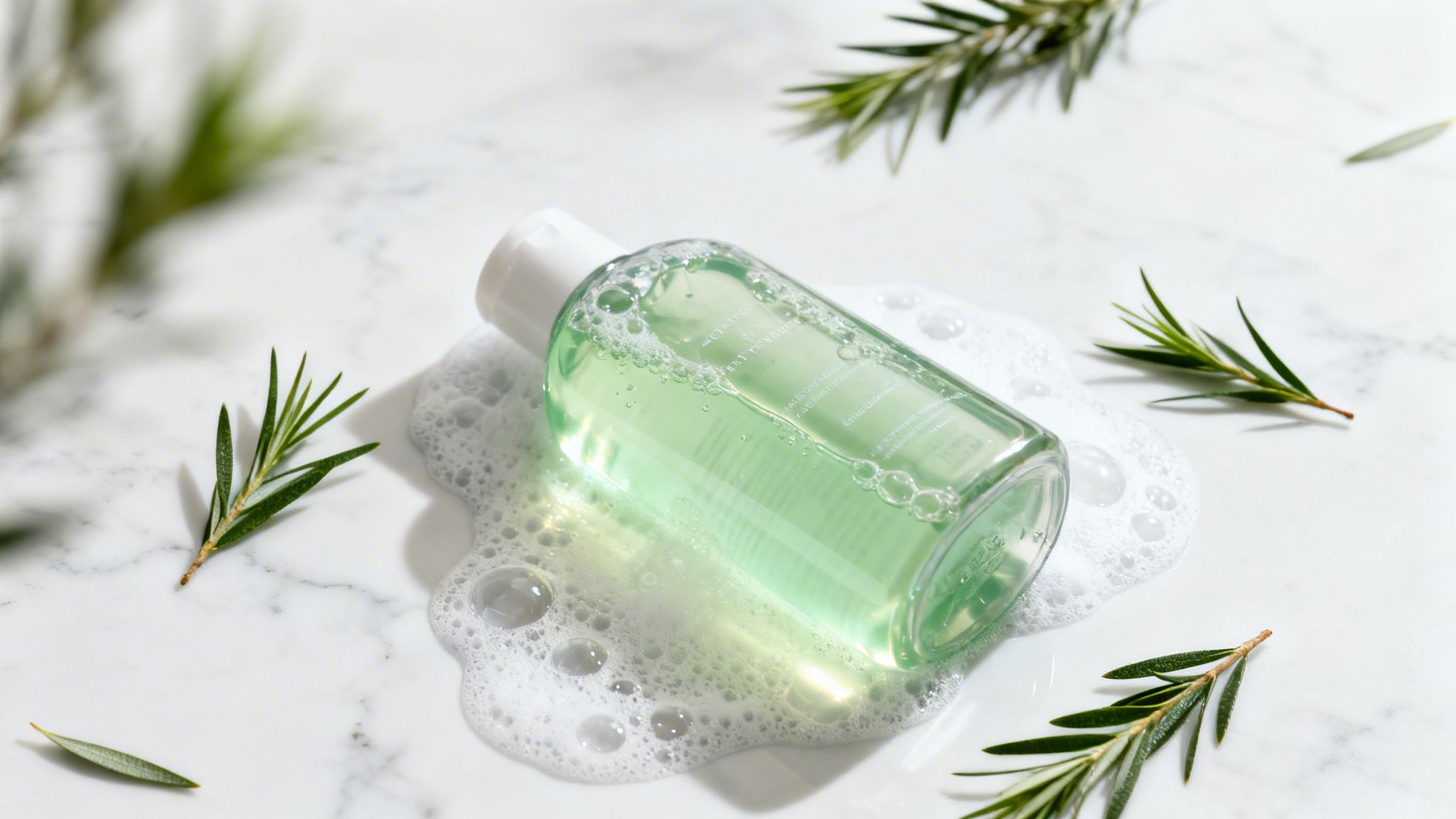
Tea Tree Oil: Famous for its natural antiseptic and antimicrobial properties, tea tree oil gives your scalp a deep, refreshing clean. It’s excellent for cutting down on the inflammation that can come with excess oil and buildup. You can learn how to spot the best herbal ingredients in our guide on tea tree shampoos.
Niacinamide: A form of Vitamin B3, this underrated hero helps strengthen your scalp’s natural barrier. A healthier barrier is better at regulating itself, which can lead to more normalized oil production over time.
The most effective shampoos for oily hair often combine a gentle cleansing agent with one or two of these active, oil-regulating ingredients. This ensures you get a thorough clean that also provides a long-term balancing benefit.
The Great Debate: Sulfates or Sulfate-Free?
This might be the most critical choice you make. Sulfates, like Sodium Lauryl Sulfate (SLS), are powerful detergents responsible for that rich, bubbly lather many of us associate with being "clean." And they are undeniably fantastic at cutting through grease.
The catch? They're often too good at it. For many people, sulfates strip the scalp so aggressively that they kickstart that vicious cycle: your scalp panics from the dryness and pumps out even more oil to compensate. Sound familiar?
Sulfate-free shampoos use much gentler cleansing agents, often derived from coconut or sugar. They clean your hair perfectly well but leave your scalp’s natural moisture barrier intact. This gentle approach helps your scalp learn that it doesn’t need to be an oil factory to stay protected. If your scalp is sensitive, your hair is color-treated, or you find yourself greasy again less than 24 hours after washing, a sulfate-free formula is almost always the way to go.
Mastering Your Hair Washing Technique
So, you’ve hunted down the perfect shampoo for your oily hair. That’s a huge win, but if you’re still not getting the results you want, the issue might not be what’s in the bottle—it’s your technique in the shower.
Think of it this way: you can have the best ingredients for a recipe, but if you crank the heat up too high or rush the process, the meal will be a letdown. The same exact logic applies to your hair. Nailing the how is just as crucial as the what.
Choosing the right product is the first step, and it's a journey of its own—from decoding labels to finding the right active ingredients.
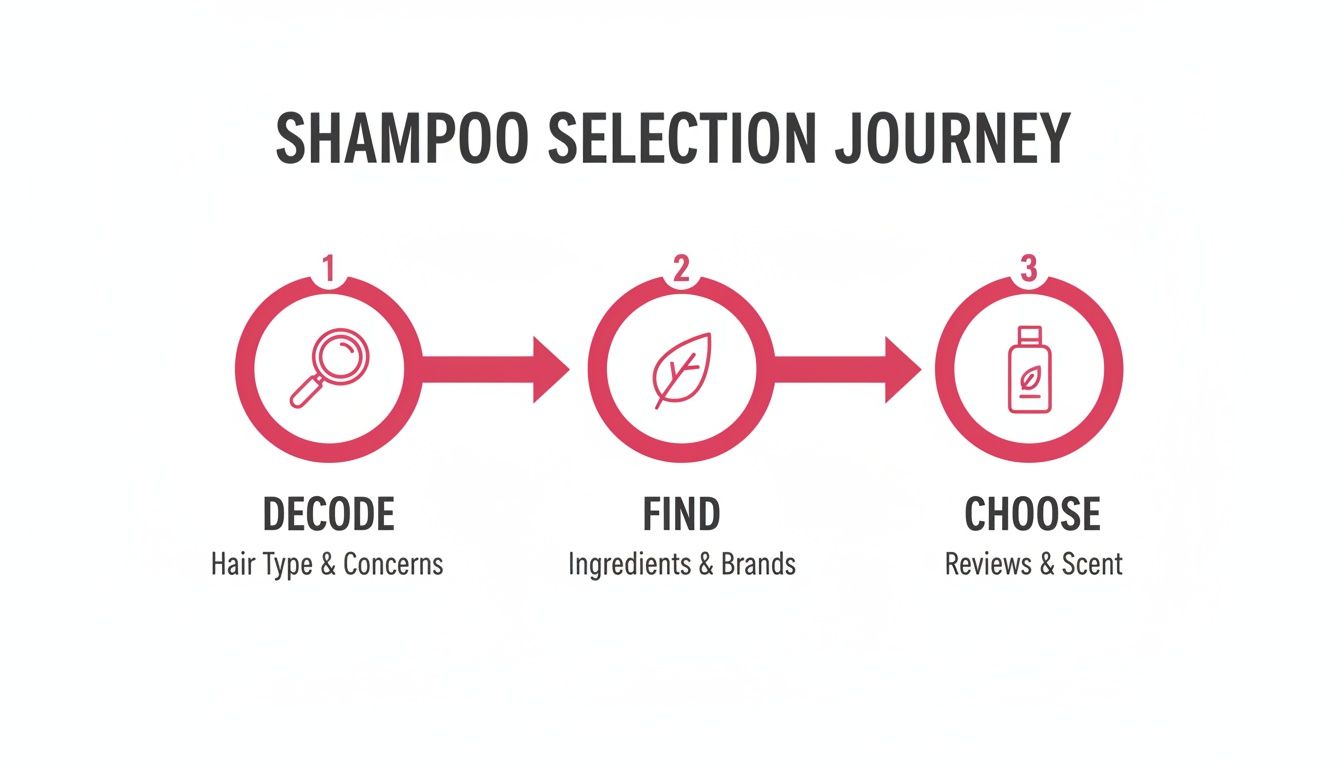
Once you've got your shampoo sorted, it's time to make it work for you.
The Perfect Wash in Five Steps
Adjusting your washing method is one of those small changes that brings surprisingly big rewards. It’s all about being more mindful and less aggressive. Try these steps, and you’ll turn every wash into a rebalancing scalp treatment.
Set the Right Temperature: Cool it with the hot water. Steamy showers feel great, but hot water can kick your oil glands into high gear. Stick to lukewarm water to gently cleanse your scalp and hair without sending the wrong signals.
Focus on the Scalp: Squeeze a quarter-sized amount of shampoo into your hands and apply it directly to your scalp. That’s where the oil, sweat, and product buildup actually live. Your ends are much drier and will get clean enough as the lather rinses through.
Massage, Don't Scrub: Use the pads of your fingertips—never your nails!—to massage the shampoo into your scalp for a good 60 seconds. This does more than just clean; it boosts circulation to the follicles and helps break up stubborn residue. Scrubbing with your nails creates irritation and micro-scratches, which can lead to inflammation and, you guessed it, more oil.
Embrace the Double Cleanse: For anyone with oily hair, this is a game-changer. The first wash is all about breaking down the gunk: dry shampoo, styling products, and surface-level oil. The second wash is where the magic happens, allowing the shampoo to deeply purify your scalp and follicles. You’ll know it’s working because the lather will be much richer the second time around.
Rinse Thoroughly: This step is so simple, but so often rushed. Leftover product residue is a one-way ticket to limp, greasy-looking hair. Take an extra minute to make sure every last bit of suds is gone. For a little extra shine, finish with a quick blast of cool water to seal the hair’s cuticle.
Debunking the Daily Wash Myth
There’s a persistent myth that if you have oily hair, you have to wash it every single day. While that gives you a clean slate each morning, it can actually make the problem worse over time. Constantly stripping your scalp of its natural oils sends it into a panic, triggering it to produce even more oil to compensate.
The real goal is to "train" your scalp to be less reactive. By using a gentle, balancing shampoo and a better washing technique, you can finally break the daily-wash cycle.
As more people learn about scalp health, the demand for targeted shampoos has exploded. Back in 2017, the global shampoo market was projected to reach $19 billion by 2026. Instead, it has already blown past that, hitting USD 33.59 billion, thanks in large part to products for specific concerns like oily hair. You can dig into the numbers in this shampoo market analysis.
Start by trying to stretch the time between washes. If you’re a daily washer, try going every other day. Once that feels comfortable, push it to every two or three days. In time, your scalp will find its balance, and you'll be rewarded with hair that stays fresh for longer.
Complementary Care for an Oily Scalp
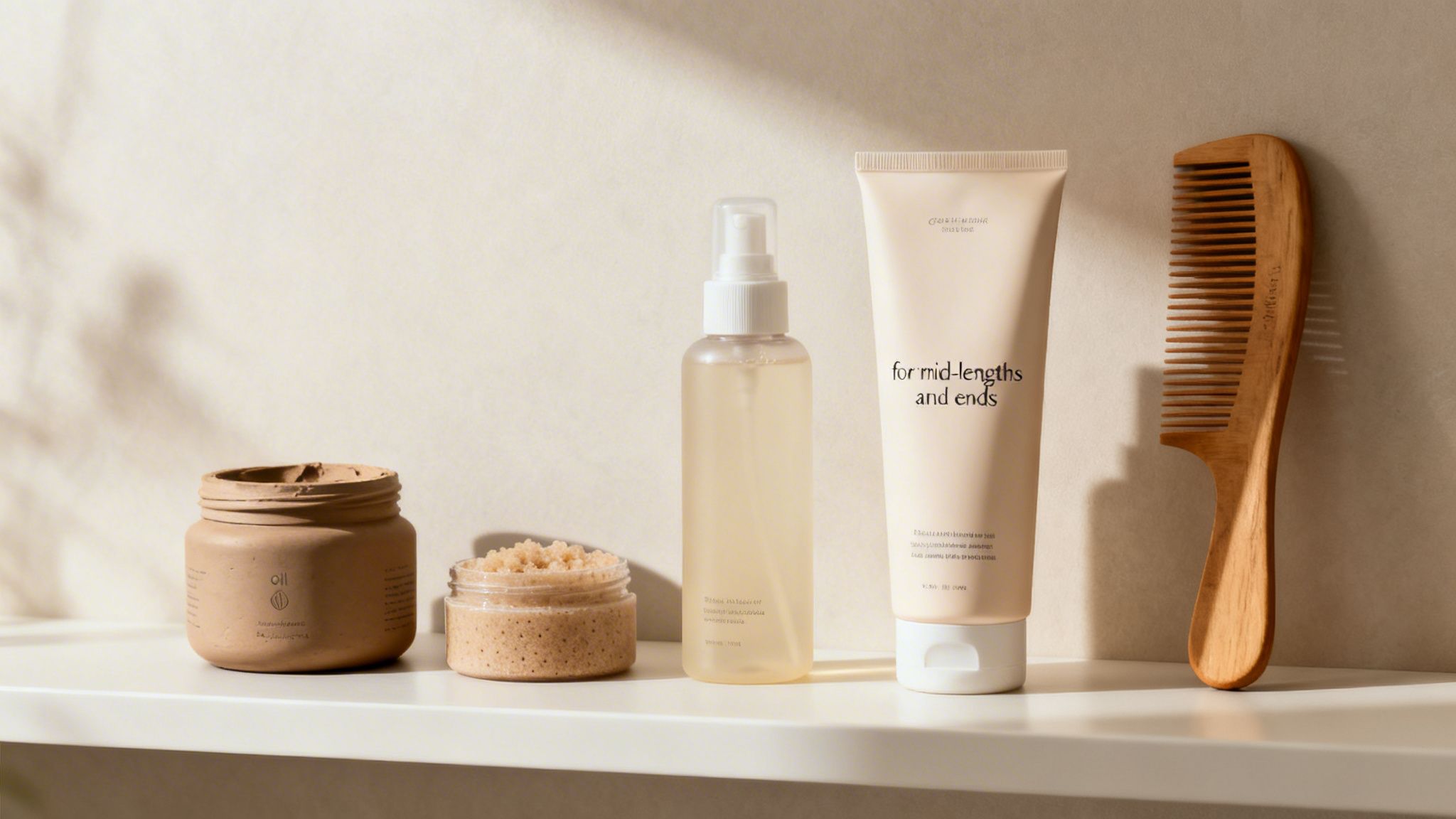
Finding the perfect shampoo for oily hair is a huge win, but it's only the first step. To truly get control over a greasy scalp, you need a full routine where every product works together. The wrong conditioner or styling cream can instantly undo all your shampoo’s hard work, leaving you right back where you started.
Think of it as a team effort. Your shampoo is the foundation, but the conditioner, treatments, and styling aids you choose are what keep your hair looking and feeling fresh between washes. Let's look at how to build out the rest of your routine.
How to Use Conditioner Without Weighing Hair Down
If you have oily hair, you probably have a complicated relationship with conditioner. The idea of adding more moisture to hair that already feels heavy just seems wrong. But skipping it is a mistake. Without conditioner, your ends—especially if they’re long or color-treated—can become incredibly dry, brittle, and prone to splitting.
The solution isn't to ditch conditioner, but to change how you use it. Your scalp makes more than enough oil for your roots, but that natural sebum has a hard time traveling all the way down to the tips. So, you have to apply moisture where it's actually needed.
Just follow these simple guidelines:
- Target the Ends: After rinsing out your shampoo, squeeze the extra water from your hair. Work a small dollop of a lightweight conditioner through your hair, focusing only from about your ears down to the ends.
- Keep It Off the Scalp: This is the most important rule. Conditioner on your roots is a fast track to greasy, weighed-down hair. It can clog follicles and signal your scalp to produce even more oil.
- Pick a Lightweight Formula: Ditch the heavy, buttery creams. You want a conditioner that’s either silicone-free or made with water-soluble silicones that rinse away cleanly without creating buildup.
I always tell my clients to think of their hair as two different zones: the "scalp zone" needs deep cleaning, while the "ends zone" needs hydration. Treat them separately, and you'll strike the perfect balance.
Weekly Treatments to Detox and Reset Your Scalp
At least once a week, it’s a good idea to give your scalp a deeper treatment. Think of it as a weekly reset button or a "facial for your scalp." These treatments go beyond daily shampooing to pull out stubborn product buildup, exfoliate dead skin, and help rebalance oil production from the source.
Here are a couple of my favorite weekly treatments:
- Clay Scalp Masks: Clays like bentonite or kaolin are incredible at soaking up excess oil and impurities without stripping your scalp. Just apply the mask to your dry scalp before you hop in the shower, let it work its magic for 10-15 minutes, then rinse and follow with your normal shampoo and conditioner.
- Scalp Exfoliating Scrubs: A gentle scrub can work wonders. Look for ones with chemical exfoliants like salicylic acid or fine physical exfoliants like sugar to gently lift away dead skin cells and residue that can clog hair follicles.
Smart Styling for Lasting Volume
Your styling routine is the final piece of the puzzle. This is where many people go wrong, reaching for heavy serums or waxes that immediately make clean hair look dirty. The goal is to use lightweight products that create lift and texture without coating your hair in anything that will weigh it down.
For styling, these are your go-to products:
- Volumizing Mousse or Foam: When your hair is damp, apply a golf-ball-sized amount to your roots before blow-drying. This will give you a noticeable lift that actually lasts.
- Texturizing Sprays: A quick mist on dry hair adds a bit of grit and hold, helping to revive flat, second-day hair while also absorbing a little oil.
- Dry Shampoo: This is your best friend for stretching the time between washes and adding instant volume. If you want to dive deeper, you can explore our tips on finding the right dry shampoo.
Just as important is what you avoid. Steer clear of heavy shine serums, pomades, and oils, especially anywhere near your roots. If you absolutely need to smooth some frizz, use a tiny amount and apply it only to the very ends of your hair.
Tailored Solutions for Different Hair Types
Oily hair is rarely a solo problem. More often than not, it comes with a frustrating sidekick—maybe it's fine hair that goes limp by noon, curls with a greasy scalp but desert-dry ends, or an itchy, flaky scalp. When you're trying to solve two issues at once, finding the right shampoo for oily hair gets a lot more complicated.
The secret is to think about your hair in zones and find ingredients that can pull double duty. What works wonders for fine, oily hair will likely be a disaster for curly, oily hair. By zeroing in on your specific combination of concerns, you can finally tackle the excess oil at the root without neglecting the unique needs of your hair strands.
Oily and Fine Hair
This is the classic combo that feels like a constant battle against gravity. You need a shampoo that can give you a truly deep clean without leaving a single trace of residue behind to weigh your hair down. The goal is purification and volume, all in one bottle.
When you're scanning labels, look for ingredients like biotin and wheat protein. Think of these as scaffolding for your hair—they help fortify and plump up each strand from the inside, giving you a fuller look. Lightweight clarifying agents are also your best friend, ensuring everything rinses away clean.
Oily Scalp and Curly Hair
Here we have the ultimate hair contradiction: an oil slick at the scalp and parched, thirsty ends. If you use a harsh, stripping shampoo to combat the grease, you'll just end up with a frizzy, undefined mess. The trick is to treat your scalp and your curls as two totally separate entities.
A gentle, sulfate-free shampoo for oily hair is absolutely non-negotiable for this hair type. You need a formula that can cut through scalp oil effectively without stripping your curls of the moisture they desperately need to thrive. Ingredients like glycerin or panthenol are great because they offer lightweight hydration that won't make your scalp feel greasy, cleansing your roots while keeping your curl pattern happy.
Oily and Dandruff-Prone Hair
When you’re seeing both grease and flakes, you're dealing with a scalp that's seriously irritated and out of balance. Many old-school dandruff shampoos are incredibly harsh and can actually trigger your scalp to produce even more oil in response. You need a formula that calms the inflammation while getting both the flakes and the sebum under control.
The most effective strategy for an oily, flaky scalp is a shampoo that soothes and clarifies at the same time. Look for salicylic acid to gently exfoliate away flakes and oil buildup, paired with calming agents like tea tree oil or peppermint oil, which have fantastic natural anti-inflammatory and antimicrobial properties.
Oily and Thinning Hair
If hair thinning or hair loss is a concern, your number one priority has to be scalp health. Excess oil and clogged follicles create a hostile environment that can actively hinder new hair growth. The right shampoo will focus on creating a clean, balanced, and stimulated base for your follicles to do their best work.
Look for shampoos with niacinamide, which can boost circulation and strengthen the scalp's protective barrier. You might also see formulas with rosemary oil, which has been shown to support growth by improving blood flow to the follicles. This gives your hair a much better environment to grow in and can help existing strands appear thicker. If you're also struggling with dry ends, our guide on how to repair damaged hair has some extra tips.
To make things a bit simpler, here's a quick cheat sheet for matching your oily hair "plus-one" with the right ingredients and care tips.
Oily Hair Solutions for Your Hair Type
| Hair Concern | Key Ingredient to Look For | Pro Tip |
|---|---|---|
| Fine Hair | Biotin, Wheat Protein | Focus on lightweight formulas that rinse completely clean to avoid weighing hair down. |
| Curly Hair | Glycerin, Panthenol (in a sulfate-free base) | Treat your scalp and ends differently. Cleanse roots thoroughly but condition ends generously. |
| Dandruff | Salicylic Acid, Tea Tree Oil | Use a targeted dandruff shampoo a few times a week, alternating with your regular gentle shampoo. |
| Thinning Hair | Niacinamide, Rosemary Oil | Scalp health is everything. Gentle scalp massages while shampooing can help boost circulation. |
Remember, this chart is a starting point. It often takes a little bit of experimentation to find the perfect routine that makes your scalp and your hair feel their best.
Frequently Asked Questions About Oily Hair
Even after you've nailed down the basics, some questions about oily hair always seem to pop up. Let's tackle some of the most common ones I hear so you can feel completely confident in your routine.
Should I Wash Oily Hair Every Day?
I know the urge to wash greasy hair every single day is strong, but this is often the biggest mistake people make. When you constantly strip your scalp of its natural oils, it panics and goes into overdrive, producing even more oil to make up for what it lost.
The real goal is to "train" your scalp. You do this by gradually putting more time between your wash days. Try switching to every other day at first and see how your hair responds. Using a high-quality shampoo for oily hair is key to making this transition feel less greasy and more manageable.
Can My Diet Affect My Oily Hair?
It absolutely can. Think about it—what you eat shows up on your skin, and your scalp is no different. A diet packed with sugar, processed carbs, and unhealthy fats can sometimes kick your oil glands into high gear.
While changing your diet won't be a magic cure, focusing on balance makes a real difference. Foods rich in B vitamins (especially B2 and B6) and zinc are fantastic for helping to regulate sebum. A good rule of thumb is to load up on fruits, veggies, and lean proteins for better scalp health from the inside out.
A common myth is that sulfate-free shampoos aren't powerful enough for truly oily hair. The reality? Gentle formulas help your scalp find its balance over time, whereas harsh sulfates just keep you stuck in a cycle of stripping and overproducing oil.
Will Sulfate-Free Shampoo Work for Very Oily Hair?
Yes, and honestly, it’s often the better choice for the long haul. Shampoos with sulfates give you that satisfying, squeaky-clean feeling right away, but they're so aggressive that they can trigger that rebound effect we talked about, leaving you greasier than before.
A well-formulated, sulfate-free shampoo cleans thoroughly without sending your scalp into panic mode. It might take a week or two for your scalp to adjust and normalize its oil production, but stick with it. The patience really does pay off with healthier, more balanced hair.
Does Stress Really Make My Hair Greasier?
It’s not just in your head. When you’re stressed out, your body pumps out more of a hormone called cortisol. This cortisol spike is like a green light for your oil glands, telling them to work overtime. The result? A much greasier-feeling scalp and hair.
Finding healthy ways to manage your stress—whether it's through exercise, meditation, or even just taking five minutes of quiet for yourself—can have a surprisingly positive impact on your hair.
At Hair and Body review, we believe getting the right information is the first step toward loving your hair. Dive into our expert guides and honest reviews to build a routine that truly works for you. Learn more about our approach at Hair and Body review.